


Saudi Arabia temporarily shut the East-West pipeline after drones launched from Iraq caused injuries and damage, while Riyadh held off on retaliation.
Saudi Arabia has temporarily shut its crucial East-West oil pipeline after several drones launched from Iraq targeted the route, causing injuries and damage to infrastructure, as tensions across the region intensified.
The Saudi Ministry of Energy said the attacks took place on Thursday, September 10, in the Riyadh and Madinah regions. Emergency and specialist teams were deployed immediately to secure the pipeline and assess the damage, while the facility was shut down as a precaution.
The incident comes as Saudi Arabia has increasingly depended on the East-West pipeline to move crude towards the Red Sea and bypass the Strait of Hormuz, which has been disrupted during the ongoing regional conflict.
Iraq Confirms Drones Were Launched From Its Territory
Saudi Arabia’s Foreign Ministry said on Saturday that several drones launched from Iraq had targeted the East-West pipeline, causing injuries and damage.
Riyadh said it had decided not to retaliate immediately after a request from the Iraqi prime minister, allowing Baghdad to take action against those responsible. At the same time, Saudi Arabia warned that it reserves the right to take “all necessary measures” to protect its sovereignty, security, infrastructure and people.
Iraq has since confirmed that the attacks originated from its territory. Prime Minister Ali Al-Zaidi ordered the removal of the commander of the Maysan Operations Command and launched an investigation into the security failures in the southern province. Iraqi authorities have also condemned the attack and said they would pursue those responsible.
The development adds pressure on the Iraqi government, which is attempting to prevent armed groups operating from its territory from dragging the country deeper into the wider regional conflict.
Why the East-West Pipeline Matters
The East-West pipeline, also known as Petroline, stretches roughly 1,200 kilometres from the Abqaiq area in eastern Saudi Arabia to Yanbu on the Red Sea coast.
The route has become particularly important since Saudi Arabia began relying more heavily on Red Sea exports to avoid the Strait of Hormuz. The pipeline can transport around 4 million to 5 million barrels of oil per day, equivalent to roughly 4% to 5% of global oil supply.
Its temporary closure therefore creates another vulnerability for global oil markets at a time when several major shipping routes are already under pressure.
The attack also highlights the growing risks surrounding Saudi Arabia’s alternative export route. With Hormuz severely disrupted and security conditions deteriorating around the Red Sea and Bab el-Mandeb, Riyadh is facing pressure on both its eastern and western routes for moving crude to international buyers.
Saudi Arabia Holds Back From Retaliation
The decision not to retaliate immediately marks an attempt by Riyadh to contain the incident diplomatically.
Saudi officials have previously accused Iran-backed Iraqi militias of attacks on Saudi infrastructure. However, the latest Saudi statement stopped short of directly assigning responsibility to a specific Iraqi militia or to Iran.
Instead, Riyadh said it would support Baghdad’s efforts to prevent further attacks from Iraqi territory.
That restraint could prove temporary. Saudi Arabia made clear that the decision did not amount to a waiver of its right to defend its territory and critical infrastructure if further attacks occur.
The Iraqi government has responded with its own security measures. Alongside the dismissal of the Maysan operations commander, Baghdad has launched investigations into the breach and taken additional steps along its border with Iran.
Red Sea Shipping Faces a Second Major Threat
The pipeline attack comes as Saudi Arabia is already facing growing pressure from Yemen’s Iran-backed Houthi movement.
The Houthis declared a maritime blockade against Saudi Arabia in July and have subsequently intensified their campaign around the Red Sea. Saudi crude shipments through the Bab el-Mandeb route have already been affected, with Saudi oil loadings through the passage falling sharply after the Houthi declaration.
The situation deteriorated further this week after Houthi forces captured the strategic Yemeni port of Mocha and advanced towards key positions around the Bab el-Mandeb Strait. The developments threaten a maritime corridor that has become increasingly important to Saudi Arabia as an alternative to the Strait of Hormuz.
That means Riyadh is now facing simultaneous pressure on two critical energy routes: the Strait of Hormuz in the east and the Red Sea-Bab el-Mandeb corridor in the west.
Oil Prices Remain Above $100
The attacks have added to an already volatile global oil market.
Brent crude briefly climbed towards $110 a barrel earlier in the week before easing on Friday to around $104.49. Despite the pullback, Brent remained more than 8% higher for the week as traders assessed the risks to global supply.
The impact is already being felt in refined fuel markets. The average US diesel price rose above $6 a gallon on Friday for the first time, reaching about $6.06, adding further inflationary pressure on transportation, logistics, and businesses.
For Saudi Arabia, the immediate priority will be restoring the East-West pipeline safely and determining the extent of the damage. For global markets, the bigger concern is whether the latest attack marks the beginning of a wider campaign against the kingdom’s energy infrastructure.
With Hormuz disrupted, Red Sea shipping under pressure, and another key pipeline temporarily offline, the number of safe routes available to move Middle Eastern oil is shrinking.
Read more news and follow us on Instagarm.
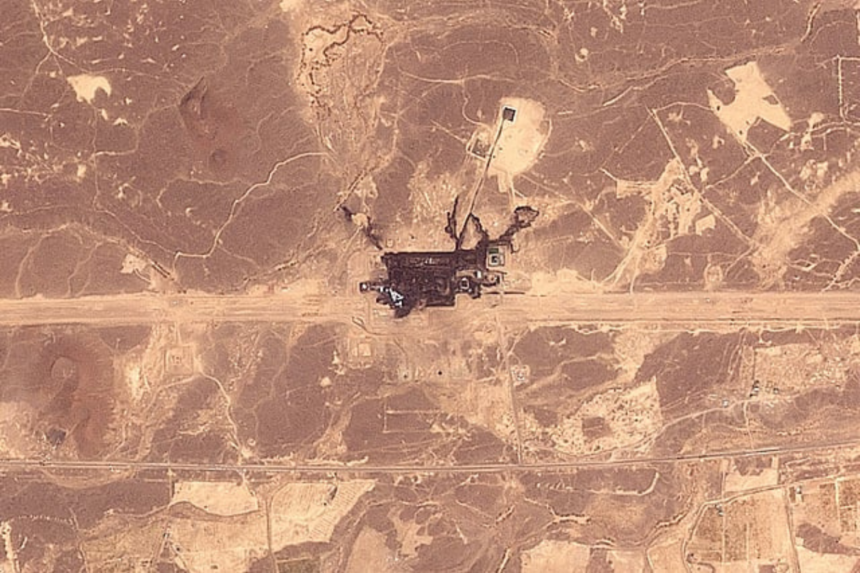
This handout satellite image, taken by Planet Labs PBC on September 11, 2026, shows a general view of an infrastructure site after it was damaged by fire southeast of Medina along the general route of Saudi Arabia’s East-West pipeline (Petroline).
AFP/ Gulf News