



Oil above $109 and dollar strength deepen pressure on the currency.
Rising oil prices, dollar strength, and foreign capital outflows are putting fresh pressure on the Indian currency.
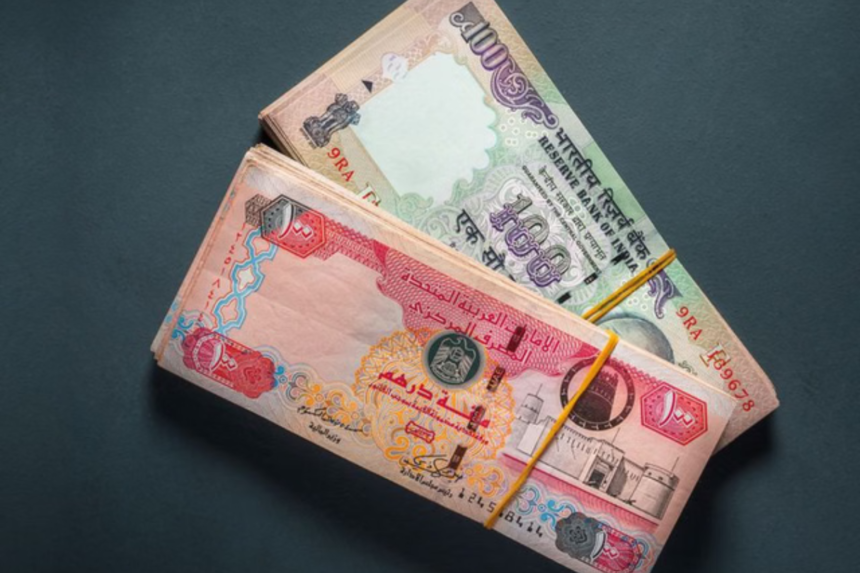
The Indian rupee weakened to its lowest level ever against the US dollar on Friday, pushing the United Arab Emirates dirham above the INR26 mark for the first time in history.
During intraday trading, the rupee slipped to 96.14 against the dollar after opening at 95.86 in the interbank foreign exchange market. The sharp decline briefly pushed the exchange value of one UAE dirham to nearly Rs26.15, strengthening remittance value for millions of Indians living across the Gulf.
The currency had already touched a then-record low of 95.96 on Thursday before slightly recovering to close at 95.64 against the dollar.
Oil Prices Add Pressure on the Rupee
Currency traders say rising global oil prices remain one of the biggest reasons behind the rupee’s weakness.
Brent crude futures climbed more than 3 percent to around $109 per barrel, intensifying concerns for oil-importing economies like India, which depends heavily on imported crude to meet domestic energy demand.
Higher oil prices increase India’s import bill, widen the trade deficit, and create additional demand for US dollars, all of which place downward pressure on the rupee.
The latest surge in crude prices comes amid continuing geopolitical instability in the Middle East and uncertainty surrounding the Iran conflict and shipping routes through the Strait of Hormuz.
Stronger Dollar and Capital Outflows Hurt Sentiment
Apart from oil, the strengthening US dollar has also contributed to the rupee’s decline.
Hawkish comments from US policymakers and expectations of higher interest rates have supported the dollar globally, making emerging-market currencies more vulnerable.
Analysts also point to persistent foreign capital outflows and slower foreign direct investment inflows as key factors weakening India’s balance of payments position.
Global investors have remained cautious amid ongoing geopolitical tensions, elevated market valuations, and uncertainty around future growth conditions.
Gulf Remittances Get a Boost
For Indians working in the UAE and wider Gulf region, the weaker rupee significantly improves remittance value.
A higher dirham-to-rupee conversion rate means expatriates can send more money home for the same amount earned in the UAE.
The development is expected to benefit remittance flows, particularly ahead of upcoming family, travel, education, and festive spending periods in India.
The UAE remains one of the largest remittance corridors for India, with millions of Indian expatriates living and working across sectors, including construction, hospitality, healthcare, technology, retail, and finance.
Inflation Risks Could Rise
While remittances benefit from a weaker rupee, the broader economic impact creates fresh concerns for India.
A falling currency makes imports more expensive, especially crude oil, electronics, machinery, and industrial raw materials. That can eventually feed into domestic inflation through higher fuel, transport, and production costs.
Economists are closely watching whether the Reserve Bank of India steps in more aggressively to stabilize the currency if volatility continues increasing.
The rupee’s trajectory will likely remain tied to three major global factors in the coming weeks:
• Oil price movements
• US Federal Reserve policy signals
• Geopolitical developments in the Middle East
For now, the crossing of the INR26 mark against the UAE dirham reflects how global energy markets, currency flows, and geopolitical uncertainty are increasingly shaping everyday financial realities for both investors and expatriate communities.
Currency traders monitor market movements as the Indian rupee slipped to a record low against the US dollar during Friday trading.
GN Archives