


The country looks to cut fuel imports and unlock untapped oil and gas reserves.
The country is pushing to attract foreign investment and strengthen energy security through new offshore oil and gas projects.
Pakistan has reopened its offshore oil and gas exploration sector after nearly two decades, signaling a major shift in the country’s strategy to reduce dependence on imported fuel and unlock untapped domestic energy reserves.
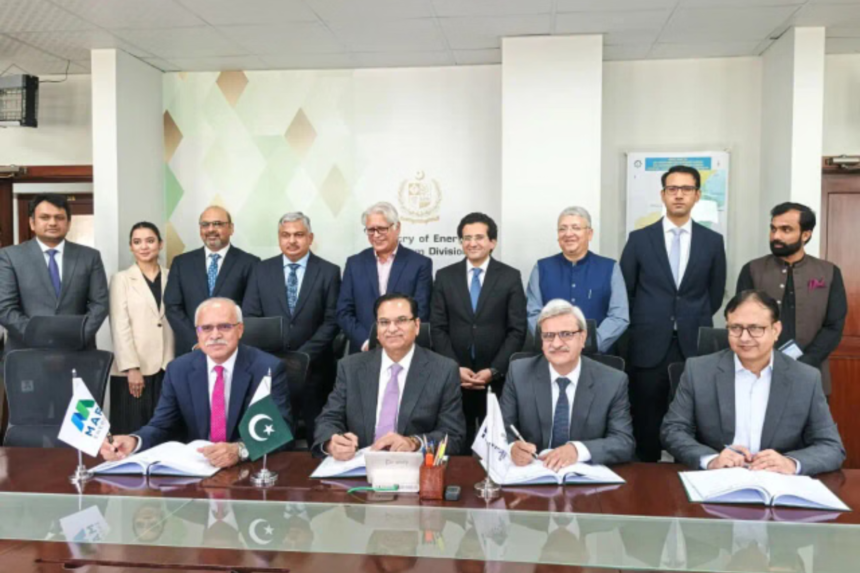
The government recently signed Production Sharing Agreements and Exploration Licenses for 23 offshore blocks under the Offshore Bid Round 2025. The blocks are located in the Indus and Makran offshore basins near the coastal regions of Sindh and Balochistan.
Ali Pervaiz Malik, Pakistan’s federal minister for petroleum, attended the signing ceremony and described the development as a significant milestone for the country’s energy sector.
Pakistan Wants to Reduce Energy Import Pressure
Pakistan has long struggled with rising fuel import costs, foreign exchange pressure, and recurring energy shortages. Because the country imports a large portion of its oil and gas requirements, global energy price spikes often create severe pressure on the economy.
Officials believe offshore exploration could eventually help reduce that dependence by increasing local production capacity.
According to Pakistan’s Ministry of Petroleum, the Offshore Bid Round 2025 attracted bids covering approximately 54,600 square kilometres of offshore territory, reflecting renewed interest in the country’s unexplored energy potential.
The government hopes successful discoveries could improve energy security while reducing pressure on the national trade balance.
Huge Offshore Potential Remains Untapped
Despite possessing a large offshore area spanning nearly 282,623 square kilometres, Pakistan has conducted very limited offshore exploration since its independence.
Officials revealed that only 18 exploratory wells have been drilled in offshore regions over several decades.
That lack of exploration partly explains why authorities believe significant untapped reserves may still exist beneath Pakistan’s coastal waters.
To encourage investment, the government introduced updated offshore petroleum rules along with a revised model production sharing agreement designed to improve transparency and attract international energy companies.
Major Energy Companies Secure Offshore Blocks
Among participating firms, Mari Energies emerged as the largest stakeholder in the offshore round.
The company secured participation across all 23 awarded blocks, operating 18 of them directly while joining five as a venture partner.
Other participating firms included:
- Oil and Gas Development Company
- Pakistan Petroleum Limited
- United Energy Pakistan
- Orient Petroleum
- Prime Global Energies
Additionally, two offshore blocks had already been awarded earlier to a consortium involving Mari Energies, Turkish Petroleum, and Fatima Petroleum Company Limited.
Exploration Could Bring Billion-Dollar Investments
Pakistan’s Ministry of Petroleum estimates the first exploration phase alone could generate approximately $82 million in investment over three years.
That phase will focus on geological studies, seismic surveys, data acquisition, and technical interpretation work.
However, officials believe total investment could rise close to $1 billion if projects advance into commercial offshore drilling operations.
Large-scale discoveries would likely attract additional foreign capital while boosting long-term energy infrastructure development inside the country.
Coastal Development Also Part of the Plan
Beyond energy production, authorities said participating companies were committed to supporting social welfare and capacity-building initiatives for coastal communities in Sindh and Balochistan.
Officials hope the projects will create broader economic activity in regions that have historically received limited industrial investment.
For Pakistan, the reopening of offshore exploration represents more than an energy project. It reflects a wider effort to strengthen economic resilience, improve energy independence, and position the country as a more competitive destination for long-term resource investment.
Source: Gulf News
Read more news, and follow us on Instagram