



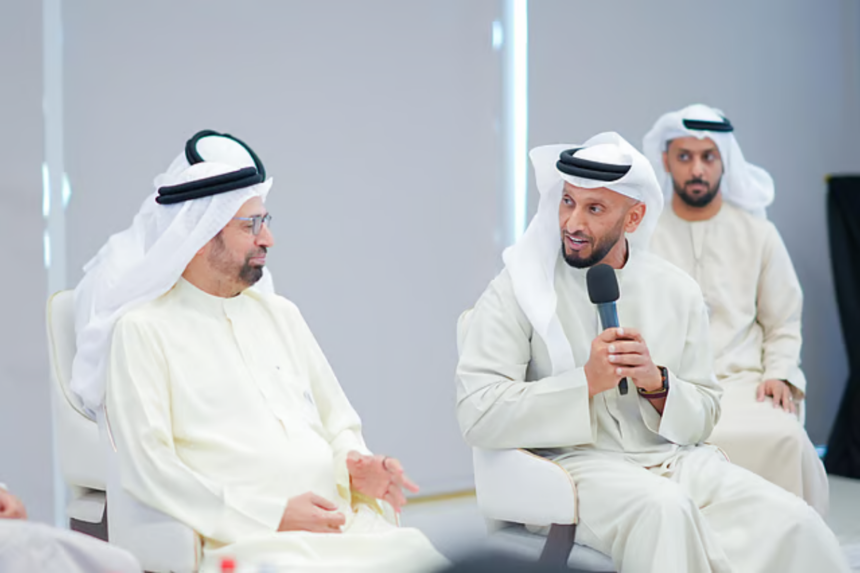
Al Nuaimi said the UAE faced threats from alleged sleeper cells during Iranian attacks, highlighting wider concerns about Iran-linked espionage networks across Gulf and Arab countries.
Dr. Ali Rashid Al Nuaimi, chairman of the Defence, Interior and Foreign Affairs Committee at the Federal National Council (FNC), said the UAE faced multiple security challenges during Iranian missile and drone attacks earlier this year, including what he described as “sleeper cells” that helped Iranian forces direct their strikes.
Speaking at the UAE Correspondents’ Council in Dubai on Thursday, Al Nuaimi said the UAE had to protect residents while ensuring daily life continued as normally as possible. Shopping malls, restaurants, and beaches remained open as authorities implemented measures to address security threats.
He said the response involved intercepting missiles and drones while monitoring potential threats around sensitive sites. Authorities also had to identify risks without imposing unnecessary restrictions on residents’ movements and everyday activities.
Al Nuaimi described maintaining normal daily life as an integral part of the UAE’s response, alongside protecting the community and managing security risks.
UAE’s Daily Life Surprised Israeli Visitors
Al Nuaimi recalled a video call with an Israeli acquaintance during the escalation. He said the acquaintance was surprised to learn that he was at Abu Dhabi’s Galleria Mall while missile and drone attacks were being launched against the UAE.
According to Al Nuaimi, the exchange highlighted how daily life can continue despite security threats.
He also said some Israelis visiting the UAE arrived with preconceived notions about Arabs. Interactions with Emiratis and residents from different Arab communities, including Palestinians, gave them an opportunity to encounter a more diverse reality.
Al Nuaimi stressed that direct contact between people can help challenge stereotypes and build understanding, even amid political and security tensions.
Al Nuaimi Meets Israeli and Palestinian Delegations
In a related development, Al Nuaimi said he had met two separate delegations the previous day, one Israeli and the other Palestinian, as part of efforts to encourage dialogue and bring the two sides’ perspectives closer together.
He said Israelis and Palestinians should have the opportunity to live alongside one another rather than allow the conflict and its consequences to affect successive generations.
Al Nuaimi added that political differences should not prevent efforts to find common ground. He emphasized the importance of giving younger generations the chance to build a future beyond the prolonged conflict.
His remarks come amid wider regional challenges involving security, coexistence, and dialogue between communities.
Gulf Countries Raise Concerns Over Iran-Linked Networks
Gulf and Arab countries have raised concerns about alleged destabilizing activities involving Iran-aligned sleeper cells and organizations linked to Hezbollah.
Several Gulf states have announced the dismantling of networks suspected of espionage and sabotage. Bahraini authorities have accused suspects of sharing information about sensitive locations with Iranian operatives, while Qatar has reported uncovering cells allegedly collecting intelligence on military facilities and critical infrastructure.
The UAE has also announced arrests involving individuals allegedly linked to Iranian networks suspected of planning activities that threatened national security.
Meanwhile, the National Emergency Crisis and Disaster Management Authority (NCEMA) has said the UAE’s early warning system is designed to issue location…
Editorial note: The supplied source ends mid-sentence in the final paragraph. The article has not been extended beyond the available text.
Source: Gulf News
Sleeper cells posed hidden dangers during Iranian attacks, Al Nuaimi reveals