



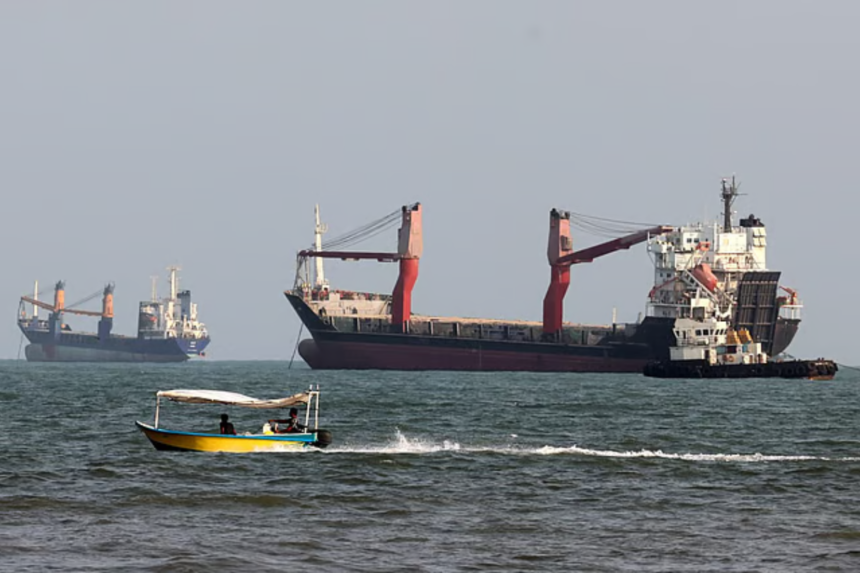
Two UAE tankers were attacked in the Strait of Hormuz as airlines changed schedules and shipping traffic remained low.
Dubai: The Strait of Hormuz remained at the centre of regional developments on Friday as attacks on two UAE tankers triggered condemnation from Arab states, while shipping traffic stayed well below normal levels.
Airlines also continued to revise schedules across the Gulf. UAE residents travelling this weekend have been advised to check flight status before leaving for the airport and allow extra time for possible delays.
Here are the key developments UAE residents should know.
UAE tankers attacked as Arab states condemn escalation
ADNOC confirmed that two of its vessels were attacked while transiting the Strait of Hormuz on Thursday evening. No injuries were reported, and the situation was brought under control.
Saudi Arabia held Iran responsible for the consequences of continued attacks, describing them as a serious escalation and a violation of international rules protecting commercial navigation.
The Arab League and GCC also condemned the attacks. Qatar and Jordan issued similar statements, while Arab Parliament President Mohammed Ahmed Al Yamahi expressed solidarity with the UAE and support for measures taken to protect its security and citizens.
Shipping traffic remains far below normal
Maritime intelligence firm Kpler said only 13 vessels crossed the Strait of Hormuz on Thursday, compared with nine the previous day. Nine vessels used an Iranian-approved route despite US warnings, while four travelled with their tracking transponders switched off.
The UK Maritime Trade Operations agency also reported that a tanker was struck by a drone while travelling outbound through the strait. The vessel suffered minor damage, while its crew remained safe. No environmental impact was reported.
Authorities have urged vessels operating in the area to exercise caution as concerns over maritime security and pollution continue to grow.
UAE flight schedules remain under review
Airlines continue to adjust services across the region, although major UAE airports remain operational.
Etihad Airways said flights EY643 and EY644 between Abu Dhabi and Bahrain were operating as scheduled. Several other Bahrain services have been cancelled through August 21, with affected passengers being offered alternative arrangements.
Emirates said passengers should check flight status before travelling. For affected Dubai-bound passengers, the airline has allowed changes to travel dates without a change fee under measures introduced on August 10, although fare and tax differences may apply.
Air Arabia has also cancelled several services between Sharjah, Abu Dhabi, Bahrain, Kuwait and Doha.
flydubai said flights to Kuwait, Bahrain and Saudi Arabia were operating as scheduled. Passengers departing from Dubai have been advised to arrive at least four hours before departure during the busy summer period.
Several international airlines have also suspended or reduced services to parts of the region.
The European Union Aviation Safety Agency has extended its conflict-zone advisory covering Gulf airspace until August 31, citing risks associated with missile and drone activity.
Travelling to India this weekend?
Passengers flying to India should also expect additional time at airports because of heightened security measures for the country’s Independence Day celebrations on August 15.
Airports in Delhi, Mumbai, Bengaluru, Kochi and Thiruvananthapuram have advised passengers to arrive early. Air India, IndiGo and SpiceJet have issued similar warnings about longer screening and check-in times.
International travellers arriving in India should also check the latest requirements before departure, including updates to the Air Suvidha portal.
Oil and energy markets remain in focus
Oil prices moved higher on Friday as markets continued to assess the impact of disruptions around the Strait of Hormuz.
The International Energy Agency has warned that restoring normal traffic through the strait is becoming increasingly important as global oil stockpiles decline.
Iraq provided a relatively positive development, with Oil Minister Bassem Mohammed Khudair saying the country’s exports had averaged around 2 million barrels per day since the beginning of August.
US military losses under Audit
The Washington Post reported that the US has lost at least 45 MQ-9 Reaper drones since the conflict began on February 28. The losses represent a significant portion of the country’s operational fleet.
Not all of the drones were brought down by hostile action. Some were reportedly lost after communication links with operators were disrupted.
Several drones were reportedly shot down near the Strait of Hormuz, adding to concerns over the growing risks faced by US forces operating in the region.
Attention is also turning to conditions aboard the USS Abraham Lincoln, which has been deployed in the region for several months and is expected to be replaced by the USS George Washington.
What UAE travellers should do?
Passengers travelling from the UAE should:
- Check their flight status before leaving home and again before travelling to the airport.
- Complete online check-in where available.
- Arrive at least three hours before departure, or four hours for flydubai flights from Dubai.
- Allow additional time for traffic, check-in, security and immigration.
- Keep passports, identification and boarding documents readily accessible.
- Ensure their contact details are updated with the airline.
- Remain prepared for last-minute schedule changes.
With maritime traffic still severely restricted and regional airlines continuing to adjust operations, travellers should rely on the latest airline and airport updates rather than assuming their original flight schedule will remain unchanged.
Read more news and follow us on Instagarm
Vessels are seen in the Strait of Hormuz, off the port city of Bandar Abbas in southern Iran on August 10, 2026.AFP-ATTA KENARE