


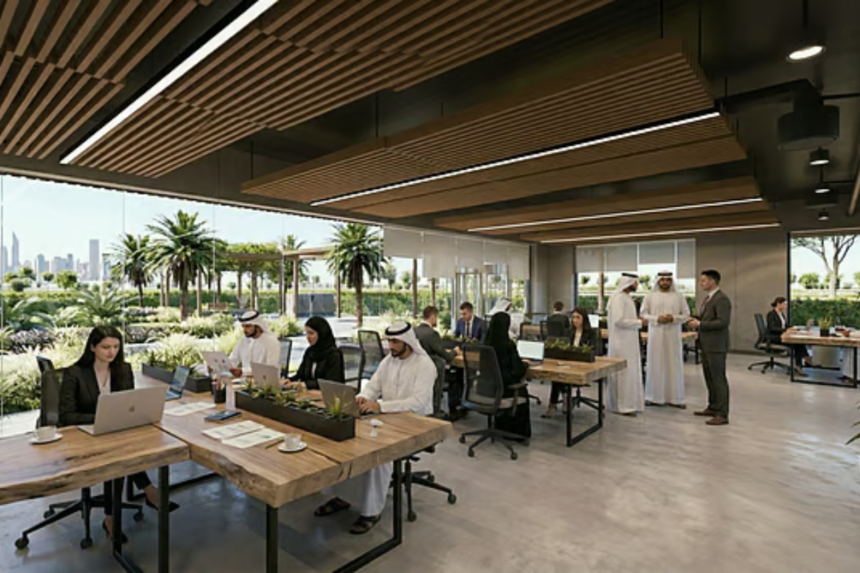
Dubai has introduced the “Dubai Work from Park” initiative, a shift that turns public parks into tech-enabled work environments. Announced by Dubai Municipality, the move expands the city’s flexible work model beyond offices and hotels into open, nature-driven spaces.
The initiative reframes parks as multi-functional urban assets that combine productivity, leisure, and community interaction. It reflects a deliberate push to align infrastructure with evolving work patterns.
A New Model for Work, Built Inside Nature
The Dubai Work from Park initiative creates flexible work zones designed for entrepreneurs, freelancers, SMEs, and remote professionals. These spaces integrate digital connectivity with natural surroundings, offering an alternative to conventional office settings.
The model positions parks as active contributors to economic productivity while preserving their recreational role. It builds an environment where work does not compete with life but coexists within it.
This approach aligns with long-term frameworks such as the Dubai Urban Plan 2040 and supports broader economic goals under the Dubai Economic Agenda D33.
Partnerships Power Infrastructure and Operations
To execute the Dubai Work from Park initiative, Dubai Municipality has partnered with Group AMANA and Letswork through formal agreements.
Group AMANA leads the construction and infrastructure development using modular systems, while Letswork manages access and operations through its digital platform. This structure enables scalable deployment across multiple parks.
The collaboration introduces workspaces such as hot desks, event zones, podcast studios, and creative production facilities, expanding beyond basic seating into full-service environments.
First Location Set at Al Barsha Pond Park
The first site under the Dubai Work from Park initiative will open in May 2026 at Al Barsha Pond Park.
This flagship location will feature modular workspaces built to high sustainability standards and integrated into the park’s natural layout. Additional locations will follow across the emirate, extending the concept into a city-wide network.
Modular Construction Enables Speed and Sustainability
The project uses advanced modular construction through Group AMANA’s DuBox system. Units are built off-site and assembled on location, reducing construction time and environmental impact.
This method improves efficiency, lowers waste, and allows flexible design adjustments. It also ensures that workspaces can evolve based on user demand without disrupting park ecosystems.
Focus on Creators, Entrepreneurs, and Community
The Dubai Work from Park initiative places strong emphasis on creative professionals and emerging businesses. Dedicated spaces for content creation, including podcast studios, support Dubai’s expanding creator economy.
The programme also includes workshops, educational sessions, and collaborative events aimed at skill development and innovation. These elements extend the initiative beyond infrastructure into ecosystem building.
Public-Private Model Expands Economic Opportunity
The initiative operates under a structured public-private partnership model. This framework opens new channels for private sector participation while encouraging investment in urban infrastructure.
Dubai Municipality positions this approach as part of a broader effort to enhance the quality of life, support economic activity, and strengthen social engagement.
A Shift in How Cities Define Workspaces
The Dubai Work from Park initiative signals a structural change in how cities design work environments. It moves away from fixed offices toward distributed, experience-driven spaces.
By merging productivity with open environments, Dubai advances a model where work adapts to life, not the other way around.
The initiative introduces flexible work environments within parks, positioning them as more vibrant, attractive, and high-quality destinations that enhance quality of life.
Supplied