



Strong Growth Outlook
Shell plc said global demand for liquefied natural gas will grow strongly over the next two decades, even as overall natural gas consumption begins to level off in some developed markets.
Specifically, the company projects LNG demand will rise by 54 to 68 percent by 2040, reaching between 650 and 710 million metric tons per year, up from 422 million metric tons in 2025.
Looking further ahead, Shell has extended its outlook to 2050, forecasting demand in a range of 610 to 780 million metric tons annually, reflecting both long-term growth potential and ongoing uncertainty in global energy systems.
Asia Driving Demand
The growth will be driven primarily by Asia, where rising industrial demand, rapid urbanisation, and efforts to shift away from coal are increasing reliance on LNG. As a result, Shell plc estimates the region will account for around 70 percent of global LNG demand growth through 2040, reinforcing its role as the main driver of future energy consumption.
At the same time, LNG is set to contribute more than half of global natural gas demand growth, further highlighting its expanding role in the global energy mix.
LNG’s Role in Energy Transition
Despite expectations that gas demand has already peaked in regions such as Europe and Japan and may peak globally in the 2030s, Shell plc continues to position LNG as a key transition fuel. The company argues that LNG offers reliability and flexibility for energy systems that increasingly rely on renewables but still require a stable and consistent supply.
Geopolitical and Market Risks
However, Shell also acknowledged that its outlook remains uncertain, particularly due to geopolitical disruptions such as the ongoing Iran conflict, which has affected global oil and gas trade flows. In addition, price volatility and supply chain disruptions could reshape demand patterns in the years ahead.
Investor Pressure
The company’s LNG strategy has also faced scrutiny from investors focused on climate commitments. At its 2025 annual general meeting, a shareholder resolution backed by investors managing $86 billion in assets received around 21 percent support, calling for greater clarity on how LNG growth aligns with net-zero targets by 2050. Critics argue that rising LNG investment may face increasing competition from renewable energy, particularly as costs decline and policy support strengthens.
Long-Term Position
Shell maintains that LNG will remain a critical component of the global energy system, particularly in emerging markets where energy demand continues to rise, and infrastructure for alternatives is still developing.
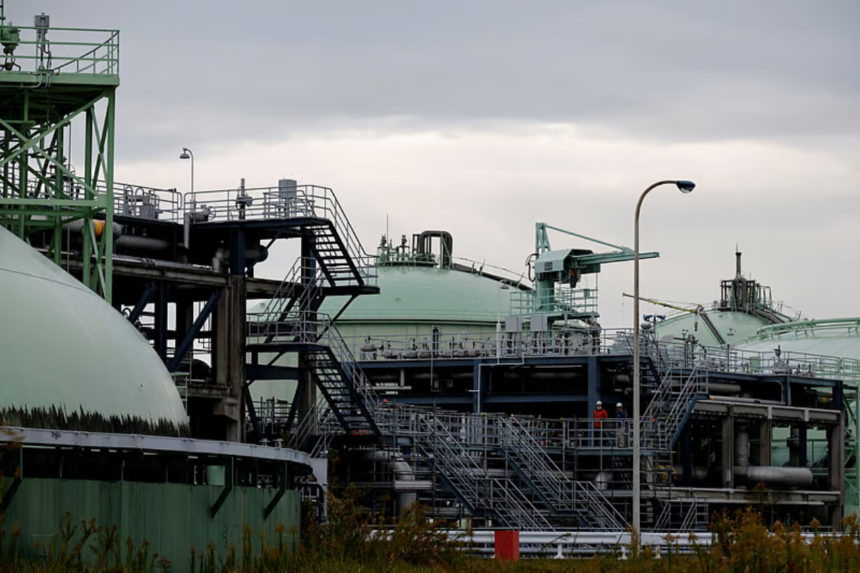
LNG tanks are pictured at Tokyo Gas’s LNG terminal in Sodegaura, Chiba Prefecture, Japan..
Photo: Reuters file, Source: KT