



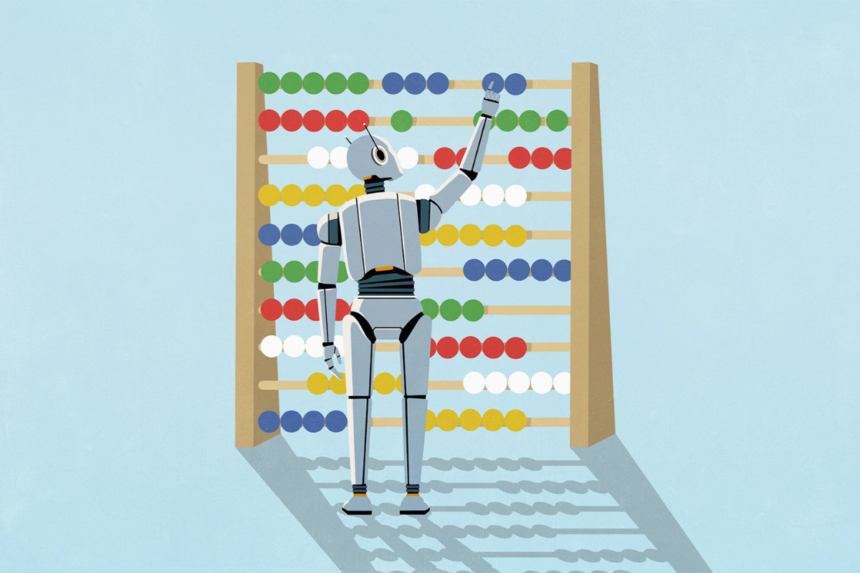
AI may provide instant answers, but its growing role in decision-making is intensifying concerns over accountability, oversight, and critical thinking.
Artificial intelligence is no longer sitting on the edge of business operations. It is moving directly into decision-making itself.
From hiring and budgeting to product development and workforce planning, AI systems are increasingly shaping how companies operate. The appeal is obvious. AI can process information faster than humans, identify patterns across massive datasets, and deliver recommendations almost instantly.
But a deeper problem is beginning to emerge.
Many executives are no longer using AI simply as a support tool. They are beginning to trust it more than human judgment.
That shift may become one of the most important leadership risks of the next decade.
When Efficiency Starts Replacing Judgment
A recent SAP survey revealed that 74% of C-suite executives trust AI-generated outputs more than human advice. Nearly half said they would allow AI to override decisions they had already made.
That changes the role of leadership itself.
There is a major difference between using AI to improve decisions and allowing AI to make decisions on your behalf. One strengthens human capability. The other gradually weakens it.
This pattern is not entirely new. Businesses have repeatedly adopted technologies expecting automatic transformation, only to realize later that tools alone do not create better outcomes.
The same thing happened with early cloud migration strategies, digital transformation projects, and even agile frameworks. Companies implemented systems without fully adapting to how people think, operate, or make decisions.
AI now risks following the same path, but with far deeper consequences because it directly affects reasoning itself.
The Cognitive Cost of Over-Reliance
The concern is not theoretical anymore.
Research from the MIT Media Lab found that heavy reliance on AI during cognitively intensive tasks reduced cognitive engagement. Participants showed weaker recall and lower understanding of the work they had completed with AI assistance.
The troubling part is that the effect remained even after the tools were removed.
In simple terms, people may slowly lose certain mental muscles when AI continuously performs the reasoning for them.
That becomes especially dangerous inside leadership roles where judgment, uncertainty management, and strategic thinking are central responsibilities.
Executives are not paid merely to produce fast answers. They are expected to navigate ambiguity, balance competing priorities, and make decisions that reflect culture, ethics, long-term goals, and human consequences.
AI can process data. It cannot fully understand context.
Leadership Is Not a Spreadsheet Problem
One of the biggest misconceptions surrounding AI is the idea that leadership is simply an optimisation exercise. In reality, it demands trust, credibility, emotional intelligence, timing, communication, and accountability, qualities that cannot be outsourced to algorithms without weakening leadership at its core.
While companies may gain speed by relying heavily on AI-driven recommendations, speed without judgment often creates fragility rather than strength.
Over time, leaders who consistently defer to AI risk losing the very instincts that made them effective in the first place.
This creates a dangerous loop:
. AI becomes more trusted because leaders rely on it more.
. Leaders rely on it more because their own confidence weakens over time.
. Human judgment slowly becomes secondary.
Eventually, the organization begins operating according to what the system optimizes rather than what leadership intentionally chooses.
The Real Risk Is Subtle
The greatest risk is not that AI suddenly becomes uncontrollable overnight, but something far quieter: the gradual erosion of independent thinking. When executives stop questioning outputs, challenging assumptions, or grappling with uncertainty themselves, organisations become more vulnerable, not less.
While AI systems rely on historical patterns and probabilities, leadership often demands breaking from those patterns, identifying hidden risks, and making decisions that data alone cannot fully justify. After all, some of the most important business decisions in history appeared irrational when they were first made.
Ultimately, AI is designed to optimise what already exists. Visionary leadership, by contrast, depends on seeing beyond it.
Where AI Actually Helps
The strongest organizations will likely be those that clearly define AI’s role rather than blindly handing over authority.
Used correctly, AI can become extremely valuable in three areas:
AI as a Neutral Analyst
AI can summarize large volumes of information quickly and identify patterns humans may miss. This improves situational awareness without removing human accountability.
AI as a Strategic Challenger
Leaders can use AI to stress-test assumptions, explore alternative scenarios, and identify weaknesses in plans before execution.
AI as an Operational Accelerator
AI can automate repetitive analysis and administrative tasks, allowing leaders to spend more time on strategic thinking, communication, and people management.
In all three cases, AI strengthens leadership rather than replacing it.
The Human Role Becomes More Important, Not Less
Ironically, the more advanced AI becomes, the more valuable strong human judgment may become.
Organizations will increasingly need leaders capable of:
. Interpreting nuance
. Understanding human behavior
. Managing uncertainty
. Taking responsibility under pressure
. Making ethical trade-offs
. Communicating difficult decisions clearly
Technology can support leadership, but it cannot carry its moral weight; those responsibilities cannot be delegated to software and must ultimately remain with humans.
Source: INC
Illustration: Getty Images