



New military action increases tensions in the Gulf despite a ceasefire.
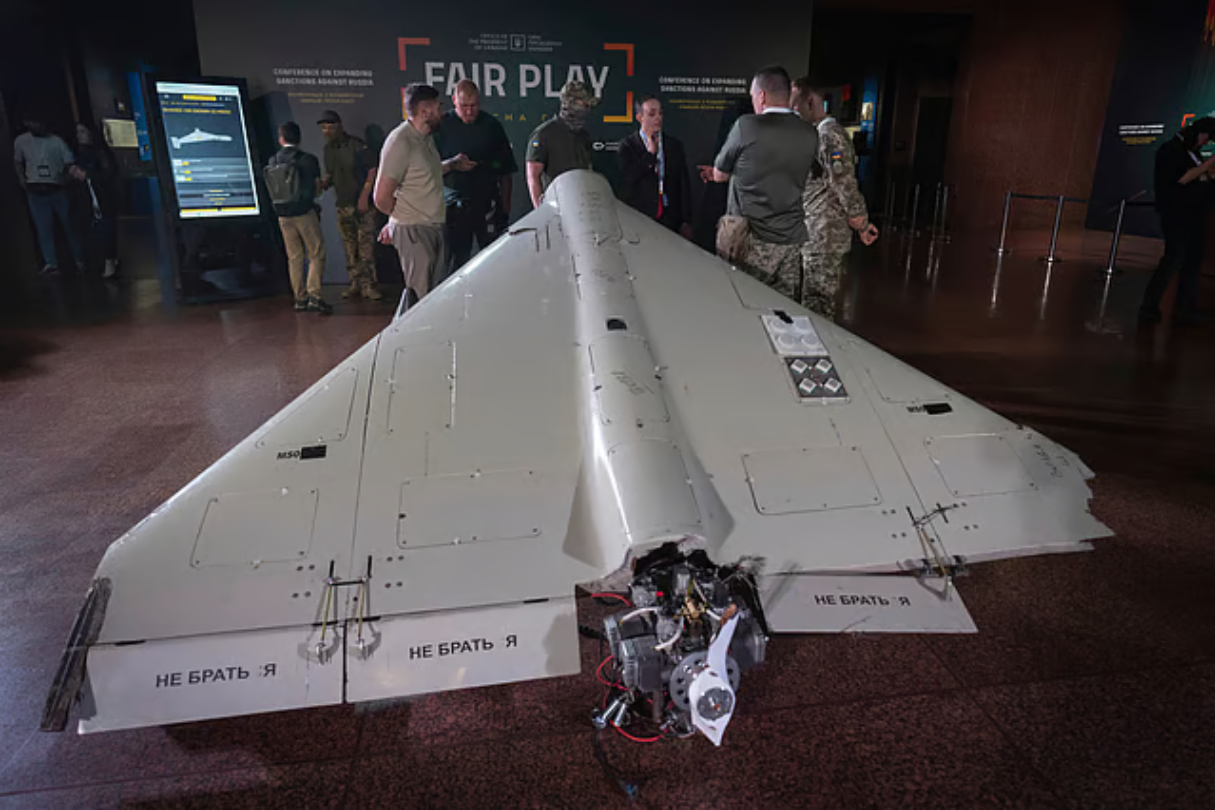
Tensions between the United States and Iran intensified once again after US Central Command (CENTCOM) announced that American forces shot down four Iranian one-way attack drones near the Strait of Hormuz and conducted strikes on Iranian coastal radar installations.
The latest military exchange highlights the fragile nature of the current ceasefire and underscores how quickly security conditions can deteriorate in one of the world’s most strategically important waterways.
While no casualties were immediately reported, the incident has renewed concerns about regional stability, global energy markets, and the risk of a broader confrontation in the Gulf.
US Says Drones Threatened Maritime Traffic
According to a statement released by US Central Command, the four drones were intercepted after being identified as a direct threat to maritime traffic operating near the Strait of Hormuz.
CENTCOM described the drones as one-way attack systems heading toward a critical international shipping corridor used by commercial vessels transporting energy supplies and other goods.
American officials said the operation was carried out to protect maritime security and prevent potential disruptions to commercial navigation.
The US military has increasingly emphasized freedom of navigation in the region, particularly as tensions with Iran have grown in recent months.
Radar Sites Targeted in Follow-Up Strikes
Following the drone interceptions, US forces launched strikes against radar installations located in Goruk and on Iran’s Qeshm Island.
According to CENTCOM, the radar systems were targeted to reduce the risk of further attacks and enhance the protection of maritime traffic moving through the region.
Military planners often view surveillance and radar infrastructure as critical components of a country’s defensive network. Such systems help track aircraft, ships, and drones while providing early warning capabilities during military operations.
By targeting these sites, US forces aimed to degrade Iran’s ability to monitor and coordinate future operations in the area.
CENTCOM stated that American forces remain prepared to respond to any actions it considers threats to regional security.
Why the Strait of Hormuz Matters
The Strait of Hormuz remains one of the most important maritime chokepoints in the world.
Located between the Arabian Gulf and the Gulf of Oman, the narrow waterway serves as a critical passage for global energy exports. Approximately one-fifth of the world’s seaborne crude oil shipments move through the strait every day.
Any disruption to shipping activity in the area can have immediate consequences for oil prices, freight costs, and global supply chains.
Because of its strategic importance, the Strait of Hormuz has frequently been at the center of geopolitical tensions involving Iran, Gulf nations, and international military forces.
Over the years, Iran has repeatedly warned that it could restrict access to the waterway in response to sanctions, military pressure, or perceived threats to its national security.
A Ceasefire Under Increasing Pressure
The latest confrontation comes despite an existing ceasefire between the United States and Iran.
Recent weeks have seen both sides accuse one another of violating the agreement through military maneuvers, surveillance operations, and regional deployments.
Earlier on Friday, CENTCOM rejected Iranian claims that warning shots had been fired at US naval vessels, describing the allegations as inaccurate and asserting that such actions would themselves violate ceasefire commitments.
These conflicting narratives illustrate the deep mistrust that continues to characterize relations between Washington and Tehran.
Even when large-scale hostilities are temporarily paused, military activity in the Gulf remains intense, creating an environment where misunderstandings or isolated incidents can escalate rapidly.
Ongoing Maritime Security Operations
The United States has maintained an extensive military presence across the Gulf and Arabian Sea, conducting surveillance missions, naval patrols, and maritime security operations.
American forces have also worked alongside regional partners to monitor shipping routes and respond to threats affecting commercial vessels.
In recent months, naval operations have intensified as part of broader efforts to enforce restrictions on Iranian trade and maritime activity.
CENTCOM has continued deploying naval assets throughout the region, including amphibious assault ships, destroyers, surveillance aircraft, and missile defense systems.
Officials say these deployments are intended to safeguard international shipping and reassure regional allies amid growing uncertainty.
Economic Implications Beyond the Battlefield
Although the latest incident was military in nature, its implications extend well beyond security concerns.
Global energy markets remain highly sensitive to developments in the Strait of Hormuz because of the route’s importance for oil exports from Gulf producers.
Even limited military exchanges can trigger volatility in energy prices, influence investor sentiment, and raise concerns about supply disruptions.
Shipping companies, insurers, and commodity traders closely monitor activity in the region because prolonged instability can increase transportation costs and complicate trade flows.
For economies heavily dependent on imported energy, sustained tensions in the Gulf can have ripple effects across multiple sectors.
A Delicate Situation Going Forward
The interception of four Iranian drones and the subsequent strikes on radar installations demonstrate how fragile the current security environment remains.
While both Washington and Tehran continue to avoid a full-scale military confrontation, repeated incidents are increasing the risk of miscalculation.
Military analysts note that every encounter provides both sides with valuable intelligence about capabilities, tactics, and defensive systems, while simultaneously increasing political pressure for retaliation.
As diplomatic efforts continue alongside military posturing, the Strait of Hormuz remains a focal point where regional security, global commerce, and geopolitical rivalry intersect.
For now, the immediate crisis appears contained. However, the latest exchange serves as another reminder that tensions between the United States and Iran remain unresolved, and that even a brief military incident in the Gulf can carry consequences far beyond the region.
A damaged Iranian-made drone,
AP/ source: Gulf News
Read more news, and follow us on Instagram