


The meeting underscored US-Israel coordination on Iran, despite recent differences over military strategy.
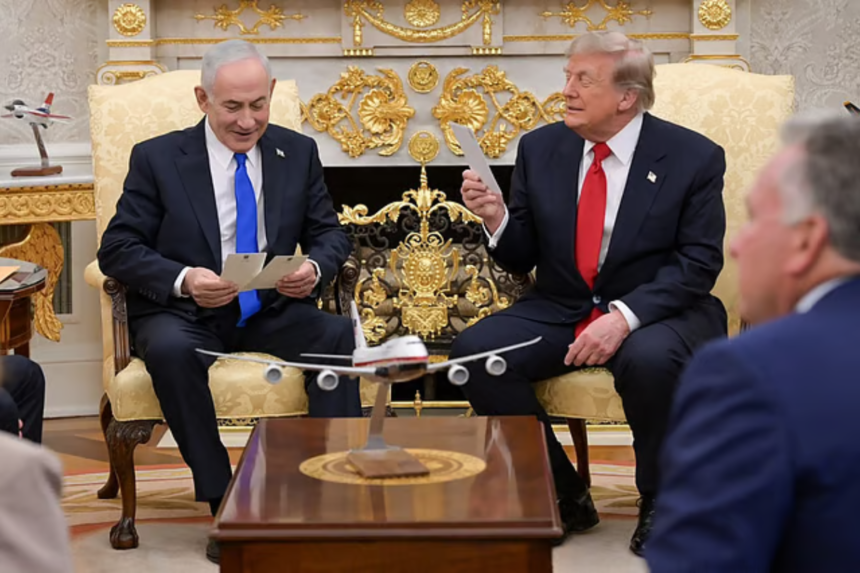
Washington: Israeli Prime Minister Benjamin Netanyahu met US President Donald Trump at the White House on Tuesday for their first face-to-face talks since the Iran war began, with discussions centred on Iran’s nuclear programme, regional security, and efforts to reinforce coordination between the two allies.
The closed-door meeting lasted around 90 minutes, with the White House describing the talks as “positive and productive.”
Following the meeting, Netanyahu said the leaders shared a common objective of preventing Iran from acquiring nuclear weapons.
“It was one of the best conversations I’ve ever had with the president of the United States,” Netanyahu said in a video statement, adding that the discussions focused on ensuring Iran does not develop nuclear weapons.
Iran Dominates Discussions
Iran remained the central issue during the meeting.
The conflict began in late February after joint US-Israeli military strikes, although recent weeks have seen a pause in direct fighting as Washington pursues diplomatic efforts with Tehran.
While Israel has not participated in the latest exchanges between the United States and Iran following the collapse of an April ceasefire, both governments continue to view Iran’s nuclear ambitions and regional influence as key security concerns.
The meeting underscored continued strategic cooperation, despite recent public differences over how the military campaign should proceed.
Repairing Public Differences
The talks also served to ease tensions that had emerged between the two leaders earlier this year.
Relations came under strain during negotiations over an Iran ceasefire in April, when Trump publicly criticised Netanyahu, later describing him as “a very difficult guy” in an interview.
Netanyahu dismissed those exchanges as tactical disagreements, maintaining that both governments remained aligned on the broader objectives of preventing Iran from strengthening its military capabilities.
According to analysts, the White House meeting was intended to demonstrate continued unity between Washington and Jerusalem despite differences over military strategy and the pace of diplomacy.
Regional Security on the Agenda
Beyond Iran, the leaders were expected to discuss several broader regional issues.
These included the implementation of the US-backed Israel-Lebanon framework agreement signed last month, which has faced challenges during its rollout.
The humanitarian crisis in Gaza and the slow progress of reconstruction efforts were also expected to feature in the discussions. However, analysts believe the Trump administration currently places greater emphasis on Iran and wider regional stability.
Abraham Accords Remain a Priority
Another topic expected to receive attention was the expansion of the Abraham Accords. These US-brokered agreements established diplomatic relations between Israel and several Arab states during Trump’s first term.
The accords led to the normalisation of relations between Israel and the United Arab Emirates, Bahrain, and later Morocco. Expanding the framework remains a key objective of the Trump administration’s Middle East strategy.
Some observers also suggested the discussions could include Israel’s military presence in Lebanon, Syria, and Gaza as regional security dynamics continue to evolve.
Strategic Partnership Remains Intact
Israeli Ambassador to the United Nations Danny Danon described Netanyahu’s visit as taking place at a critical moment for the Middle East, arguing that Iran continues to challenge regional stability.
Meanwhile, international relations expert Yonatan Freeman of the Hebrew University of Jerusalem said the primary purpose of the meeting was to demonstrate that there is no major rupture in US-Israel relations.
According to Freeman, while the two leaders may differ over the timing and intensity of military operations, they remain closely aligned on their long-term strategic goals for the region.
Read more news and follow us on Instagram
This handout picture released by the Israeli Government Press Office (GPO) shows Israel’s Prime Minister Benjamin Netanyahu (L) meeting with US President Donald Trump in the Oval Office of the White House in Washington DC, on July 28, 2026.
AFP