



Why the ceasefire is fraying and what could happen next.
Just months after a fragile ceasefire appeared to reduce tensions between the United States and Iran, the region is once again facing the possibility of a wider conflict.
A series of military exchanges across the Gulf, culminating in a deadly drone strike on Kuwait International Airport, has pushed relations between Washington and Tehran back toward a dangerous crossroads. What began as disputes over maritime security and military operations near the Strait of Hormuz has evolved into a broader confrontation involving Gulf states, regional security alliances, and the growing conflict in Lebanon.
The latest developments raise a critical question: Is the ceasefire collapsing, or is this another phase in the long-running cycle of pressure, retaliation, and diplomacy that has defined US-Iran relations for decades?
A Ceasefire Under Growing Pressure
The ceasefire that emerged earlier this year was never a comprehensive peace agreement.
Instead, it functioned as a temporary framework designed to reduce direct military confrontation while creating space for negotiations around shipping security, regional stability, and the future of the Strait of Hormuz.
For several weeks, both sides avoided major escalations.
However, tensions gradually resurfaced as disagreements over maritime activity, sanctions enforcement, and military deployments intensified.
The situation deteriorated rapidly when the United States targeted a tanker it said was attempting to violate restrictions linked to Iranian exports. Iran responded by targeting another vessel, setting off a chain of military actions that quickly expanded beyond the original dispute.
Within days, military strikes, missile launches, and drone attacks had returned to the center of regional headlines.
Why Qeshm Island Became a Flashpoint
One of the most significant moments in the recent escalation was the reported US strike against facilities on Qeshm Island.
Located near the entrance to the Strait of Hormuz, Qeshm occupies a strategically important position within Iran’s defense network.
The island plays a major role in monitoring maritime activity through one of the world’s most important shipping corridors. Military installations, radar systems, surveillance infrastructure, and coastal defense assets located there help Iran maintain visibility over traffic moving through the Gulf.
For Tehran, any attack on Qeshm is viewed not simply as a military action but as a challenge to its broader ability to protect and influence activity around Hormuz.
That explains why the response from Iran was swift and forceful.
Iran’s Retaliation and Regional Fallout
Following the strike, Iran’s Islamic Revolutionary Guard Corps announced missile and drone attacks targeting US-linked military assets across the Gulf.
Iran described the operations as an initial response and warned that additional measures could follow if hostilities continued.
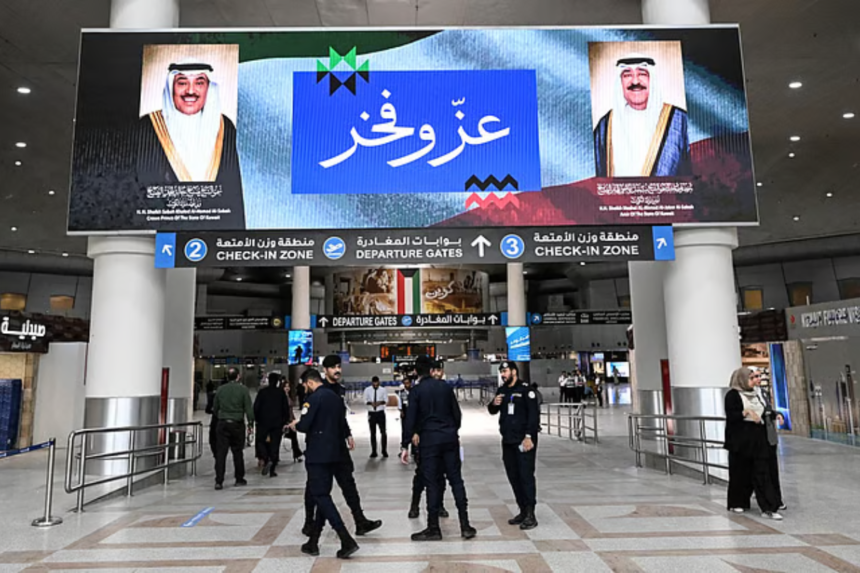
While several missiles and drones were intercepted, the conflict expanded beyond military installations when a drone strike reportedly hit Kuwait International Airport.
The attack caused casualties, damaged civilian infrastructure, and temporarily disrupted airport operations.
For Gulf countries, the incident highlighted a growing concern.
Many regional states host American military facilities while simultaneously attempting to avoid becoming direct participants in any confrontation between Washington and Tehran.
The latest violence demonstrates how difficult that balance is becoming.
The Strategic Importance of the Strait of Hormuz
At the center of the crisis remains the Strait of Hormuz.
The narrow waterway serves as one of the most critical energy corridors in the world, connecting Gulf oil and natural gas producers to international markets.
A significant share of global seaborne oil exports passes through the strait every day.
Any disruption can affect energy prices, shipping costs, insurance premiums, and global supply chains.
This reality explains why military activity around Hormuz attracts worldwide attention.
For the United States, maintaining freedom of navigation remains a core strategic objective.
For Iran, Hormuz represents one of its most important sources of regional leverage.
As long as disagreements over control, security, and access continue, the strait is likely to remain a central point of friction.
Why Lebanon Is Complicating Diplomacy
The latest crisis is no longer limited to Gulf security.
Lebanon has emerged as a major obstacle to diplomatic progress.
Iran increasingly argues that any lasting regional settlement must address Israel’s military operations against Hezbollah inside Lebanon.
From Tehran’s perspective, regional conflicts cannot be treated as isolated events. Iranian officials believe negotiations must reflect the broader security environment across the Middle East.
The United States and Israel reject that position.
Both continue to treat the Lebanon conflict and US-Iran negotiations as separate issues.
Yet events on the ground suggest those conflicts are becoming increasingly connected.
As military pressure grows in Lebanon, Iran’s willingness to compromise elsewhere appears to be diminishing.
That reality complicates efforts to preserve the ceasefire and advance negotiations.
Why the US Fifth Fleet Matters
Another recurring source of tension is the presence of the US Fifth Fleet in Bahrain.
The fleet plays a central role in protecting shipping lanes, supporting regional allies, and monitoring maritime activity throughout the Gulf, Arabian Sea, and surrounding waters.
For Washington, the fleet is a cornerstone of regional security architecture.
For Iran, it represents a symbol of long-term American military influence near its borders.
This fundamental disagreement over military presence continues to shape strategic calculations on both sides.
Every escalation near the Gulf inevitably brings the fleet back into focus.
What Happens Next?
The immediate future remains uncertain.
Both Washington and Tehran continue to signal openness to negotiations while simultaneously engaging in military actions that increase the risk of further escalation.
History shows that US-Iran confrontations rarely follow a straight path. Periods of diplomacy are often interrupted by military incidents, while moments of crisis frequently give way to renewed negotiations.
What makes the current situation particularly concerning is the growing number of actors involved.
The conflict now touches Gulf states, international shipping routes, energy markets, Lebanon, Israel, and global diplomatic efforts.
Each additional front increases the potential for miscalculation.
A Region at a Critical Moment
The latest military exchanges demonstrate how fragile the ceasefire has become.
What began as efforts to stabilize Hormuz and reduce tensions has evolved into a broader struggle involving regional security, strategic influence, and competing visions for the future of the Middle East.
For now, diplomacy remains alive, but it is operating under increasing pressure.
The coming weeks will likely determine whether the current crisis returns to negotiation tables or moves toward a more dangerous phase of confrontation.
As military activity intensifies and political positions harden, the stakes extend far beyond Washington and Tehran.
They now affect the security of the Gulf, the stability of global energy markets, and the future of one of the world’s most strategically important regions.
Source: Gulf News
Security officers were at the Kuwait International Airport on June 1, 2026, when the airport resumed operations following a phased reopening plan.
AFP
With AP inputs
Read more news, and follow us on Instagram