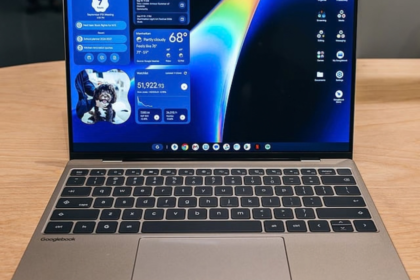




The upgraded assistant may reshape expectations and challenge apps built around similar features.
Every year, Apple introduces new features that influence how people use technology. Most announcements generate excitement among consumers. Some create anxiety among competitors.
Apple’s latest unveiling of Siri AI falls firmly into the second category.
During its recent developer conference, Apple showcased a rebuilt version of Siri that can understand context, carry on natural conversations, perform actions across applications, retrieve information buried inside emails, and help users complete complex tasks without requiring step-by-step instructions.
For consumers, these capabilities represent a major leap forward.
For many startups, they may represent something else entirely: a warning.
Apple’s Most Important AI Move Yet
For years, Apple appeared to lag behind competitors in artificial intelligence.
While companies such as OpenAI, Google, Anthropic, and Microsoft aggressively rolled out AI products, Apple moved cautiously. Critics questioned whether the company was falling behind in one of the most important technological shifts in decades.
The new Siri suggests Apple was not ignoring AI. It was waiting.
Rather than launching standalone AI applications, Apple has integrated intelligence directly into the operating system itself.
That distinction matters. Consumers no longer need separate tools for many everyday AI tasks. The assistant is built into the devices they already use.
Writing assistance appears wherever text is entered. Calendar events can be created from natural language prompts. Automations can be built through simple descriptions. Safari monitors websites and organizes information automatically. Photos can be edited with AI-powered enhancements without requiring additional software.
The strategy is familiar.
Apple rarely tries to be first. Instead, it waits until user behavior becomes mainstream and then integrates those capabilities directly into the ecosystem.
The Return of “Sherlocking”
Developers have a term for what happens when Apple incorporates features that were previously offered by third-party applications.
They call it “Sherlocking.”
The term dates back to 2002 when Apple introduced features inside its Sherlock search tool that closely resembled capabilities offered by a popular third-party application called Watson.
The result was devastating for Watson’s developer.
Since then, Apple has repeated the pattern numerous times.
Password managers, note-taking apps, screen-time tools, journaling applications, and other categories have all faced competition from native Apple features.
The difference this time is scale. Apple’s ecosystem now spans more than 2.5 billion active devices worldwide.
When Apple introduces a new feature, it does not enter the market gradually. It instantly appears across one of the largest technology platforms ever created.
Why Some Startups Should Be Concerned
The startups most vulnerable to Apple’s AI expansion are not necessarily the most innovative ones.
They are often the companies whose primary value proposition revolves around convenience.
Many consumer AI products have built businesses around simplifying tasks such as writing, summarization, scheduling, productivity, and basic automation.
The challenge is that Siri AI now performs many of these same functions without requiring users to download anything.
A consumer who can generate text, organize information, create shortcuts, summarize content, and manage daily workflows directly through Apple’s operating system may see little reason to pay for additional tools.
Convenience becomes difficult to monetize when the operating system provides similar functionality at no extra cost.
This dynamic has historically been difficult for startups to overcome.
The Real Threat Is Distribution
Technology founders often assume that success comes down to building the best product. In reality, distribution often matters more. Apple’s advantage is not that its new Siri AI will outperform every specialised tool on the market. In many cases, it will not.
Many niche apps will continue to offer deeper functionality, greater customisation and more advanced workflows. The challenge is that most users never reach the point where those differences matter.
They simply use what is already in front of them. When a capable AI assistant is built into Spotlight, Safari, Photos, Mail, and the wider operating system, many consumers will not bother looking elsewhere. The built-in option becomes the default choice. History has repeatedly shown just how powerful default choices can be.
Who Is Most Likely to Survive
Not every startup faces the same risk.
The strongest companies often possess advantages Apple cannot easily replicate.
Enterprise software providers, for example, operate in environments involving compliance, security requirements, proprietary workflows, and industry-specific expertise.
Healthcare AI companies manage specialized medical knowledge and regulatory obligations.
Legal AI platforms understand contracts, case law, and compliance requirements.
Financial technology companies navigate complex regulations and proprietary datasets.
Apple is unlikely to pursue many of these specialized markets because they require a level of depth and responsibility that falls outside the scope of a consumer operating system.
The same principle applies to products built around unique communities, exclusive data, or deeply integrated workflows.
These businesses compete on expertise rather than convenience.
Lessons From Previous Survivors
Several companies have already demonstrated how to survive Apple’s expansion.
Password manager company 1Password continued growing despite Apple’s increasing investment in native password management tools. Instead of competing solely on storage, it expanded into enterprise security, team collaboration, and advanced authentication features.
Grammarly followed a similar path.
Rather than focusing exclusively on spelling and grammar correction, the company evolved into a broader communication platform serving businesses, teams, and enterprise customers.
These companies succeeded because they offered more than just a feature.
They built ecosystems, workflows, and business relationships that Apple could not easily replace.
The Future Belongs to Vertical AI
The arrival of Siri AI reinforces an important reality about the next phase of artificial intelligence.
Generic AI functionality is becoming a commodity.
Writing assistance, scheduling, summarization, and automation are increasingly available everywhere.
As these capabilities become embedded in operating systems, browsers, and productivity suites, their standalone value decreases.
The startups most likely to thrive are those solving specific problems for specific industries.
Vertical AI products focused on healthcare, law, finance, education, engineering, cybersecurity, and other specialized fields possess advantages that general-purpose assistants cannot easily replicate.
Their value comes from expertise, not access.
A Defining Moment for AI Startups
Apple’s new Siri is more than a product update. It signals that artificial intelligence is entering a new stage of maturity. The first wave of AI created opportunities by making powerful tools more accessible. The next wave may eliminate businesses built solely around that accessibility.
As Apple integrates AI more deeply into everyday computing, founders will be forced to answer a difficult question: If Apple offered a similar feature for free tomorrow, would customers still need your product?
The companies that can confidently answer yes will likely remain relevant. Those that cannot may discover that building a useful feature and building a durable business are two very different things.
Illustration: Inc.; Photo: Adobe Stock, Apple
Source: INC