


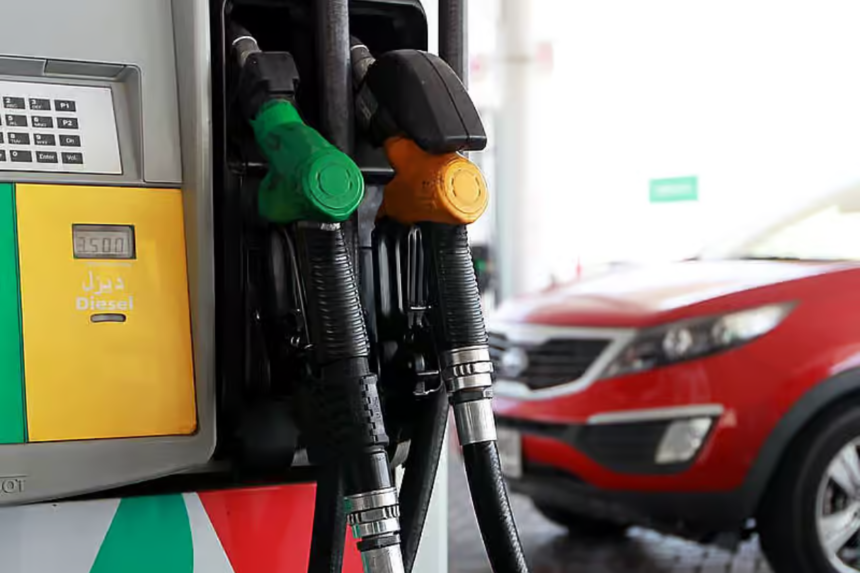
Petrol prices in the UAE have already risen nearly 50% since February, with June expected to bring another possible hike.
Motorists across the UAE could soon face another increase in petrol prices as global crude oil rates continue trading above the $100-a-barrel mark following disruptions linked to the Strait of Hormuz crisis.
The UAE’s fuel prices committee is expected to announce June rates later this week, and market conditions currently indicate a likely fourth straight monthly increase.
Petrol Prices Have Already Risen Nearly 50% Since February.
Fuel prices across the UAE have climbed sharply over recent months as geopolitical tensions disrupted global energy supply chains and pushed oil prices higher.
In May, Super 98 petrol was priced at Dh3.66 per litre, while Special 95 and E-Plus reached Dh3.55 and Dh3.48 respectively.
The increase becomes even more significant when compared to February prices, when Super 98 was selling at Dh2.45 per litre. That represents a jump of roughly 50 percent, or Dh1.21 per litre, within just three months.
Why Oil Prices Are Staying Elevated
Global crude markets have remained under pressure after the closure of the Strait of Hormuz during the US-Israel-Iran conflict disrupted oil shipments and heightened fears of supply shortages.
Brent crude averaged around $106 per barrel during May, compared to approximately $99 per barrel in April. Over the weekend, Brent closed near $103.5 a barrel, while West Texas Intermediate traded around $96.6.
The Strait of Hormuz remains one of the world’s most important energy transit routes, carrying a substantial share of global oil exports. Any disruption there immediately impacts energy markets worldwide.
UAE Fuel Prices Remain Below 2022 Record Highs
Although current petrol prices are rising rapidly, they remain below the historic peaks recorded in 2022 after the Russia-Ukraine war.
In July 2022, UAE fuel prices crossed Dh4 per litre for the first time in the country’s history. Super 98 reached Dh4.63 per litre, while Special 95 climbed to Dh4.52.
Still, the current upward trend is reviving concerns among households already dealing with rising living costs.
Rising Fuel Costs Affect Household Budgets
Monthly fuel price adjustments in the UAE directly affect household spending because petrol remains an essential recurring expense for most residents.
As fuel prices rise, motorists often spend a larger share of their monthly income on transportation, commuting, and delivery-related costs. Over time, higher fuel expenses can also influence prices across broader sectors of the economy.
Oil Prices Could Ease if US-Iran Relations Improve
Despite current pressure in the market, analysts say oil prices may soften if geopolitical tensions begin easing.
Rania Gule said any potential agreement between Washington and Tehran could place immediate downward pressure on crude prices by reducing geopolitical risk and increasing global oil supply.
“This would increase global supply and reduce the geopolitical risk premium that has supported prices in recent periods,” she said.
According to Gule, oil prices could initially decline between 4 percent and 8 percent following any official peace agreement between the United States and Iran.
Markets Remain Focused on Hormuz Developments
For now, however, global markets remain highly sensitive to developments surrounding the Strait of Hormuz and Middle East supply flows.
As long as uncertainty continues around shipping routes and regional stability, oil prices are likely to remain elevated, increasing the possibility of another fuel price hike across the UAE in June.
Source: KT