


Iranian police and Basij forces have been told to prepare for possible protests as rising fuel prices add to the country’s economic problems.
Iran’s security forces are preparing for possible renewed protests as worsening economic conditions, rising fuel costs and the impact of war put increasing pressure on households.
Dubai: Six months into the war, Iran is facing a challenge that cannot be addressed through missiles or air defences: growing economic frustration at home.
The country is dealing with high inflation, a sharply weaker rial, disrupted trade, sanctions and the economic consequences of the conflict. Annual inflation reached 66% in July, while food inflation climbed to 128%, according to Iran’s Statistical Centre.
President Masoud Pezeshkian has acknowledged the severity of the situation, saying Iran’s problems have multiplied while government income has fallen. He also said foreign trade had declined by 35% during the war.
There has been no new nationwide uprising so far. But Tehran is clearly preparing for the possibility that economic pressure could once again bring large numbers of people onto the streets.
Police Told to Prepare for Unrest
Iranian police commander Ahmad-Reza Radan has warned senior officers that issues including livelihoods, gasoline prices, unemployment and the wider economy could become triggers for unrest.
Radan said police should have plans ready for different scenarios and called for “preemptive and preventive measures” to prevent protests from developing.
He also instructed cyber and public-security police to monitor people accused of encouraging unrest online and called for the Basij militia to assist police operations.
The preparations reflect Iran’s experience with previous waves of demonstrations, particularly those sparked by economic hardship and fuel prices.
Why Fuel Prices Are So Sensitive in Iran
Iran’s subsidised fuel system has repeatedly become a source of political tension.
The government has indicated that the cheapest monthly gasoline quota will remain protected, while officials have discussed changes to additional subsidised fuel allocations and gradual price liberalisation.
That prospect is particularly sensitive because fuel prices were at the centre of the nationwide protests in 2019.
A sudden petrol-price increase that year triggered demonstrations across the country. Security forces responded with a major crackdown.
Iran has also experienced major protests in 2009, 2017-18 and 2022, although the causes and scale of each movement were different.
More recently, economic grievances contributed to protests that spread nationwide in January 2026 before authorities moved to suppress them.
A Veteran of Crackdowns Returns to the Basij
Tehran’s concerns are also reflected in changes within the security establishment.
Hossein Taeb, a hardline cleric and former intelligence chief, has been appointed commander of the Basij, the Islamic Revolutionary Guard Corps’ volunteer force that has repeatedly been deployed during periods of unrest.
Taeb previously commanded the Basij during the crackdown that followed the disputed 2009 presidential election. He later spent almost 13 years leading the Revolutionary Guard’s intelligence organisation.
His return to the organisation has been interpreted by analysts as another indication that Tehran wants to prevent economic frustration from developing into an organised political movement.
The Basij already maintains networks across neighbourhoods, government institutions and other parts of Iranian society.
Iran’s Economy Is Under Growing Pressure
Iran entered the current conflict with significant economic problems already in place.
The country was dealing with sanctions, high inflation, a weakening currency and energy shortages. The war has added damage to infrastructure, disruptions to trade and additional reconstruction costs.
The impact on households has been particularly severe.
Iran’s Statistical Centre reported annual inflation of 66% in July, while consumer prices were 87.9% higher than a year earlier. Food inflation reached 128%.
The rial’s decline has further reduced purchasing power, while the dollar value of wages has fallen despite increases in nominal salaries.
For ordinary Iranians, the combination of higher food prices, weaker purchasing power, unemployment concerns and potential fuel-price increases creates the kind of economic pressure that has previously triggered protests.
But Economic Pain Does Not Automatically Mean Revolution
The government’s concern should not be confused with evidence that another nationwide uprising is already underway.
Economic hardship can create anger, but turning that anger into a sustained protest movement requires organisation, communication and a willingness among large numbers of people to accept the risks of confronting the state.
Iran’s security apparatus has considerable experience suppressing protests and controlling dissent.
That may explain Tehran’s emphasis on prevention.
Rather than waiting for demonstrations to become large enough to threaten the government, authorities appear to be trying to identify potential flashpoints before they develop.
Can Economic Pressure Overcome Fear?
The Iranian leadership is becoming increasingly dominated by veteran figures from the military and security establishment as the conflict continues.
At the same time, President Pezeshkian has argued for restraint and suggested that ending the war could be preferable while Iran still has leverage.
That creates a difficult balance for Tehran.
The economic pressure created by sanctions, war and disrupted trade could increase public anger. But the government’s response has been to strengthen the institutions capable of containing that anger.
For now, there is no clear evidence of another nationwide uprising.
The warning from Iran’s police leadership nevertheless reveals what Tehran fears most: that fuel prices, unemployment, declining incomes and the rising cost of basic goods could turn economic frustration into organised street protests.
Source: Gulf News
Read more news and follow us on Instagarm.
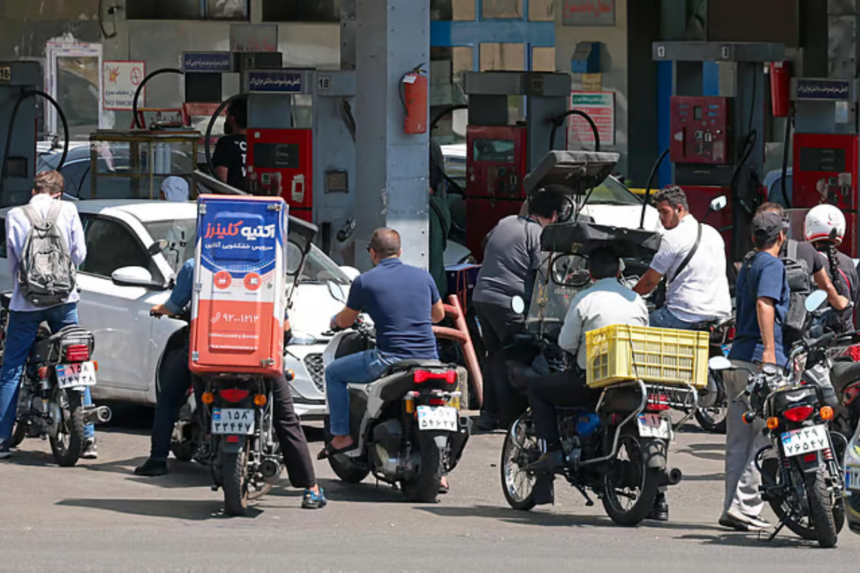
Motorists queue for fuel in Iran as economic pressure and uncertainty over petrol prices add to concerns about renewed public unrest.
AFP