



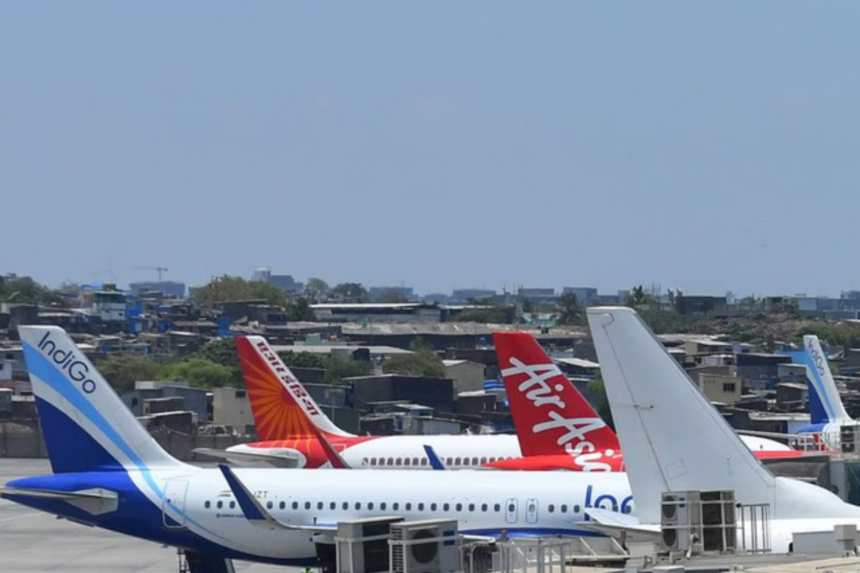
The latest reductions add pressure on travel demand between India and the UAE.
Travel between India and the UAE is becoming more challenging just as the summer holiday season reaches its peak.
Air India and IndiGo, which together account for nearly 90 percent of India’s domestic passenger traffic, have begun scaling back operations as soaring jet fuel prices continue to pressure airline economics. The latest round of reductions is expected to impact thousands of travelers across the UAE-India corridor, where demand traditionally surges during school holidays and family travel periods.
The growing wave of India-UAE flight cuts comes as airlines grapple with rising operating costs linked to disruptions in global energy markets following the Iran conflict and continued instability around the Strait of Hormuz.
Airlines Scale Back Operations
According to sources familiar with the matter, IndiGo has reduced approximately 7 to 10 percent of its planned domestic flights for June and July, while Air India has cut nearly 22 percent of its scheduled domestic services.
Although the reductions are primarily focused on domestic operations within India, the impact is likely to extend well beyond the country’s borders.
Many passengers traveling from Dubai, Abu Dhabi, and Sharjah rely on major Indian hubs such as Delhi and Mumbai to connect to smaller cities across India. With fewer domestic flights available, travelers may face longer layovers, reduced flexibility, and limited connection options.
Air India confirmed that it has temporarily rationalized operations on selected routes between June and August due to the sustained impact of rising fuel costs.
Why Fuel Prices Are Driving the Cuts
Fuel remains one of the largest expenses for any airline, accounting for as much as 40 percent of operating costs.
The recent spike in aviation turbine fuel prices has significantly increased pressure on carriers already dealing with operational challenges and competitive fare environments.
According to Air India officials, aviation fuel costs have climbed from roughly Rs 80,000 per kiloliter before the Iran conflict to more than Rs 100,000 per kiloliter.
Much of this increase has been linked to disruptions surrounding the Strait of Hormuz, one of the world’s most important energy transit routes. Concerns over supply security have pushed crude oil prices higher, creating a ripple effect across the aviation industry.
As a result, airlines are increasingly prioritizing profitability and operational efficiency over aggressive capacity expansion.
UAE Travelers Could Feel the Impact
The consequences of these India-UAE flight cuts are likely to be felt most strongly by expatriate families traveling during the busy summer season.
Reduced domestic capacity means fewer feeder flights connecting international passengers through major Indian airports. Travelers heading to regional destinations may find fewer available seats and longer journey times.
The impact extends beyond India-bound travel.
Many UAE residents regularly use Indian airports as affordable transit hubs for onward journeys to Europe, North America, and parts of Asia. As Air India continues to reduce several international services, some of those travel options may become less accessible.
The airline has already suspended Delhi-Chicago services and reduced frequencies on routes including San Francisco, Toronto, Vancouver, Paris, Singapore, Bangkok, and several other destinations.
IndiGo Faces Growing Pressure
IndiGo, India’s largest airline by market share, has also been forced to reassess its growth plans despite maintaining one of the world’s largest aircraft order books.
The carrier operates more than 2,200 flights daily across domestic and international networks. However, rising fuel prices, airport congestion, and broader operational constraints have pushed the airline to trim capacity in key areas.
The situation highlights a growing challenge for India’s aviation sector. Demand remains strong, but external factors such as energy costs and geopolitical disruptions continue to influence profitability and route planning.
Higher Fares May Persist Through Summer
Travel analysts believe ticket prices are likely to remain elevated throughout the summer travel season.
The combination of reduced seat capacity, strong seasonal demand, and higher fuel expenses creates conditions that typically support higher airfares. Popular UAE-India routes could see continued pricing pressure as airlines attempt to offset rising operational costs.
Some travelers may increasingly turn to Gulf carriers such as Emirates, Etihad Airways, and flydubai in search of more stable schedules and direct international connections.
However, these airlines are also facing higher fuel costs, meaning broader relief on ticket prices may remain limited.
Uncertainty Could Continue Beyond Summer
For Air India, the latest reductions also reflect wider financial pressures.
The airline recently reported annual losses exceeding $2 billion, impacted by rising fuel expenses, restrictions on Pakistani airspace, and currency-related challenges. The carrier says affected passengers will be offered alternative travel arrangements, date changes, or refunds where applicable.
Industry observers warn that additional schedule adjustments remain possible if tensions in the Middle East continue affecting oil markets and aviation supply chains.
For UAE travelers, that means uncertainty around fares, flight schedules, and seat availability may continue well beyond the summer holiday period.
As airlines adapt to rising costs and changing market conditions, the India-UAE travel corridor could face one of its most challenging periods in recent years.
Source: Gulf News
AFP