


The high-stakes cat-and-mouse game behind a drone shootdown and the risk of rapid military escalation.
When news broke that Iran had shot down a US surveillance drone over the Arabian Gulf, the headlines focused on the immediate military confrontation.
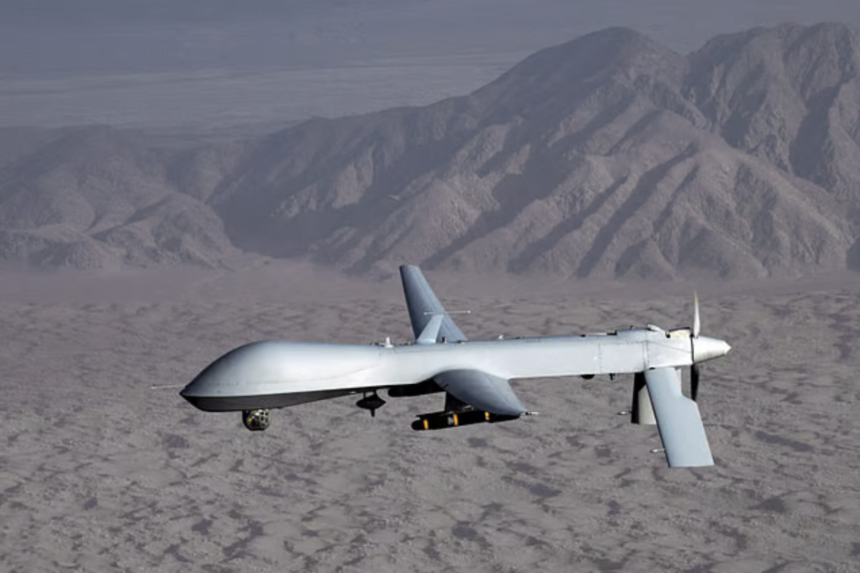
Iran’s Islamic Revolutionary Guard Corps (IRGC) announced that its air defenses had successfully intercepted an American MQ-1 Predator drone and claimed it had also engaged an F-35 stealth fighter jet. The United States denied the F-35 claim but confirmed the loss of the drone, stating that it had been operating over international waters.
On the surface, the incident appeared to be a familiar exchange in a region long defined by strategic rivalry.
In reality, it exposed a much larger military contest unfolding behind the scenes, one involving surveillance networks, radar systems, electronic warfare, air defenses, and the constant risk of escalation in one of the world’s most sensitive waterways.
Why Drone Operations Matter So Much
Modern military drones are far more than flying cameras.
Platforms such as the MQ-1 Predator are designed to gather intelligence, monitor activity, identify threats, and provide real-time information to commanders hundreds or even thousands of kilometers away.
In regions like the Strait of Hormuz, surveillance drones play a critical role because military planners rely on constant visibility.
The waterway serves as one of the most important energy corridors in the world, carrying a significant share of global oil exports. Any disruption has the potential to affect energy prices, shipping costs, and broader economic stability.
As a result, intelligence gathering becomes a strategic necessity.
The side that sees first often gains a significant advantage.
The Hidden Battle Behind a Drone Shootdown
When a drone enters an area monitored by advanced air-defense systems, a complex chain of events begins long before any missile is launched.
Radar stations search for unusual activity. Once an aircraft is detected, operators begin tracking its movement, speed, altitude, and direction. Information is then transmitted to command centers and missile batteries.
If military commanders decide to engage, surface-to-air missile systems can be activated.
From the outside, the result appears straightforward: a missile launches and a drone is destroyed.
But the engagement creates another problem for the defending side.
The moment radar systems become active, they begin broadcasting signals that can reveal their own location.
How Air Defenses Can Become Targets
Military analysts often describe active radar systems as electronic beacons.
To track aircraft, radars must emit radio signals. Those emissions can be detected by enemy aircraft, satellites, intelligence platforms, and electronic warfare systems.
In other words, every radar that searches for a target may also expose itself. This dynamic has shaped military doctrine for decades.
The United States and many allied militaries operate specialized weapons designed specifically to exploit this vulnerability. Anti-radiation missiles can detect radar emissions and follow those signals directly back to their source.
Rather than visually identifying a target, the missile follows the electronic signature.
This creates a dangerous dilemma for air-defense operators. If they leave radars inactive, they may struggle to detect incoming threats. If they activate them, they risk becoming targets themselves.
Why the Strait of Hormuz Changes Everything
Military incidents occur around the world every year.
The Strait of Hormuz is different because of its strategic importance.
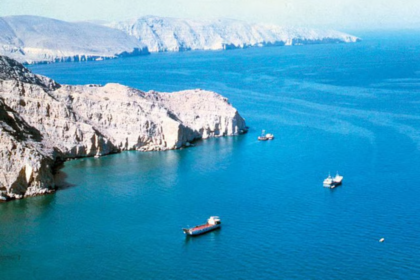
The narrow passage connects the Arabian Gulf with international shipping routes and serves as a vital artery for global energy supplies. Roughly one-fifth of the global seaborne oil trade passes through the strait.
Any military confrontation in the region quickly draws international attention because its consequences extend far beyond regional security. Even a single drone incident can trigger ripple effects across the global economy, driving up insurance costs, disrupting key shipping routes, and causing energy markets to react within hours.
What may begin as a localized military encounter can therefore carry significant implications for international trade, energy supplies, and global financial stability.
Iran’s Layered Defense Strategy
For years, Iran has invested heavily in creating a multi-layered defense network designed to monitor and protect its coastline.
This system combines radar stations, missile batteries, drones, naval assets, and surveillance infrastructure positioned across strategic locations overlooking the Gulf.
Rather than relying on a single defensive capability, Iran seeks to create overlapping layers that complicate military operations for potential adversaries.
The strategy aims to increase detection capability while improving response times during crises.
It also serves as a deterrent by demonstrating that Iranian forces can challenge surveillance and reconnaissance activities near their territory.
The US Military Presence in the Gulf
The United States maintains one of its largest overseas military footprints in the Middle East.
Aircraft carriers, destroyers, surveillance aircraft, fighter jets, missile-defense systems, and regional bases provide a substantial operational presence across the Gulf.
A significant portion of that presence is focused on protecting commercial shipping lanes, monitoring regional threats, and maintaining freedom of navigation through international waters.
Surveillance missions form a critical component of those operations.
The information gathered helps military planners understand developments across the region and respond quickly to emerging threats.
This explains why drone operations remain a central part of US strategy despite the risks involved.
Why Escalation Risks Remain High
Military experts often view drone shootdowns as far more significant than the loss of a single aircraft because every engagement generates valuable intelligence for both sides. Defenders learn whether their systems can successfully detect and engage targets, while attackers gain insight into how those defenses operate, which frequencies are used, how command networks respond, and where vulnerabilities may exist.
The information gathered can shape future military operations, strategic planning, and even diplomatic negotiations. The risk, however, lies in how quickly such incidents can escalate: a drone is shot down, retaliatory strikes follow, air-defense systems activate, and additional military assets are deployed, potentially turning a single encounter into a broader confrontation.
What begins as a limited incident can rapidly evolve into a broader confrontation.
A Strategic Contest Beyond the Battlefield
The latest drone incident highlights a larger reality.
The confrontation between Washington and Tehran is no longer limited to traditional military posturing. It increasingly involves intelligence gathering, surveillance networks, electronic warfare, maritime security, and technological competition.
Every radar activation, drone flight, missile launch, and military response forms part of a much larger strategic contest.
In the Strait of Hormuz, where military power intersects with global commerce, even a brief exchange can send signals far beyond the battlefield.
That is why the downing of a single drone matters. It is not simply an isolated military event.
It is a reminder of how quickly regional tensions can influence global security, international trade, and the stability of one of the world’s most important energy corridors.
An MQ-1 Predator drone flies over an undisclosed location in this handout by the US Air Force.
EPA, source: Gulf News
Read more news, and follow us on Instagram