


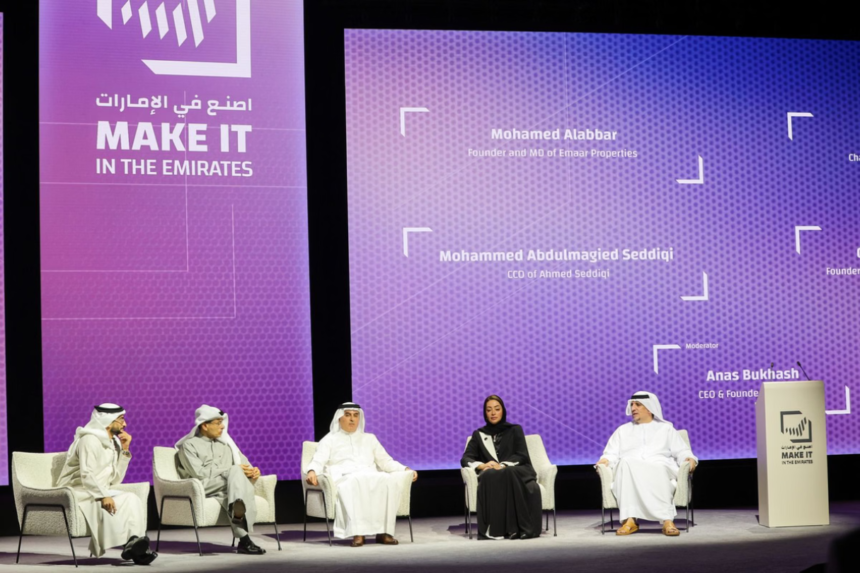
Mohamed Alabbar highlights the work ethic and consistency he sees in Indian talent, while stressing that constant risk checks keep companies prepared for uncertainty.
Work Ethic as a Strategic Advantage
At the Make it in the Emirates summit in Abu Dhabi, Mohamed Alabbar framed hiring not as a function of talent alone but as a reflection of operating culture. His remarks on preferring Indian talent were not positioned as a passing observation but as part of a broader philosophy centered on discipline, consistency, and responsiveness.
He described his own approach in simple terms. Average intelligence, but uncompromising work ethic. In his view, success is built less on innate ability and more on the willingness to sustain effort, track details, and remain engaged beyond standard expectations.
The reference to Indian professionals emerged within this framework. The emphasis was on reliability and availability, traits that become critical in businesses where execution speed and constant monitoring determine outcomes.
Beyond Effort: Systems, Risk, and Execution
Alabbar’s definition of hard work extends beyond long hours. It includes structured thinking and continuous evaluation. Studying opportunities, identifying where risk should be taken, and maintaining oversight across teams form the core of his operating model.
This approach reflects a system rather than an attitude. Teams are expected to remain close to their work, revisit assumptions, and adjust as conditions evolve. Hiring decisions, therefore, are tied to how well individuals fit into this system of ongoing accountability.
The underlying message is precise. Effort without structure is inefficient. Structure without effort is ineffective. Businesses that survive combine both.
Crisis as a Filter for Leadership Quality
Alabbar placed strong emphasis on how companies behave under pressure. He referenced multiple disruptions, including the 2008 financial crisis and the COVID-19 pandemic, as defining moments that exposed weaknesses in decision-making and preparedness.
In his view, resilience is not built during a crisis. It is revealed. Companies that had already embedded discipline, liquidity management, and operational clarity were able to respond faster and with greater control.
This perspective shifts the role of leadership. It is no longer about reacting to disruption but about preparing systems that can absorb it.
Workforce Decisions as Reputation Signals
During the recent period of uncertainty, Emaar Properties moved early to communicate stability to its workforce. Employees were assured that there would be no layoffs or salary cuts.
This decision reflects more than internal management. It signals how leadership views responsibility. In Alabbar’s framework, companies are judged not by performance during stable periods but by their conduct under pressure.
Reputation, therefore, becomes an operational asset. It influences trust, retention, and long-term positioning within the market.
The Deeper Signal Behind Hiring Preferences
The preference for Indian talent, when placed in context, points to a larger principle. Businesses operating in uncertain environments prioritize individuals who align with sustained execution, adaptability, and responsiveness.
It is less about nationality and more about behavioral patterns that support continuity under pressure.
The broader implication is structural. As markets become more volatile, hiring decisions increasingly reflect operational demands rather than conventional definitions of talent.
Conclusion
Mohamed Alabbar’s remarks outline a consistent philosophy. Build teams that work with discipline, design systems that continuously track risk, and operate under the assumption that disruption is inevitable.
The advantage does not come from avoiding crises. It comes from being structured enough to move through them without losing direction.
Virendra Saklani/Gulf News
Source: Gulf News