


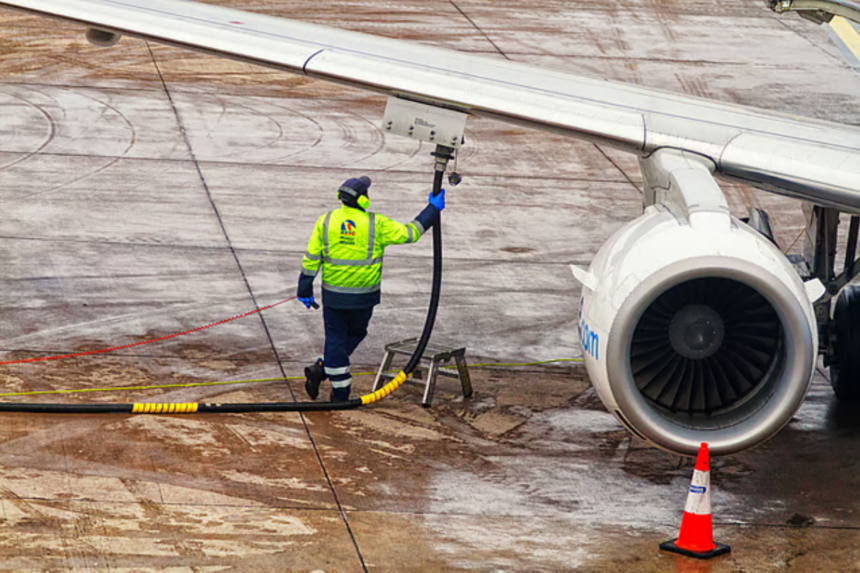
ENOC Group and Emarat have signed a strategic agreement to secure the UAE’s aviation fuel supply, ensuring the uninterrupted availability of Jet A-1 fuel across the country’s airports.
The move comes as global airlines adjust operations due to tightening fuel supply and rising logistical risks.
Coordinated System Targets Continuity Under Pressure
The agreement establishes a structured coordination framework between the two entities.
It defines processes for:
- Fuel supply management across airports
- Pipeline transfer coordination
- Truck loading and distribution logistics
The system also includes regular testing, training exercises, and operational checks to maintain readiness.
This shifts fuel supply from reactive handling to planned continuity.
Hormuz Disruption Raises Strategic Risk
The Strait of Hormuz remains a key pressure point in global energy flows.
Any disruption in this corridor affects crude movement, refining cycles, and fuel distribution. The impact extends directly to aviation fuel availability.
The UAE aviation fuel supply strategy responds to this exposure by strengthening domestic coordination.
Aviation Demand Remains Strong Despite Constraints
UAE carriers continue to operate at high capacity across major routes.
Emirates, one of the region’s largest carriers, is operating at around 65% capacity, with parts of its network affected by airspace restrictions.
Passenger volumes remain high. Operational continuity depends on fuel reliability.
Fuel Continuity Framed as National Infrastructure
Leadership from both organisations framed the initiative as essential infrastructure.
ENOC highlighted the role of advanced logistics and coordinated response systems in maintaining seamless fuel delivery.
Emarat positioned fuel continuity as a national responsibility, requiring alignment across systems, teams, and procedures before disruptions occur.
Business Continuity Plan Extends Beyond Routine Operations
The framework covers multiple disruption scenarios:
- Supply shocks
- Technical failures
- External geopolitical events
It defines how operations will be maintained, restored, and scaled under stress.
This creates a system that can absorb disruption without halting aviation activity.
Global Energy Recovery Expected to Remain Slow
Fatih Birol has indicated that even if key routes reopen, oil markets will take time to stabilise due to dislocated supply chains and delayed production recovery.
This reinforces the need for internal resilience rather than reliance on external normalisation.
System Designed to Protect Economic Flow
Aviation underpins tourism, trade, and transit in the UAE.
Fuel disruption would cascade across these sectors.
The UAE aviation fuel supply initiative reduces that risk by embedding coordination into infrastructure.
Continuity becomes a designed outcome, not a reactive response.
Source: Gulf News
Read more news and follow us on Instagram
This collaboration between ENOC and Emarat aims to strengthen the coordination and enhance the reliability of Jet A 1 aviation fuel supply operations.