



Kaspersky says fake websites are offering non-existent iPhone 18 deals, including discounts and Bitcoin payments, while collecting users’ personal and bank card details.
The launch of Apple’s iPhone 18 Pro and iPhone 18 Pro Max has created a fresh opportunity for cybercriminals.
Kaspersky has identified fake shopping websites offering non-existent iPhone 18 deals, including one that advertises a 25% discount and accepts Bitcoin payments. The cybersecurity company said the sites are designed to collect money and sensitive personal information from shoppers.
The fraudulent websites have appeared in multiple languages, including English, Arabic and Portuguese, potentially widening their reach as interest in Apple’s latest smartphones grows.
Fake iPhone 18 deals use familiar shopping tactics
One of the websites identified by Kaspersky presents itself as a legitimate online store, complete with technical specifications and a supposed 25% discount on the iPhone 18 Pro and iPhone 18 Pro Max.
It also offers Bitcoin as a payment method.
The polished appearance is part of the deception. Kaspersky said the websites are designed to make users feel comfortable enough to enter their information and transfer money, despite there being no genuine product purchase behind the offer.
Kaspersky Senior Web Content Analyst Olga Altukhova said unusually attractive offers and product selections that differ from Apple’s official announcements should be treated as warning signs.
Some fake sites advertise iPhones that do not exist
Another scam site examined by Kaspersky allows users to supposedly pre-order the iPhone 18 Pro while offering colours and configurations that do not match Apple’s official launch lineup.
Apple lists the iPhone 18 Pro and iPhone 18 Pro Max in black, silver, glacier and burgundy, with storage options of 256GB, 512GB, 1TB and 2TB.
The discrepancy is significant because a fake product configuration can provide an early clue that a website is not an authorised retailer.
Kaspersky said the fraudulent site also claims customers do not have to pay the entire amount immediately and can settle the remaining balance later. It further promises a full refund if an order is cancelled.
The scam does not stop at payment
The websites can also be used to harvest personal information.
According to Kaspersky, users are asked to provide details including their full name, phone number, email address, city, and WhatsApp contact information before being asked for bank card details.
That information can have value even if the victim does not complete the purchase.
Phone numbers, email addresses and other personal details can potentially be used in later social-engineering attempts, while payment information can expose users to unauthorised transactions.
The combination makes the fake shopping process more than a simple attempt to sell a non-existent phone.
Why iPhone launches attract scammers
High-profile product launches create a particularly useful environment for online fraud.
Consumers are already searching for availability, prices, discounts and early purchase opportunities. A fake retailer can exploit that urgency by presenting a limited-time offer or an unusually low price.
Kaspersky said it has seen similar scam campaigns emerge around major device launches in previous years.
Altukhova said consumer excitement around new products can give cybercriminals an advantage by making shoppers more willing to act quickly.
That is particularly relevant with a product such as the iPhone, where demand peaks immediately after launch and buyers may be looking across multiple websites for stock or discounts.
How to spot a fake iPhone website
A large discount is one warning sign, but it should not be the only thing shoppers check.
Consumers should first verify the website address and make sure the retailer is genuine. Small changes in a domain name, unusual spelling, or a website that closely imitates Apple’s branding can indicate a fraudulent page.
Product specifications should also be checked against Apple’s official information. If a website advertises a colour, storage option, or model that Apple has not announced, shoppers should avoid the transaction.
Kaspersky also recommends purchasing new devices through official or reputable retailers rather than unfamiliar websites promising unusually large discounts.
Protect your payment information.
Kaspersky advises consumers to use dedicated virtual cards or payment services for online purchases where possible, limiting the exposure of their primary bank or credit-card details.
Two-factor authentication should also be enabled on important accounts, particularly financial applications and online identities.
Consumers should regularly check bank and card statements for transactions they do not recognise.
If a shopper has already entered card details into a suspicious website, contacting the bank or card issuer promptly is important. The sooner potentially compromised payment information is reported, the sooner protective measures can be taken.
The safest iPhone deal may be the one without the discount
Apple’s iPhone 18 Pro is already officially available through Apple’s retail channels. The company lists the current lineup and its configurations publicly, making it relatively straightforward to check whether an offer matches the official product range.
That makes an unusually cheap offer worth questioning, not celebrating.
A professional-looking website doesn’t prove a seller is legitimate, and a 25% discount on a newly launched flagship phone should prompt a closer look at the retailer, payment method, and product details.
The iPhone 18 Pro may be the product people are searching for.
For scammers, the real target can be the person doing the searching.
Read more news and follow us on Instagram.
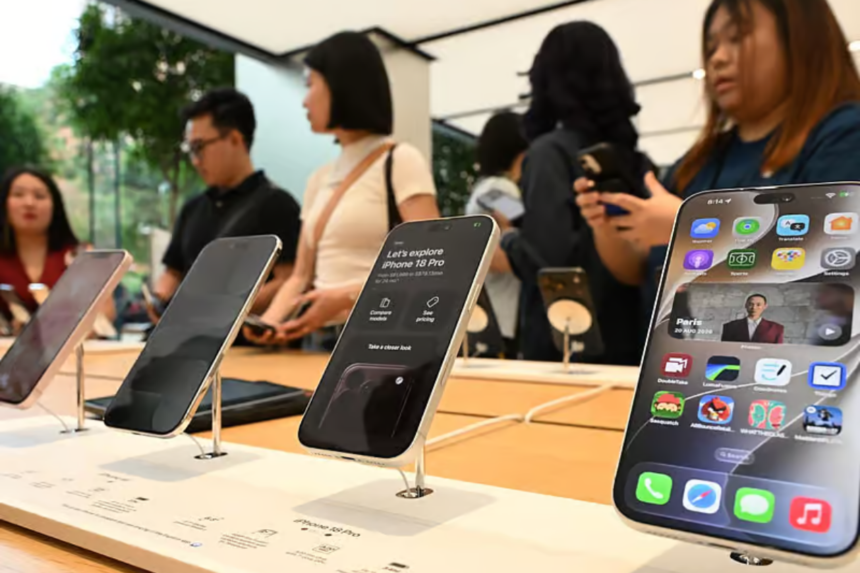
People visit an Apple store during the launch of the iPhone 18 series in Singapore. Photo: AFP