


The incident has raised concerns about safety at one of the world’s key energy hubs.
A major explosion at a gas facility in Qatar’s Ras Laffan Industrial City has left 13 people dead and 66 injured, making it one of the deadliest industrial accidents in the Gulf region in recent years.
Qatar’s Minister of State for Energy Affairs and President and CEO of QatarEnergy, Saad Al Kaabi, confirmed the casualties on Monday, stating that those who lost their lives were Indian and Pakistani nationals. He added that all injured individuals were receiving medical treatment and none were reported to be in life-threatening condition.
The explosion occurred late Sunday at the Barzan local gas supply facility in Ras Laffan, a critical component of Qatar’s energy infrastructure.
Authorities Rule Out Sabotage
Addressing concerns over regional security following recent tensions in the Middle East, Al Kaabi emphasized that the incident was not linked to military action or sabotage.
“This was an accident and not sabotage or hostile in nature,” he said.
Earlier statements from Qatar’s Interior Ministry described the incident as an internal explosion caused by a technical malfunction. Authorities have launched a full investigation to determine the exact cause.
The clarification comes at a sensitive time for Gulf energy markets, which have been under pressure following recent regional conflicts, attacks on energy infrastructure, and disruptions to shipping routes through the Strait of Hormuz.
Explosion Felt Across Doha
The blast occurred at Ras Laffan Industrial City, located approximately 64 kilometers north of Doha.
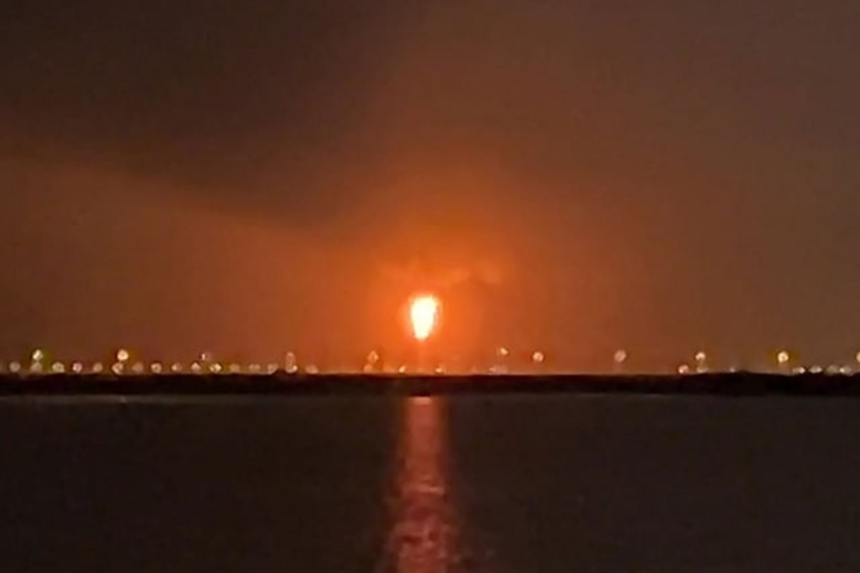
Witnesses reported hearing the explosion across parts of the capital. An AFP journalist located nearly 20 kilometers from the facility observed large flames and thick smoke rising from the industrial zone shortly after the incident.
Emergency response teams were deployed immediately, and QatarEnergy later confirmed that the fire had been successfully contained.
“The fire was brought under control following the rapid response of emergency teams,” the company said in a statement.
Importance of the Barzan Facility
The Barzan gas project plays a vital role in Qatar’s domestic energy supply.
According to QatarEnergy, the facility is capable of supplying approximately 1.4 billion standard cubic feet of natural gas per day to power generation plants, water desalination facilities, and industrial users across the country.
In addition to natural gas, the plant produces several important industrial products, including:
- Ethane
- Condensates
- Liquefied Petroleum Gas (LPG)
- Sulfur
The project is primarily owned by QatarEnergy, which holds a 93 percent stake, while ExxonMobil owns the remaining 7 percent.
No Impact on LNG Exports
Despite the scale of the explosion, QatarEnergy moved quickly to reassure global markets.
The company stated that the incident did not affect liquefied natural gas export operations, shipping infrastructure, or port activities at Ras Laffan.
“It will not affect anything regarding exports. It will not affect anything regarding our local requirements,” Al Kaabi said.
The assurance is particularly important because Qatar remains one of the world’s largest LNG exporters, supplying major markets across Asia and Europe.
At a time when global energy security remains a major concern, any prolonged disruption to Qatari gas exports could have significant consequences for international energy markets.
Strategic Importance of Ras Laffan
Ras Laffan Industrial City is the centerpiece of Qatar’s energy sector and one of the world’s largest energy complexes.
The facility serves as the primary hub for Qatar’s natural gas industry, handling massive volumes of LNG shipped to customers worldwide.
Qatar possesses the world’s third-largest proven natural gas reserves and shares the massive South Pars gas field with neighboring Iran. The country is among the world’s leading LNG producers alongside the United States, Australia, and Russia.
Energy exports remain the backbone of Qatar’s economy, accounting for a substantial share of government revenues and export earnings.
Energy Sector Under Pressure
The accident comes during a challenging period for Gulf energy producers.
Regional tensions over the past year have raised concerns about the security of critical energy infrastructure, while disruptions in the Strait of Hormuz have affected global shipping routes and energy supply chains.
Although Al Kaabi stressed that Sunday’s explosion was unrelated to geopolitical developments, the incident highlights the importance of operational safety across major energy facilities.
Industry experts note that even isolated technical failures can have significant consequences at large-scale energy complexes handling vast quantities of natural gas and industrial feedstocks.
Investigation Continues
QatarEnergy and government authorities are continuing their investigation into the technical malfunction that caused the explosion.
Officials have not yet released detailed findings regarding the sequence of events leading up to the incident.
The company said its priority remains supporting affected families, ensuring the recovery of injured workers, and determining the cause of the accident to prevent similar incidents in the future.
While energy exports remain unaffected, the tragedy has once again drawn attention to the operational risks associated with large-scale industrial and energy facilities, even in some of the world’s most advanced energy-producing nations.
An explosion at Qatar’s Ras Laffan industrial zone, home to the world’s largest liquefied natural gas hub, as a result of a “technical incident”, the interior ministry says.
AFP
Source: Gulf News
Read more news, and follow us on Instagram