


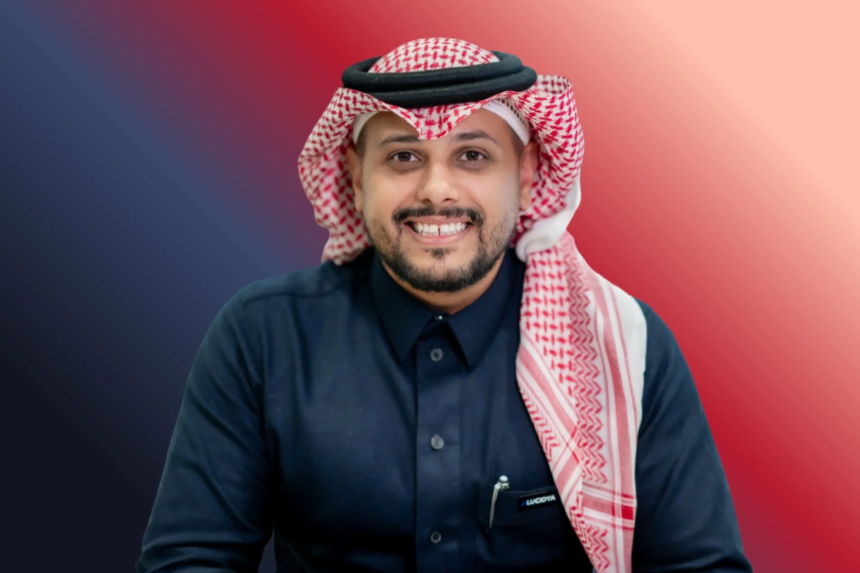
Lucidya founder and CEO Abdullah Asiri is building AI designed around the needs of Arabic speakers, rather than adapting technology built for other languages to serve the region.
Most AI companies compete on model performance, speed, or price. Lucidya founder and CEO Abdullah Asiri believes his company’s advantage began with a different decision in 2016: building technology around Arabic speakers rather than adapting products designed for other languages.
Nearly a decade later, that decision has become central to Lucidya’s strategy. The Saudi-founded company has collected more than 10 billion public posts, developed models designed to understand 17 Arabic sub-dialects, and expanded its customer base to 13 countries.
Lucidya describes itself as an agentic customer experience (CX) platform that uses customer and market intelligence to resolve issues and deliver measurable business outcomes. Its challenge now is to demonstrate that its Arabic-language expertise can translate into a lasting competitive advantage beyond its home market.
Building Arabic Into the Product From Day One
Founded in Jeddah in 2016 by Abdullah Asiri, Hatem Kameli, Mohamed Milyani and Zuhair Khayyat, Lucidya initially focused on social listening. Its platform has since expanded to include media monitoring, customer profiling, surveys, and omnichannel engagement through its OmniServe solution.
Asiri identifies the decision to make Arabic the product, rather than an additional feature, as the choice that most shaped the company.
Building an English-first product with Arabic support would have been cheaper and easier to explain to investors. Lucidya chose the more difficult route, accepting slower fundraising and tougher conversations in exchange for years of specialised language data.
Asiri argues that this investment has created an advantage competitors cannot easily replicate by spending more on technology. The company says its proprietary models understand 17 Arabic sub-dialects, from Khaliji to Maghrebi, and report 92% accuracy on an unspecified benchmark.
Lucidya also chose to work with government institutions early in its development. Serving public-sector customers required the company to address data residency, security certification, and compliance requirements before expanding into sectors such as banking, telecommunications, retail, travel, insurance, and logistics.
When large language models gained prominence in 2023, Lucidya resisted becoming a thin layer on top of third-party AI services. Instead, it adopted a hybrid approach, using frontier models where they perform better while retaining its own models for tasks where Arabic dialects, regional context, and accuracy matter most.
For Asiri, the distinction is fundamental. Arabic-first development, he argues, creates an advantage that compounds as more conversations pass through the platform and improve its models.
How the Founder Learned to Let Go
Lucidya’s growth has also forced Asiri to rethink his role as chief executive.
In its early years, he handled everything from sales presentations to discussions with engineers about model accuracy. That approach became increasingly difficult as the company added products, employees, and international markets.
A major shift came between 2022 and 2023, when Lucidya expanded beyond social listening and launched OmniServe in roughly 12 months. The product broadened the company’s offering and contributed to revenue growth, but it also made the business too complex for one person to manage through direct involvement in every decision.
Asiri realised that his responsibility was no longer simply to make good decisions, but to build an organisation capable of making them independently.
He began bringing experienced leaders into key roles, including executives with backgrounds in global finance, engineering and revenue management. Learning to trust them, he says, proved harder than hiring them.
Asiri credits Liz Wiseman’s book Multipliers with helping him recognise how a leader who quickly supplies answers can unintentionally discourage independent thinking.
He now applies a simple rule: if another person can decide 70% of his quality, that person should make it. His attention belongs to the small number of decisions that only the founder can take.
The next leadership challenge is adapting to agentic AI while managing a company that has grown beyond 300 employees across multiple countries. Asiri says the transition requires greater clarity, less certainty, and a willingness to move quickly on reversible decisions while taking more time over choices that are difficult to undo.
Moving AI From Analysis to Action
Lucidya’s latest strategic shift concerns what its AI actually does.
Traditional customer experience platforms help companies understand customer sentiment, identify recurring complaints, and track interactions. Those insights still leave employees to resolve the underlying issues.
Lucidya wants its AI agents to complete that final step by acting within customers’ existing systems, following policy controls, maintaining audit trails, and escalating cases when human intervention is necessary.
Asiri cited one five-month deployment in which an AI agent handled around 85% of eligible cases without human intervention and removed approximately 6,000 hours of work from the team.
Those figures illustrate the company’s argument that agentic AI should be judged by operational results rather than the quality of its conversations alone.
Asiri believes companies often struggle to turn AI pilots into meaningful business improvements because they begin with a general desire to adopt AI instead of identifying a measurable operational problem.
He recommends starting with figures such as cost per contact, backlog, resolution time, or first-response service levels. Businesses must then give AI systems sufficient authority to complete tasks, rather than limiting them to conversations that eventually pass the work back to employees.
Governance also needs to be built into the system from the beginning. For Asiri, successful adoption requires organisations to reconsider workflows, responsibilities and staffing models instead of treating AI as another software purchase.
He expects the industry to move away from chatbots designed primarily to deflect customer enquiries towards systems that resolve problems and increasingly anticipate customer needs.
Taking a Saudi AI Company to Global Markets
Asiri’s ambition extends beyond building a successful Saudi technology company. Since starting his first business in 2011, he has wanted to develop technology in Saudi Arabia that can compete internationally.
Lucidya now serves customers in 13 countries, including the United Kingdom and the United States. The company has also established a sales presence in the US, which Asiri considers its most demanding international test.
In the Gulf, shared language and overlapping enterprise relationships can make market entry easier. The US presents a different challenge because Lucidya cannot rely on geographic proximity or regional familiarity to win customers.
Its approach is to let prospective customers experience the product and judge its performance before committing to a wider commercial relationship.
Asiri divides international expansion into four stages: explore, test, validate, and scale. The company looks for genuine customer demand, evidence that it can compete on capability, sufficient leadership capacity,y and opportunities that strengthen the business beyond immediate revenue.
He is wary of expanding simply because a market looks attractive on a presentation. Premature international investment, he argues, can distract companies from improving retention, protecting margins and building management teams that do not depend on the founder.
For Lucidya, the ultimate test is whether its product remains competitive when its Saudi origins are removed from the conversation.
Protecting Culture as Lucidya Scales
As Lucidya grows, Asiri sees decision-making speed and individual ownership as the qualities most vulnerable to bureaucracy.
He encourages teams to treat most decisions as reversible, moving ahead with limited information when mistakes can be corrected later. Decisions with lasting consequences, by contrast, deserve greater scrutiny.
He also wants the company to stop initiatives that no longer make sense. One test is straightforward: knowing what the team knows today, would it start the project again? If the answer is no, stopping the work should be considered sound judgement rather than failure.
Asiri also rejects the idea that a demanding workplace must become joyless as it grows. He believes people do their most inventive work when they have room to take ownership and enjoy what they are building.
That philosophy reflects a wider concern about founder-led companies. Growth becomes difficult to sustain when too many decisions depend on one person or when experienced employees lose the freedom to exercise judgement.
What Saudi Arabia Needs to Build Global Technology Companies
Asiri credits Saudi Arabia’s public sector with helping Lucidya grow, particularly through enterprise demand and regulatory requirements.
He points to data residency rules, the personal data protection framework, cloud-first policy and national AI ethics guidelines as standards that initially increased the cost and complexity of operating but ultimately strengthened the company’s product.
Lucidya is also involved in research with the Saudi Data and AI Authority and King Abdullah University of Science and Technology on training methods for large language models.
However, Asiri distinguishes creating favourable conditions from building technological capability. Government support can help companies find customers and establish standards, he argues, but it cannot replace a product that wins on merit.
He wants procurement systems to give growing technology companies a fairer chance to compete, contracts to reward measurable outcomes rather than software licences alone, and a public benchmark that lets Arabic-language AI products be assessed against common standards.
He also believes international revenue should carry greater weight when evaluating Saudi technology companies, since success abroad provides a clearer test of whether their products can compete without the advantages of proximity.
Building for the Destination
After 15 years of building technology companies, Asiri continues to judge decisions against a long-term destination rather than their immediate usefulness.
That approach can make a founder appear stubborn, he acknowledges, particularly when the original ambition turns out to be wrong. Yet he believes companies that optimise only for the nearest visible win risk becoming busy without developing a clear competitive position.
His advice to founders is to identify an advantage that strengthens with time, invest in the fundamentals of retention and profitability, and make decisions quickly when they can be reversed.
For Lucidya, the long-term ambition is to become a globally competitive AI company whose Arabic-language expertise provides a genuine product advantage.
The company’s next test is whether its specialised models, customer experience platform and agentic AI capabilities can deliver consistent results across markets with different expectations and established competitors.
Asiri does not present that outcome as guaranteed. Lucidya is ten years old, he notes, and only now is competing globally a credible ambition rather than a distant hope.
His larger goal is to make that path easier for the founders who follow. If they can build on Lucidya’s lessons without repeating every mistake, he believes that may be more valuable than any single company’s financial success.