


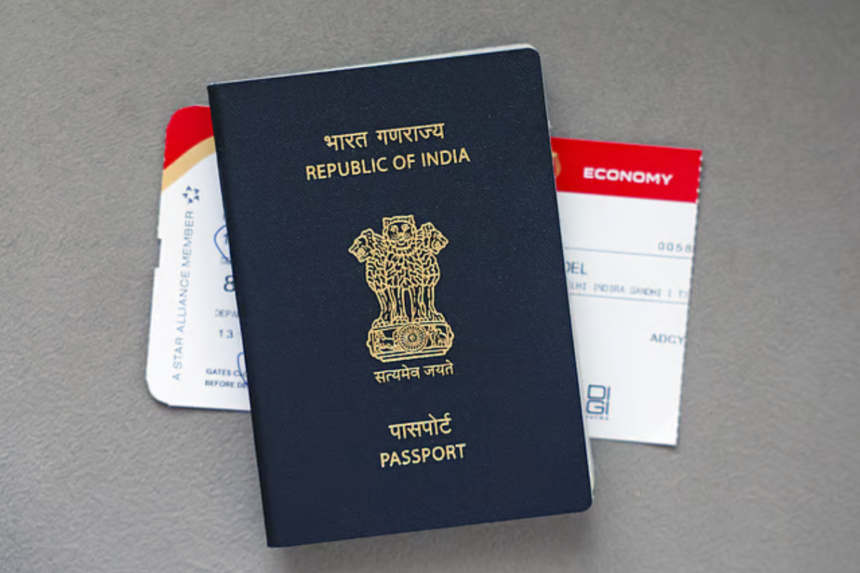
The MEA issued 13.9 million passports in 2025, reflecting strong demand for travel documents.
The Government of India has clarified that an Indian passport should primarily be regarded as a travel document rather than definitive proof of Indian citizenship. The clarification was made during the 14th Passport Seva Divas celebrations, where the Ministry of External Affairs (MEA) also highlighted the rapid expansion of India’s passport services and major advances in digital passport infrastructure.
The announcement comes as India continues modernizing its passport ecosystem through electronic passports, expanded Passport Seva Kendras, and upgraded digital services for millions of Indians living both within the country and abroad.
Passport Primarily Serves as a Travel Document
Speaking during Passport Seva Divas, an official from the Ministry of External Affairs explained that while an Indian passport is issued only after prescribed verification procedures, its primary legal purpose is to facilitate international travel rather than serve as standalone evidence of citizenship.
The clarification may surprise many Indians, particularly members of the global Indian diaspora, who often use passports as their principal identity document while living overseas.
Under Indian law, citizenship is determined by the provisions of the Citizenship Act, 1955, and supporting documentation issued through legally prescribed procedures. A passport, although issued to Indian citizens, is fundamentally governed by the Passports Act, 1967, which regulates international travel documents.
This distinction becomes important in legal proceedings involving citizenship verification, where authorities may require additional documentary evidence depending on the circumstances.
India Issued 13.9 Million Passports in 2025
The Ministry of External Affairs also shared the latest figures highlighting the growing demand for passport services.
India issued approximately 13.9 million passports during 2025, reflecting continued growth in overseas travel, international education, business mobility, employment, and tourism.
The steady rise in passport issuance mirrors India’s expanding global footprint, with millions of citizens travelling abroad every year for work, higher education, medical treatment, entrepreneurship, and leisure.
Passport Infrastructure Has Expanded Six-Fold
One of the most significant achievements highlighted during Passport Seva Divas was the expansion of India’s passport service network.
According to the MEA, the number of Passport Seva Kendras has increased from 77 centres a decade ago to 545 centres today, representing nearly a six-fold expansion.
The larger network has significantly improved access to passport services, particularly for citizens living outside major metropolitan cities.
The expanded infrastructure has reduced travel distances, improved appointment availability, and accelerated passport processing across the country.
Digital Transformation Through Passport Seva Programme 2.0
External Affairs Minister S. Jaishankar described Passport Seva Divas as an opportunity to reflect on the modernization of India’s passport ecosystem.
In a message shared on social media, Jaishankar said the government’s vision of “Minimum Government, Maximum Governance” has driven continuous improvements in passport services.
Among the key initiatives are:
- Operational rollout of Passport Seva Programme (PSP) Version 2.0
- Global deployment of Global Passport Seva Programme (GPSP) Version 2.0
- Digitization of passport application services
- Improved service delivery for Indians living overseas
The upgraded systems are designed to improve efficiency, simplify application processes, and strengthen service delivery across Indian diplomatic missions worldwide.
Chip-Enabled e-Passports Strengthen Security.
The government also highlighted the nationwide rollout of chip-enabled e-Passports, one of the most significant technological upgrades in India’s passport system.
These electronic passports contain an embedded secure microchip that stores the passport holder’s biometric and personal information in encrypted form.
The technology complies with International Civil Aviation Organization (ICAO) standards and is designed to improve document authentication, reduce passport forgery, strengthen border security, speed up immigration checks, and provide better protection against identity fraud.
The introduction of e-Passports aligns India with several countries that have already adopted electronic travel documents.
Indian Passport Holders Gain Greater Global Mobility
The Ministry also highlighted improvements in international mobility for Indian passport holders.
According to the MEA:
- 27 countries now offer visa-free access to Indian citizens, compared with 16 countries in 2019
- 47 countries provide visa-on-arrival facilities
- 66 countries offer electronic visa (e-Visa) access
The government attributed this progress to sustained diplomatic engagement and bilateral mobility agreements with several partner nations, many of which are designed to make travel and international opportunities more accessible for students, researchers, academics, skilled professionals, business travellers, and tourists.
The arrangements also establish mechanisms to facilitate the return of illegal migrants where necessary.
Why the Clarification Matters
The government’s clarification regarding passports and citizenship primarily addresses the legal distinction between identity, nationality, and travel documentation.
In everyday life, an Indian passport remains one of the country’s most trusted identity documents and is widely accepted by banks, employers, immigration authorities, and institutions across the world.
However, in specific legal or constitutional matters concerning citizenship, authorities may rely on provisions of the Citizenship Act and other supporting records rather than treating the passport alone as conclusive proof.
The clarification, therefore, reflects a legal interpretation rather than any change in passport validity or its usefulness for international travel.
India’s Passport Ecosystem Continues to Expand
India’s passport system has undergone a remarkable transformation over the past decade through expanded infrastructure, digital services, and stronger security standards.
With 13.9 million passports issued in 2025, 545 Passport Seva Kendras, nationwide implementation of e-Passports, and growing global visa access for Indian citizens, the country’s passport services continue evolving to meet the needs of one of the world’s largest travelling populations.
While the passport remains India’s primary international travel document, the latest clarification reinforces an important legal distinction. It facilitates international mobility, but citizenship itself remains governed by India’s citizenship laws rather than by the passport alone.
Source: Gulf News
Read more news, and follow us on Instagram