


The 60-day agreement expired without a permanent deal as Washington and Tehran remain divided over sanctions, Iran’s nuclear programme and the Strait of Hormuz.
US President Donald Trump has ruled out extending the US-Iran interim deal, as Washington and Tehran failed to reach a permanent agreement before the 60-day deadline.
The memorandum of understanding signed on June 17 was intended to end military operations and give both sides time to negotiate a broader settlement covering Iran’s nuclear programme, US sanctions and other disputed issues. The agreement allowed an extension by mutual consent, but Trump said on Monday that Washington was not seeking one.
The development comes as tensions over the Strait of Hormuz remain high and diplomatic efforts show little visible progress.
Trump Rejects Extension
Trump said Iran would not accept the kind of agreement he considers necessary, reiterating that his main objective is to prevent Tehran from obtaining a nuclear weapon.
His comments came as US envoy Jared Kushner described conversations with different parts of the Iranian government as active and more robust than before, while acknowledging that no understanding had been reached.
The contradiction highlights the uncertain state of diplomacy. Communication channels remain open, but the two sides remain far apart on the terms of a permanent settlement.
Iran Warns of Wider Escalation
Iran has responded with a sharper warning.
A senior Iranian official told Reuters that Tehran was moving from a defensive to a “fully offensive” posture because negotiations had stalled. The official warned that Iran could take military action in the Strait of Hormuz and the wider region if diplomacy failed.
Tehran has also demanded that Washington implement the provisions of the interim agreement before further negotiations can move forward.
The Strait of Hormuz has become one of the central issues in the dispute because disruptions there have severely affected commercial shipping and global energy markets.
Hormuz Becomes a Major Flashpoint
The US is seeking the reopening of the strategic waterway, while Iran has been negotiating separately with Oman over maritime arrangements.
Trump has criticised those efforts and threatened Oman if it obstructs a US agreement with Tehran, adding another layer of tension to an already fragile diplomatic process.
Turkey is also pushing for diplomacy. President Recep Tayyip Erdoğan urged Trump to continue negotiations with Iran and offered Turkey’s support in efforts to reduce tensions and reopen the Strait of Hormuz.
Oil Markets Feel the Pressure
The diplomatic deadlock is already affecting energy markets.
Brent crude settled at $90.87 a barrel on Monday, up $2.35, while US West Texas Intermediate rose to $84.50. Investors are increasingly concerned that prolonged disruption around Hormuz could tighten global oil supplies.
Gulf financial markets also came under pressure as investors assessed the risk of a prolonged conflict and continued disruption to shipping through the strait.
What Happens Next?
The end of the 60-day window does not necessarily mean diplomacy is over. Communication between the two sides continues through direct and indirect channels, and regional governments are attempting to keep negotiations alive.
But Trump’s refusal to extend the interim arrangement, combined with Iran’s warning of possible military escalation, leaves the path to a permanent agreement increasingly uncertain.
For now, the US-Iran interim deal has reached its deadline without producing a final settlement, while the unresolved disputes over Iran’s nuclear programme, sanctions and the Strait of Hormuz continue to threaten regional stability and global energy markets.
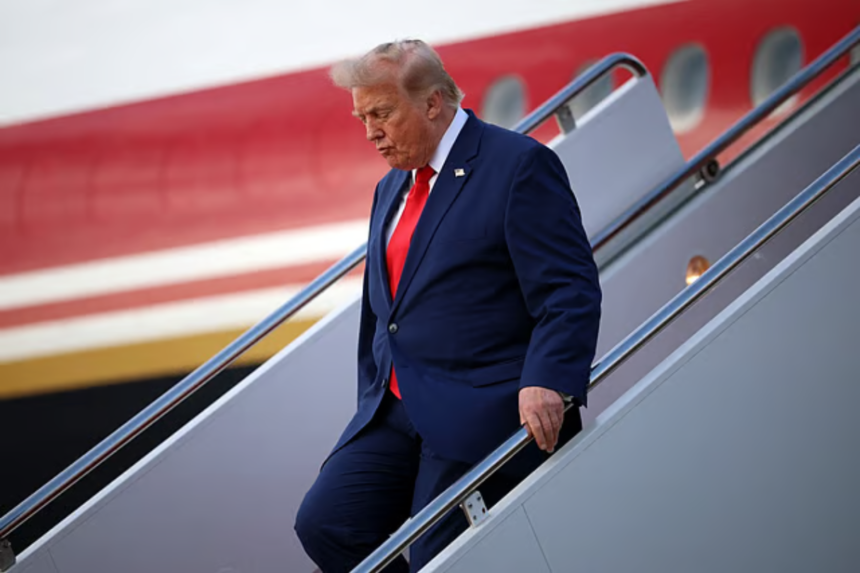
US President Donald Trump travels to Ohio for a day trip to attend the Patriot Games.
Source: Gulf News