


Riyadh is seeking closer ties with Baghdad after US-Saudi strikes in Iraq, while the Islamic Resistance in Iraq has delayed its planned retaliation.
Riyadh: Saudi Arabia has signalled a renewed effort to strengthen ties with Iraq, with Defence Minister Khalid bin Salman describing the country as a “cherished neighbour” despite deadly US-Saudi strikes on Iraqi targets last month.
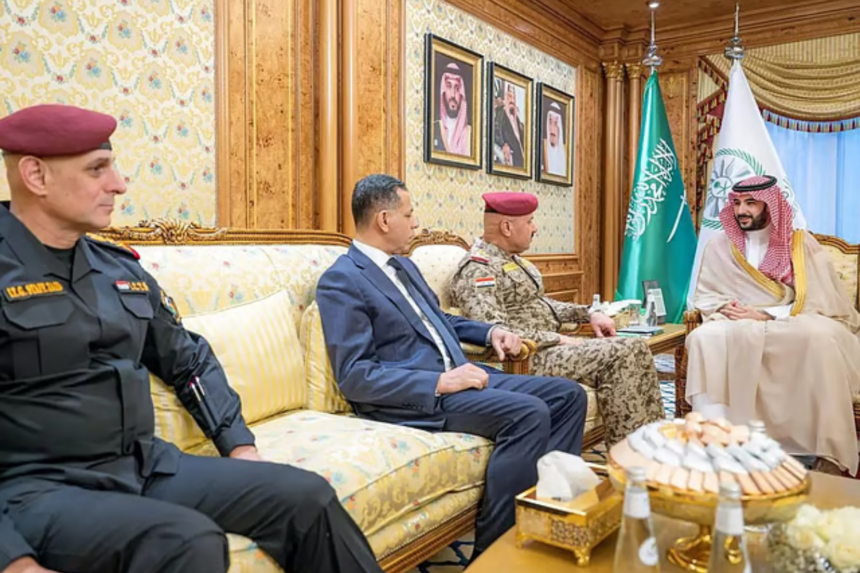
The comments came during a meeting on Thursday between Khalid bin Salman and Abdul Amir Al-Shammari, director of Iraq’s Office of the Commander in Chief. The officials discussed military and defence cooperation, as well as wider developments affecting regional security.
The meeting marked the first publicly announced visit by a senior Iraqi security official to Saudi Arabia since Iraqi Prime Minister Ali Al Zaidi cancelled a planned trip following the strikes on July 29.
Saudi Arabia Signals Support for Iraq
Khalid bin Salman said Saudi Arabia would continue to support Iraq’s security, stability and development, while emphasising the longstanding ties between the two countries.
He said the two sides reviewed cooperation in the military and defence sectors and stressed the importance of continued coordination to protect their shared interests and regional stability.
The diplomatic outreach comes despite the recent escalation. Officials from the Hashed Al Shaabi, also known as the Popular Mobilisation Forces, said the US-Saudi strikes killed 20 militants, including five Iranians. The alliance includes several armed groups aligned with Tehran.
Iraqi Groups Delay Retaliation
The strikes had raised concerns about another escalation between US-backed forces and Iran-aligned groups operating in Iraq.
The Islamic Resistance in Iraq, an alliance of Tehran-backed armed factions, had threatened retaliation following the attacks. However, the group announced last week that it would postpone its response.
The decision has temporarily reduced the immediate risk of another round of attacks, although tensions remain high.
Saudi and Iraqi officials had already begun restoring high-level diplomatic contact. Their foreign ministers met last week on the sidelines of a regional meeting in Amman, Jordan, marking the first high-level Saudi-Iraqi talks since the strikes.
Iraq Caught Between Washington and Tehran
The latest developments come as Baghdad faces increasing pressure from Washington to disarm Iran-aligned armed groups operating inside Iraq.
Those groups have carried out hundreds of attacks against US facilities during the wider Middle East conflict, putting the Iraqi government in a difficult position.
Prime Minister Ali Al Zaidi, who came to power this year with US backing, has pledged to ensure that the armed factions surrender their weapons. However, several powerful groups have resisted the move.
Iraq’s position is particularly sensitive because both the United States and Iran are major allies of Baghdad. Their rivalry has repeatedly turned Iraqi territory into a battleground, forcing successive Iraqi governments to balance relations with both powers.
Against this backdrop, Saudi Arabia’s latest diplomatic message suggests Riyadh is seeking to maintain closer relations with Baghdad while limiting the risk of further regional escalation.
Source: Gulf News