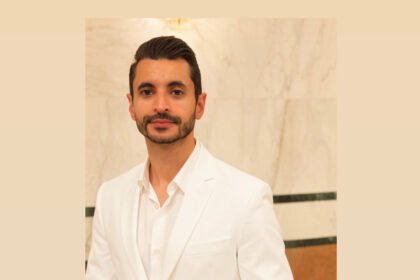



Her focus is on helping countries become more independent and prepared for the future.
From localization to innovation, a healthcare strategist explains why the future belongs to countries that can build, innovate, and lead.
For decades, healthcare discussions around the world focused on access, affordability, and efficiency. Today, another issue has moved to the center of the conversation: resilience.
The disruptions of recent years exposed how dependent many countries remain on global supply chains for medicines, medical technologies, and critical healthcare resources. As governments rethink long-term healthcare strategies, the focus has expanded beyond access to a broader question: how can nations build healthcare systems that remain reliable during periods of uncertainty?
For Yasmine Ghorayeb, the answer lies in healthcare sovereignty.
A healthcare strategist with experience spanning pharmaceutical manufacturing, business development, localization initiatives, and healthcare transformation, Ghorayeb believes the future of healthcare will be shaped by countries that can move beyond dependency and build the capabilities needed to innovate independently.
Her perspective is informed by a career that bridges multiple disciplines, from pharmacology and business strategy to storytelling and organizational leadership.
Looking Beyond Traditional Specialization
Many professionals spend years building expertise within a single field. Ghorayeb’s career has followed a different path.
With academic credentials that include an Executive MBA from Columbia Business School and London Business School, she has worked across healthcare, innovation, manufacturing, and strategic development. That multidisciplinary background has shaped the way she approaches complex challenges.
Rather than viewing industries, technologies, and policies in isolation, she focuses on how they intersect.
In healthcare, that means looking beyond individual products or facilities and examining the broader systems that support innovation, manufacturing, talent development, research, and patient outcomes.
As healthcare becomes increasingly influenced by geopolitics, emerging technologies, and shifting economic priorities, this systems-level thinking is becoming more important than ever.
The Evolution of Healthcare Localization
Across the Gulf region, healthcare localization has become a strategic priority.
Initially, many localization programs were designed to reduce reliance on imported medicines and strengthen domestic manufacturing capabilities. Over time, however, the conversation has evolved significantly.
Today, localization is increasingly linked to national resilience, economic diversification, healthcare security, and long-term competitiveness.
Countries across the region are investing in pharmaceutical manufacturing, research partnerships, technology transfer programs, and innovation ecosystems designed to strengthen local capabilities while attracting global expertise.
According to Ghorayeb, successful localization requires more than building factories or increasing domestic production.
It requires creating an environment where knowledge, talent, technology, and investment can work together to generate sustainable growth.
Why Healthcare Sovereignty Is the Next Step
While manufacturing capacity remains important, Ghorayeb argues that true transformation begins when countries move beyond production and focus on innovation.
She describes healthcare development as progressing through three stages.
The first stage is dependency, where healthcare systems rely heavily on external suppliers and imported technologies.
The second stage is capacity, where countries build local manufacturing capabilities and strengthen domestic production.
The third stage is sovereignty, where nations develop the ability to innovate, conduct research, create intellectual property, and shape the future of healthcare independently.
Many countries successfully reach the second stage. Far fewer reach the third.
The distinction is significant because manufacturing can improve supply security, but innovation creates long-term strategic advantage.
Countries that generate new knowledge, develop advanced therapies, and contribute to global healthcare advancements are often better positioned to compete in an increasingly technology-driven world.
Lessons from the Gulf’s Transformation
The Gulf region has emerged as one of the most active healthcare transformation markets globally.
Government initiatives, particularly those linked to economic diversification programs, have accelerated investment in pharmaceuticals, biotechnology, digital health, and advanced medical research.
Saudi Arabia’s Vision 2030, for example, has played a major role in expanding healthcare localization efforts and attracting international partnerships.
These initiatives demonstrate how policy can act as a catalyst for industrial and technological development when supported by long-term planning and ecosystem building.
Rather than focusing solely on production targets, many regional programs are increasingly designed to encourage technology transfer, workforce development, research collaboration, and innovation.
This broader approach creates opportunities that extend far beyond healthcare itself, generating new industries, attracting foreign investment, and supporting knowledge-based economic growth.
Building the Next Global Healthcare Ecosystem
The healthcare industry is entering a period of rapid change driven by advances in biotechnology, precision medicine, artificial intelligence, and data-driven healthcare solutions.
As these technologies mature, competitive advantage will increasingly depend on a country’s ability to attract talent, support research, and accelerate innovation.
Ghorayeb believes the next globally influential healthcare ecosystem may look very different from traditional innovation hubs.
Rather than being concentrated in a single city or region, future healthcare ecosystems could be built through international collaboration, cross-border partnerships, and interconnected networks of researchers, companies, investors, and policymakers.
The Gulf region, with its growing investment in healthcare infrastructure and innovation, has an opportunity to play a meaningful role in that transformation.
Measuring Success Beyond Infrastructure
While healthcare investments are often measured through factory construction, production volumes, or capital deployment, Ghorayeb believes the ultimate measure of success is far broader.
Strong healthcare systems provide reliability during crises, support economic growth, create high-value jobs, and improve quality of life for entire populations.
They also enable countries to contribute solutions to global health challenges rather than simply consuming innovations developed elsewhere.
The long-term goal is not only to manufacture medicines locally but to create environments where new ideas, technologies, and treatments can emerge.
As governments continue investing in healthcare transformation, that distinction may become increasingly important.
The countries that succeed will not necessarily be those that build the most facilities. They will be the ones that build the strongest capabilities, develop the deepest expertise, and create ecosystems capable of sustaining innovation for decades to come.
For Ghorayeb, that is the essence of healthcare sovereignty: the ability to shape the future rather than simply adapt to it.