


The UAE introduced a Dh1 billion fund to help companies manage challenges and maintain business operations.
- As regional tensions disrupt global trade routes, the UAE is accelerating alternative corridors, logistics transformation, and economic resilience measures.
- Why the Strait of Hormuz Matters So Much
- UAE Accelerates Alternative Trade Corridors
- Dh1 Billion Support Fund for Businesses
- Trade Strategy Remains Central to UAE Growth
- The Bigger Strategic Shift Happening
As regional tensions disrupt global trade routes, the UAE is accelerating alternative corridors, logistics transformation, and economic resilience measures.
The UAE has made its position on the Strait of Hormuz unmistakably clear.
No country or regional actor should be allowed to dominate one of the world’s most critical maritime trade corridors or use it as leverage against the global economy.
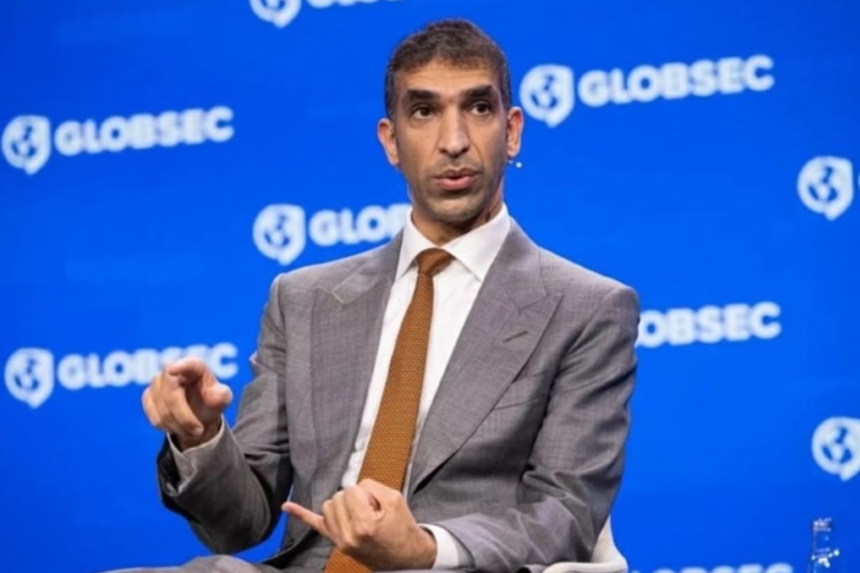
Speaking during the GLOBSEC Forum 2026 in Prague, Thani bin Ahmed Al Zeyoudi said the Strait of Hormuz must remain open to international navigation and protected from geopolitical weaponisation.
The comments came during a strategic discussion focused on how the Iran conflict is reshaping global economies, supply chains, and international trade policies.
Why the Strait of Hormuz Matters So Much
The Strait of Hormuz is not simply a regional shipping lane.
It is one of the most strategically important maritime corridors in the world, carrying a significant share of global oil exports, energy shipments, and commercial trade flows between the Gulf, Asia, Europe, and international markets.
Any disruption immediately affects:
. Global oil prices
. Energy security
. Shipping costs
. Supply chains
. Insurance markets
. International trade stability
With rising regional tensions and disruptions linked to Iran’s actions in Gulf waters, global concerns around energy security and maritime access have intensified sharply.
The UAE’s message in Prague reflected growing frustration among Gulf economies that critical international waterways should never become tools of political pressure.
UAE Accelerates Alternative Trade Corridors
In response to disruptions linked to the Strait of Hormuz, the UAE has moved aggressively to activate alternative trade and logistics routes designed to reduce dependency on vulnerable maritime chokepoints.
According to Al Zeyoudi, the country accelerated infrastructure and logistics plans that were originally designed for long-term implementation over the next decade.
Instead, those plans are now being compressed into a much shorter timeline due to geopolitical urgency.
“The logistics restructuring program we originally planned to deliver over a decade is now being implemented within years,” he said.
This reflects a broader strategic shift already visible across the UAE’s infrastructure policies.
For years, the country invested heavily in:
. Fujairah energy export infrastructure
. Alternative shipping routes
. Advanced logistics systems
. Port expansion projects
. Integrated trade corridors
. Supply chain resilience
The latest tensions appear to have dramatically accelerated those priorities.
Dh1 Billion Support Fund for Businesses
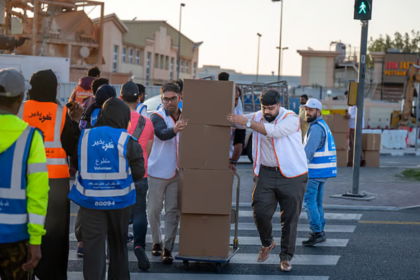
Alongside infrastructure measures, the UAE also announced a Dh1 billion economic support fund aimed at helping businesses navigate disruptions caused by regional instability.
The fund is designed to:
. Support business continuity
. Assist small and medium-sized enterprises
. Protect supply chains
. Stabilize operational activity during disruptions.
The move signals that the UAE is not only focusing on state-level infrastructure resilience but also attempting to shield private-sector businesses from external geopolitical shocks.
For SMEs, especially, prolonged shipping disruptions, rising freight costs, and supply uncertainty can quickly affect operations and cash flow.
The support package aims to soften that pressure.
Trade Strategy Remains Central to UAE Growth
Despite geopolitical tensions, the UAE continues pushing its long-term trade expansion strategy aggressively.
Al Zeyoudi highlighted the country’s Comprehensive Economic Partnership Agreements program, which has become one of the UAE’s main tools for expanding global trade influence.
According to the minister:
. The UAE has signed 35 trade agreements across six continents.
. Non-oil foreign trade reached $1.03 trillion in 2025.
. The country continues positioning itself as a resilient global trade hub.
This matters because the UAE’s economic model increasingly depends on connectivity rather than oil alone.
Trade, logistics, ports, aviation, digital infrastructure, and financial services now form major pillars of national growth.
That makes uninterrupted global trade routes strategically essential for the country’s long-term economic ambitions.
The Bigger Strategic Shift Happening
What is happening now extends beyond a temporary regional crisis.
The Gulf is entering a new phase where trade resilience, infrastructure independence, and logistics diversification are becoming national security priorities.
Countries can no longer assume traditional shipping routes will remain permanently stable.
The UAE appears to understand this clearly.
Its response has not focused only on diplomatic messaging. It has focused on building alternatives:
. Alternative export routes
. Faster logistics transformation
. Economic resilience funds
. Long-term trade partnerships
. Infrastructure redundancy
This is the same strategic philosophy that previously turned the UAE into a global aviation, shipping, and trade hub.
Now, that model is being adapted again for a far more unstable geopolitical environment.
Source: Gulf News
Read more news, and follow us on Instagram
Al Zeyoudi said the Strait of Hormuz must remain a free and open international waterway critical to global trade and energy supplies.
Supplied