


Weeks of shifting strategies, indirect diplomacy, and Strait of Hormuz tensions have yet to produce a workable deal.
Nearly ten weeks into the Iran conflict, Washington and Tehran are still exchanging proposals through Pakistani and Omani mediators, yet no final agreement has emerged.
The continued back-and-forth diplomacy is increasingly exposing a deeper problem for the Trump administration. Despite overwhelming military power, sanctions pressure, naval operations, and repeated threats, the United States still has not secured a decisive political outcome on its own terms.
At the center of the latest negotiations is a reported one-page memorandum of understanding designed to halt the conflict temporarily and create a framework for broader talks covering Iran’s nuclear program, sanctions relief, and shipping access through the Strait of Hormuz.
But the agreement remains unsigned.
Trump Projects Optimism While Officials Sound More Cautious
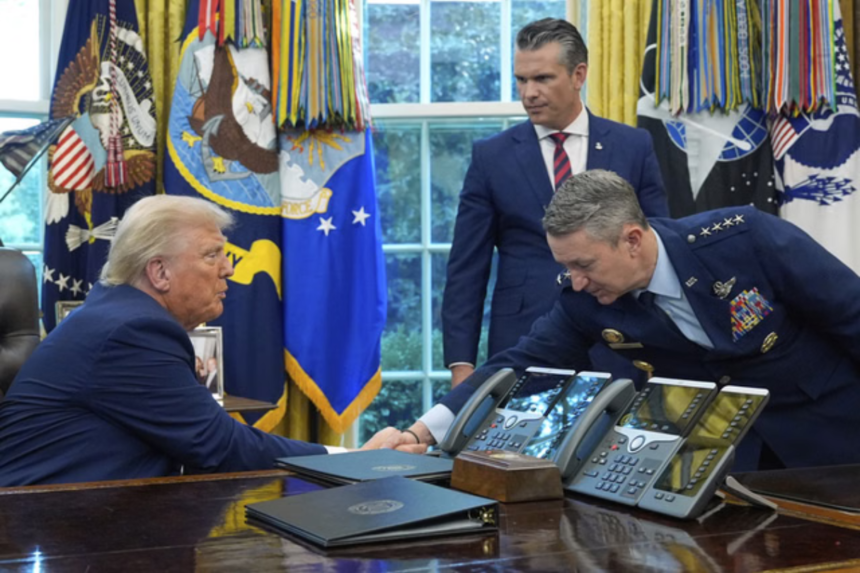
Donald Trump struck an optimistic tone this week, saying the United States and Iran had held “good talks” and suggesting a breakthrough could arrive soon.
“We’re dealing with people that want to make a deal very much,” Trump told reporters at the White House.
Yet even as Trump projected confidence publicly, other American officials acknowledged privately that negotiations remain unresolved.
One US official told Axios: “We are not far, but there is no deal yet.”
That contradiction has become a defining feature of the administration’s handling of the conflict.
Within days, and sometimes within hours, Washington has shifted between presenting the war as effectively contained and threatening a new phase of escalation if Tehran refuses American demands.
Threats and Diplomacy Continue Side by Side
The Trump administration’s latest proposal reportedly includes:
- A temporary freeze on Iranian uranium enrichment
- Gradual sanctions relief
- The release of frozen Iranian funds
- Steps tied to reopening maritime transit through Hormuz
- A broader 30-day negotiation window toward a longer agreement
However, Iranian officials have not accepted the proposal.
Esmail Baghaei said Tehran was still reviewing the framework through Pakistani mediators, while another Iranian official reportedly dismissed the draft as “a list of American wishes.”
At the same time, Trump has continued alternating between diplomacy and threats.
In a recent Truth Social post, he warned that if Iran rejected the deal, “the bombing starts” and would come “at a much higher level and intensity.”
That messaging appeared to contradict comments made earlier by Marco Rubio, who suggested the military phase of the conflict was largely over.
The Strait of Hormuz Has Become Iran’s Biggest Leverage Point
One of the clearest shifts in the conflict is how the Strait of Hormuz has evolved from a background strategic asset into the center of negotiations itself.
Before the war, global shipping access through Hormuz was largely treated as non-negotiable. Now, reopening the Strait has become one of Washington’s primary diplomatic goals.
That reflects how effectively Iran has used geography as leverage.
Despite facing stronger military capabilities, Tehran has managed to transform control over maritime traffic into a strategic bargaining tool that affects global oil markets, shipping insurance costs, and energy supply chains.
Rubio acknowledged that reality this week when he said the US preference was for the strait to reopen “without tolls, mines or restrictions.”
Oil prices have already reacted sharply to the uncertainty, increasing economic pressure on Washington as the conflict drags on.
Diplomacy Keeps Restarting Without Resolution
Since February, multiple ceasefire proposals and negotiation frameworks have been introduced, collapsed, and restarted.
Timeline of Failed or Incomplete Negotiations
- Feb. 6: Indirect US-Iran talks begin in Muscat through Omani mediation
- Feb. 20: Trump issues a 10-day ultimatum as talks stall over sanctions and enrichment
- Feb. 25-27: Mediators suggest a breakthrough may be near
- Feb. 28: US-Israeli strikes on Iran begin after negotiations collapse
- April 5-8: Pakistan proposes a 45-day ceasefire framework; Iran rejects it and submits its own proposal
- April 11-12: Direct talks in Islamabad lasted nearly 21 hours without an agreement
- April 21: Trump extends the ceasefire window after requests from mediators
- May 1: Iran submits another revised proposal
- May 6-7: Both sides move closer to a 14-point memorandum, but no agreement is finalized
The repeated restarting of negotiations increasingly suggests neither side has the leverage to impose a final settlement unilaterally.
Analysts Say Military Power Has Not Produced Strategic Success
Several analysts now argue that the war is exposing the limits of military pressure in achieving long-term political objectives.
Trita Parsi described the administration’s approach as a recurring “silver bullet” strategy involving dramatic actions designed to force Iran into submission.
Those tactics have included:
- Bombing campaigns
- Naval pressure
- Assassinations
- Economic sanctions
- Sudden diplomatic ultimatums
Yet Iran’s governing structure has remained intact.
Ian Lesser told CNN that the conflict reveals “the enormous gap between America’s operational capability and the difficulty in bringing a strategic result.”
Similarly, Anja Manuel warned against assuming the conflict is nearing resolution.
“This conflict is not over,” she said, pointing to rising oil prices, shipping disruptions, and continued pressure on American businesses.
Washington Appears Caught Between Escalation and Exit
The administration’s rapidly changing tactics have added to perceptions of strategic drift.
One recent example was “Project Freedom,” a naval escort mission launched to protect commercial shipping through Hormuz. The operation was introduced urgently but then paused within hours after escorting only a small number of vessels.
Trump later framed the move as support for diplomacy, but critics described it as another example of Washington searching for quick tactical wins without a stable long-term framework.
Meanwhile, Benjamin Netanyahu has continued emphasizing that removing Iran’s enriched uranium stockpile remains a central objective for Israel.
“There is full coordination between us,” Netanyahu said.
The Conflict Remains Suspended Between Negotiation and Escalation
At this stage, the endless circulation of proposals between Washington and Tehran reflects more than diplomatic momentum.
It reflects a strategic reality.
The United States has not managed to force Iran into surrender despite military superiority. Iran, meanwhile, has not secured sanctions relief or broader guarantees while facing severe economic pressure.
The result is a conflict trapped between two competing outcomes: escalation and negotiation, with neither side yet capable of fully controlling how the war ends.
President Donald Trump, with Chairman of the Joint Chiefs of Staff Gen. Dan Caine, as Defence Secretary Pete Hegseth watches in the Oval Office of the White House. Trump struck an optimistic tone on Wednesday, saying the US and Iran had held “good talks over the last 24 hours” and suggesting a deal could emerge soon.
AP file, source: Gulf News