


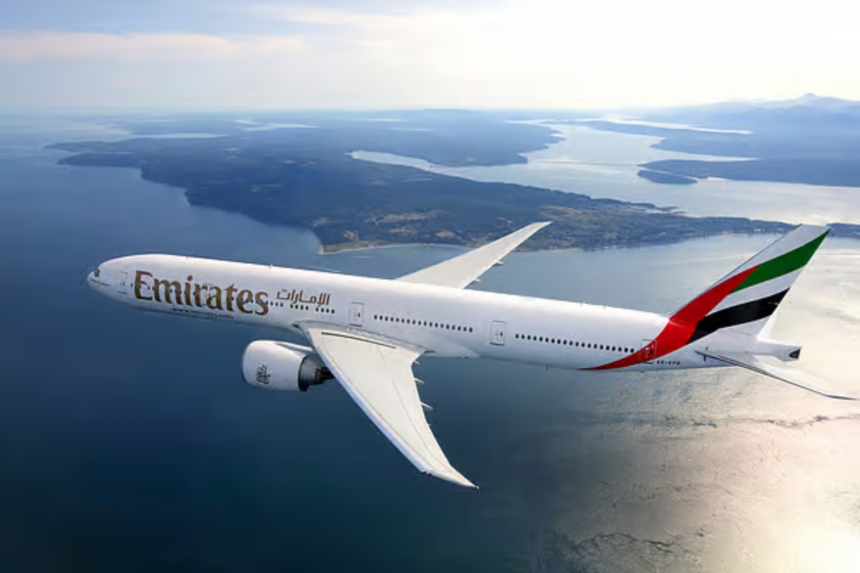
Emirates President Tim Clark expects a rapid recovery for Emirates once regional tensions ease, stating that demand will return quickly after the Iran-related conflict subsides.
Speaking at the CAPA Airline Leader Summit in Berlin, Clark said the airline and Dubai’s aviation sector could rebound within weeks after the conflict ends.
Operations Reduced but Demand Remains Intact
The conflict involving the US, Israel, and Iran disrupted aviation activity across the region. Airlines in the UAE, GCC, and broader Middle East scaled back operations after February 28.
Emirates currently operates at around 65% capacity, reflecting temporary adjustments rather than structural decline.
Clark indicated that the slowdown has not weakened underlying demand.
Confidence in Brand Strength and Market Position
Clark dismissed concerns about losing market share to competitors.
He stated that Emirates is likely to maintain its position as one of the most profitable global airlines, supported by strong brand equity and consistent service standards.
The airline’s positioning as a global connector remains unchanged.
Dubai Aviation Sector Expected to Recover Quickly
The outlook extends beyond Emirates.
Dubai’s aviation ecosystem is expected to regain momentum rapidly once conditions stabilise. Clark pointed to the resilience of travel demand and the city’s global appeal as key drivers.
He noted that travellers tend to return quickly once disruptions ease, restoring traffic flows across major routes.
Fuel Costs Rise, but Supply Remains Stable
Airlines continue to face pressure from higher fuel costs, with oil prices exceeding $100 per barrel during the conflict.
Despite this, Emirates does not expect fuel supply constraints. Clark confirmed that availability remains sufficient, allowing the airline to absorb cost increases.
This reduces operational risk during recovery.
Short-Term Disruption, Long-Term Stability
The Emirates airline recovery outlook reflects a clear distinction.
The disruption is temporary. The system remains intact.
Reduced capacity, higher fuel costs, and geopolitical uncertainty define the current phase. Demand strength, brand positioning, and operational scale define the next.
Once conditions stabilise, recovery is expected to follow quickly.
Source: KT