


Oil markets continue to price in disruption, with Brent crude rising to $100.16 per barrel as the Strait of Hormuz remains constrained.
The move reflects a sharp shift from pre-conflict levels near $70. The increase is not driven by demand. It is driven by restricted supply.
The Strait of Hormuz oil prices dynamic now sits at the center of global energy markets.
A Critical Chokepoint Under Pressure
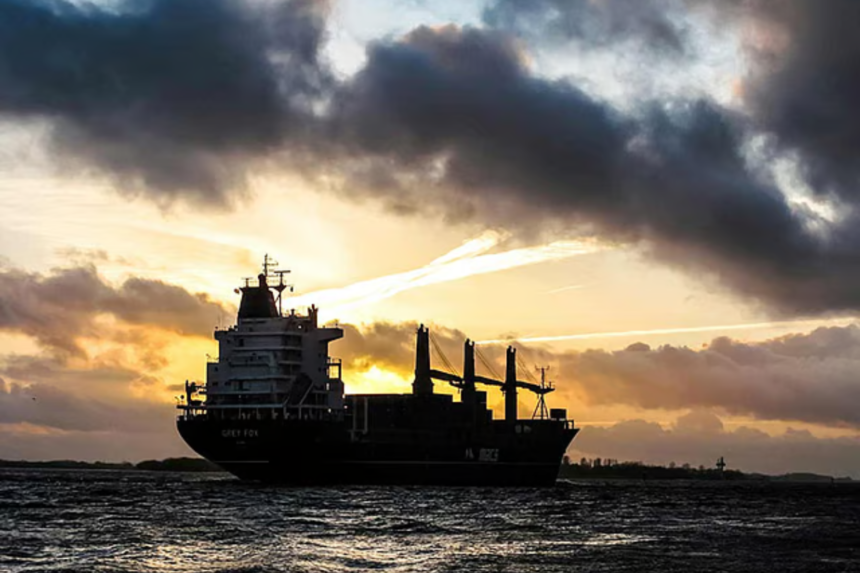
The Strait of Hormuz carries roughly 20% of the world’s oil exports. Current disruptions have reduced traffic significantly following vessel attacks and tanker seizures.
This has limited the flow of crude into global markets.
Even partial disruption at this scale creates immediate pricing pressure. The system does not require a full shutdown. Constraint alone is enough.
Policy Signals Add to Market Uncertainty
The geopolitical environment remains unresolved.
Donald Trump has extended a ceasefire window to allow negotiations. At the same time, the United States continues to enforce a blockade on Iranian ports.
This creates a dual signal. De-escalation in language. Restriction in action.
Markets respond to execution, not messaging. The result is sustained uncertainty.
Conflicting Forces Keep Prices Contained
Analysts point to opposing dynamics shaping the current range.
Supply is tightening due to restricted flows. Demand remains uneven, particularly in parts of Asia. Inventory drawdowns in China have softened immediate pressure.
This balance explains why prices hold near $100 rather than moving sharply higher.
Volatility persists because neither side of the equation dominates fully.
Refined Fuel Markets Show Deeper Stress
The strain is more visible in downstream markets.
Diesel, jet fuel, and petrochemical inputs are tightening. Costs are rising. Airlines and governments are beginning to adjust operations.
These segments react faster than crude benchmarks. They reveal underlying constraints earlier.
Structural Limits Slow Any Recovery
Even if the Strait reopens, supply will not normalize quickly.
Tankers are out of position. Infrastructure may be damaged. Production and logistics require time to restart.
Lost output could reach hundreds of millions of barrels. This raises the structural floor for oil prices beyond the immediate disruption.
Short-term relief does not reset the system.
Delayed Impact May Push Prices Further
Current pricing may not fully reflect future constraints.
Officials, including Qatar’s finance leadership, have indicated that existing premiums could represent only early-stage effects. A prolonged disruption would push prices higher over the coming months.
The lag between disruption and full market impact remains a key variable.
Market Direction Driven by Supply, Not Demand
The current phase is defined by supply-side pressure.
Restricted flows through the Strait of Hormuz limit availability. Political uncertainty delays resolution. Refining capacity tightens.
This combination supports prices at elevated levels.
A meaningful decline requires a clear restoration of shipping routes and stable geopolitical conditions.
Until then, the Strait of Hormuz oil prices cycle remains sensitive to every development in the region.
Unsplash