


Regional Conflict Raises Global Concerns
Qatar’s Prime Minister Sheikh Mohammed bin Abdulrahman bin Jassim Al-Thani has warned that the current conflict in the Gulf has reached a critical stage.
In an interview with Sky News, he described the situation as “extremely serious,” saying it threatens regional security as well as global economic stability.
The prime minister said attacks in the region have already disrupted aviation, energy supply, and industrial operations.
Energy Infrastructure Under Pressure
Qatar plays a central role in global energy markets. According to Sheikh Mohammed, the country supplies around 20 percent of global energy.
When the attacks began, energy operations had to halt on the first day. The interruption triggered immediate volatility in international energy prices.
On the following day, strikes targeted industrial complexes, forcing authorities to shut down several downstream factories and manufacturing plants, including fertilizer production facilities.
Qatar ranks as the world’s second-largest producer of urea and accounts for about 10 percent of the global market. Any disruption in fertilizer supply could affect agricultural production and food security worldwide.
Critical Global Resources at Risk
The country also produces about 35 percent of the world’s helium supply.
Helium is essential for a range of industries, including medical imaging equipment and scientific research facilities. Disruptions to production could therefore affect hospitals and laboratories across multiple countries.
Civilian Infrastructure Targeted
The prime minister said the attacks have affected both strategic and civilian infrastructure.
He estimated that about 40 percent of the attacks targeted energy facilities, while 25 percent struck civilian infrastructure. The remaining attacks hit military sites.
He said Qatar’s international airport had been targeted several times. Drinking water storage facilities were also attacked.
Such strikes, he said, raise serious questions about the purpose behind targeting civilian assets.
Diplomatic Channels Remain Open
Despite the escalation, Qatar continues to pursue diplomatic engagement with Iran.
Sheikh Mohammed said the attacks have shaken trust between the two countries but stressed that dialogue remains necessary.
Qatar has called on Iran to halt attacks on Gulf states and other countries not involved in the conflict.
Risk of Wider Regional Conflict
The prime minister warned that prolonged attacks could draw additional countries into the conflict.
If more nations are forced to focus on defending their own territory, opportunities for international mediation could disappear.
He also expressed hope that the United States and other international partners will support efforts toward de-escalation and diplomatic resolution.
International Partnerships
Sheikh Mohammed thanked the United Kingdom and European partners for their support during the crisis.
He noted that Qatar and the UK operate a joint military squadron and maintain close defense cooperation.
European governments have also provided support on supply chain coordination and logistics, he said.
A Crisis With Global Consequences
The Gulf region serves as one of the world’s most important transit hubs.
Airports in Doha, Abu Dhabi, and Dubai collectively handle around 350 million passengers annually. Disruptions across the region have therefore affected international aviation and global logistics networks.
For Qatar, the immediate priority remains reducing tensions.
The prime minister said the country will continue pursuing diplomatic efforts aimed at restoring stability in the region while protecting critical global infrastructure.
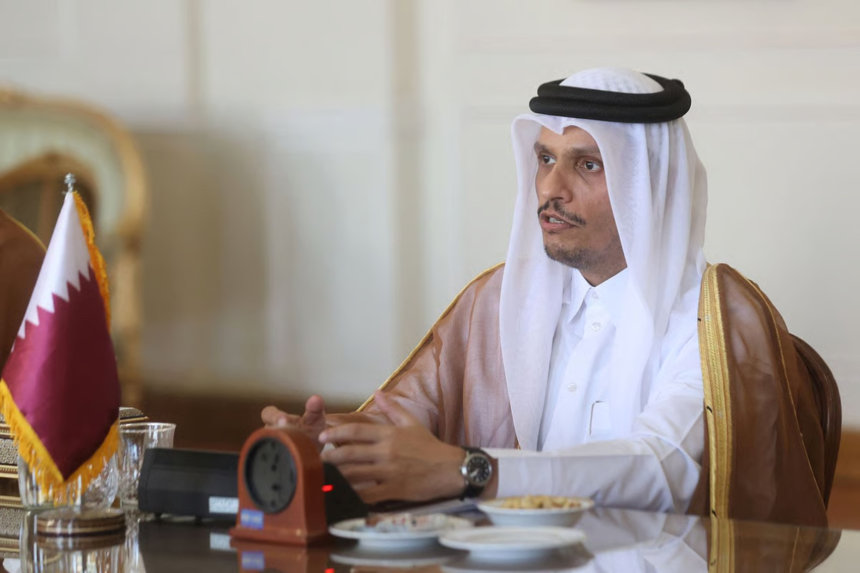
Qatar’s Prime Minister and Foreign Minister, Sheikh Mohammed bin Abdulrahman Al Thani.
Photo: Reuters/File