


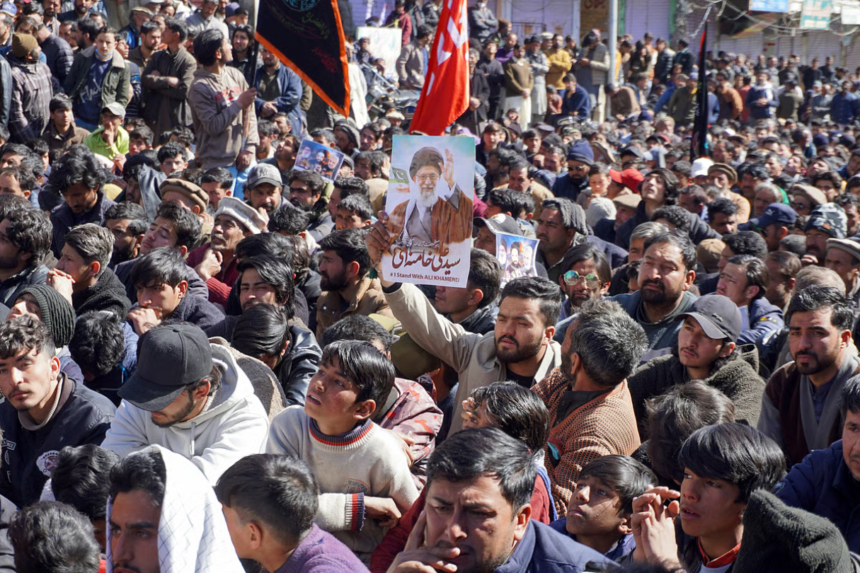
At least 25 people have died in violent protests across Pakistan following the killing of Ali Khamenei in US-Israeli strikes, according to an AFP tally.
Demonstrations erupted over the weekend in major cities, including Karachi, Islamabad, and parts of Gilgit-Baltistan, as thousands took to the streets in anger.
Karachi Clashes Leave Dead and Injured
In Karachi, hundreds of protesters attempted to storm American diplomatic buildings. Police confronted crowds near the consular premises, firing tear gas to disperse demonstrators.
Officials from the Karachi police surgeon’s office confirmed at least 10 deaths and more than 70 injuries during the unrest. Hospital records reviewed by AFP indicated that nine of the fatalities resulted from gunshot wounds.
Witnesses reported that groups of young protesters breached the main gate of the consular compound and damaged property before police regained control.
Gilgit-Baltistan Under Curfew
In northern Gilgit-Baltistan, authorities reported at least 13 deaths in clashes between protesters and security forces.
Rescue officials confirmed seven deaths in Gilgit, while medical authorities in Skardu reported six additional fatalities. In response, officials imposed a late-night curfew in both cities until Wednesday and deployed army units to patrol the streets.
Islamabad Protest Draws Thousands
In Islamabad, thousands gathered near the diplomatic enclave, many carrying portraits of Khamenei. Police again used tear gas to prevent protesters from approaching the US embassy compound.
Two additional deaths were reported in the capital amid confrontations.
The embassies of the United States and the United Kingdom issued advisories urging their citizens in Pakistan to exercise caution.
Market Shock and Political Response
Financial markets reacted sharply. The Karachi Stock Exchange’s KSE-100 Index plunged 9.6 percent, losing 16,089 points in what market analysts described as its largest single-day decline.
Sanie Khan, executive director of Floret Capitals, described the situation as alarming and challenging for Pakistan’s economic stability.
Prime Minister Shehbaz Sharif condemned the killing of Khamenei, calling it a violation of international law. He said targeting heads of state or government contravenes long-standing international norms and expressed condolences to the Iranian people.
Regional Fallout
The strikes against Iran have intensified tensions across the region, with Pakistan facing both internal unrest and diplomatic pressure. Protesters in Karachi chanted slogans against the United States and Israel, while security forces sought to prevent attacks on foreign diplomatic missions.
With curfews in place and military deployments ongoing, authorities continue efforts to contain the violence and restore order.
A Shiite Muslim holds up a poster of the deceased Iran’s supreme leader Ayatollah Ali Khamenei during an anti-US and Israel protest in Skardu in Pakistan’s Gilgit-Baltistan region on March 1. Photo: AFP