



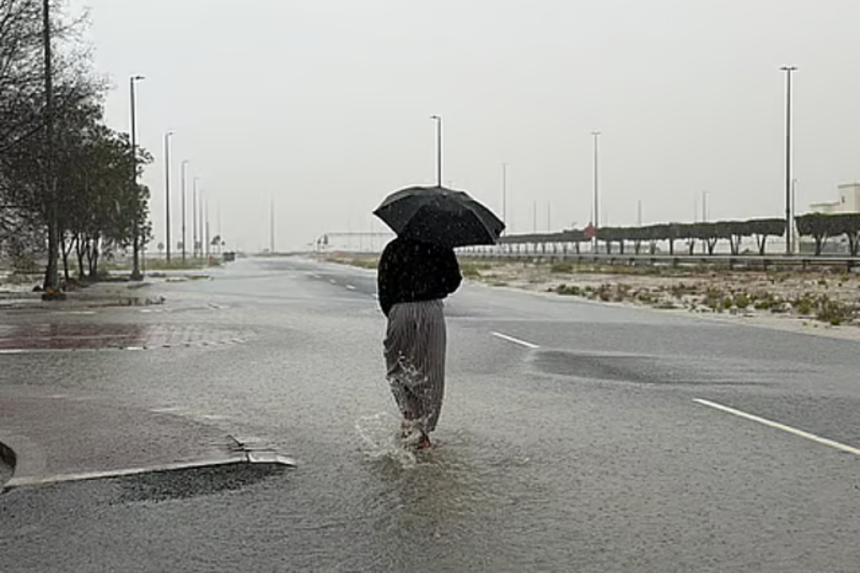
The weather pattern could bring a warmer winter, earlier rain and periods of heavier rainfall across the UAE through April 2027.
Abu Dhabi: A strengthening El Niño could influence UAE weather from autumn through spring 2027, bringing warmer-than-usual temperatures, an earlier start to the rainy season and periods of heavier rainfall, according to the National Centre of Meteorology (NCM).
Dr Mohammed Al Abri, director of the Meteorology Department at the NCM, said the probability of this year’s El Niño developing into a strong event is around 70 per cent.
For the UAE, its effects could become more noticeable during autumn and continue through the 2026-27 winter, potentially lasting until April 2027.
That does not mean continuous rain throughout the season. Instead, the forecast points to the possibility of intermittent periods of more significant weather, including episodes of heavy rainfall and an earlier-than-usual start to the wetter season.
UAE temperatures could rise above normal
Temperatures are also expected to remain higher overall during the period.
Al Abri said some temperature departures could exceed 2.7°C above normal.
However, a warmer seasonal average does not mean the UAE will avoid cold weather altogether.
Short periods of cooler conditions could still occur and may last several days or even more than a week.
The distinction is important because seasonal forecasts describe how weather conditions are expected to average out over weeks or months. They do not predict that every day will follow the same pattern.
A warmer winter can still contain sharp cold spells, while a wetter season can include extended dry periods.
What is El Niño?
El Niño is a naturally recurring warming of surface waters across the central and eastern tropical Pacific Ocean.
It typically develops every two to seven years and can last around nine to 12 months.
Although the phenomenon begins in the Pacific, its effects can extend across the world. Changes in ocean temperatures influence atmospheric circulation, tropical rainfall, jet streams and pressure patterns.
These shifts can change the likelihood of heat, rainfall, storms and other extreme weather events in distant regions.
The NCM’s latest assessment said sea-surface temperatures in the Niño 3.4 region had reached around 0.5°C above normal, placing conditions within El Niño territory.
The centre continues to monitor the El Niño-Southern Oscillation through international climate observations and forecasting models.
Why is the 2026 El Niño unusual?
The developing El Niño is attracting particular attention because several forecasting systems are indicating an exceptionally strong event.
The UK’s Met Office said on August 21 that forecasts pointed to what could be the largest El Niño in living memory and possibly the strongest since the 19th century.
Its models indicate that tropical Pacific sea-surface temperatures could rise by more than 3°C above normal later this year.
For comparison, a typical El Niño produces warming of around 1°C to 2°C in the affected Pacific region.
The Met Office has cautioned that uncertainty remains over the event’s eventual strength. However, several forecasting systems are currently producing unusually strong signals.
A stronger El Niño can produce larger disruptions to established atmospheric circulation patterns, increasing the potential for unusual weather across different parts of the world.
Could El Niño bring more rain to the UAE?
Not necessarily.
El Niño does not guarantee a wet winter in the UAE or determine exactly when or where heavy rain will occur.
Its influence is indirect. Changes in large-scale atmospheric circulation can alter the probability of certain weather patterns developing over the Arabian Peninsula.
For the UAE, NCM studies indicate an increased potential for significant rainfall episodes from autumn into winter, including the possibility of an earlier start to the rainy season.
However, the forecast indicates increased probability rather than certainty.
Long-range climate models can show whether rainfall is more likely to be above, near or below average. They cannot determine months in advance which emirate will experience heavy rain on a particular day.
That level of precision becomes possible only much closer to an individual weather event.
A warmer winter does mean no cold spells.
The expected temperature increase could create another common misunderstanding.
The UAE may experience a warmer winter overall while still seeing periods of significantly colder weather.
Al Abri said cold spells lasting a week or longer could still occur.
The difference would be visible in the seasonal average. Even with those colder periods, temperatures across the full season could remain above their usual levels.
This is why seasonal climate forecasts should not be interpreted as day-to-day weather forecasts.
NCM is also watching cyclone activity
The NCM is also monitoring the possibility of increased cyclone activity in the Indian Ocean as atmospheric circulation changes.
That does not mean a cyclone is currently forecast to hit the UAE.
Tropical cyclone development and movement depend on multiple factors, including ocean temperatures, atmospheric conditions and wind patterns.
Any potential threat to the UAE or Arabian Peninsula can only be assessed with greater confidence once an individual storm begins to develop.
For the UAE, the more immediate question is whether changing circulation patterns will affect moisture moving towards the Arabian Peninsula and increase the frequency of unstable weather systems.
El Niño and climate change are different.
A strong El Niño can temporarily push global temperatures higher, but El Niño is not the same as climate change.
Human-driven climate change results primarily from greenhouse gases accumulating in the atmosphere and trapping additional heat over decades.
El Niño is a natural climate cycle that redistributes heat stored largely in the ocean and releases more of that heat into the atmosphere during its warm phase.
The two phenomena can occur at the same time.
That means the current El Niño is developing against a backdrop of a planet that is already significantly warmer because of long-term greenhouse gas emissions.
The Met Office expects the global temperature response to this El Niño to become particularly apparent in 2027, with the year potentially surpassing 2024 as the warmest year on record.
What UAE residents should expect
For the UAE, the clearest signal is not a forecast of months of extreme weather. It is a higher probability of unusual weather episodes within a warmer overall season.
From autumn 2026 through winter and into early spring 2027, residents could see:
- Warmer-than-normal seasonal temperatures
- Earlier onset of the wetter season
- Periods of heavier rainfall
- Occasional extended cold spells despite higher average temperatures
- Potential changes in regional cyclone activity
The NCM expects the influence of El Niño on UAE weather to remain noticeable until around April 2027.
As the season approaches, updated forecasts will provide a clearer picture of when and where individual weather events are likely to develop.
Read more news and follow us on Instagarm.
El Niño effects are expected to become more noticeable from autumn and continue through the 2026-27 winter, potentially lingering until April.
Supplied
Source: Gulf News