


Qatar said official records show 19 injuries, including a child, challenging Iran’s claim that the strikes only targeted US interests.
Qatar has rejected Iran’s assertion that its missile attacks on the country were directed only at US interests, saying official records submitted to the United Nations document strikes on civilian, commercial and residential areas.
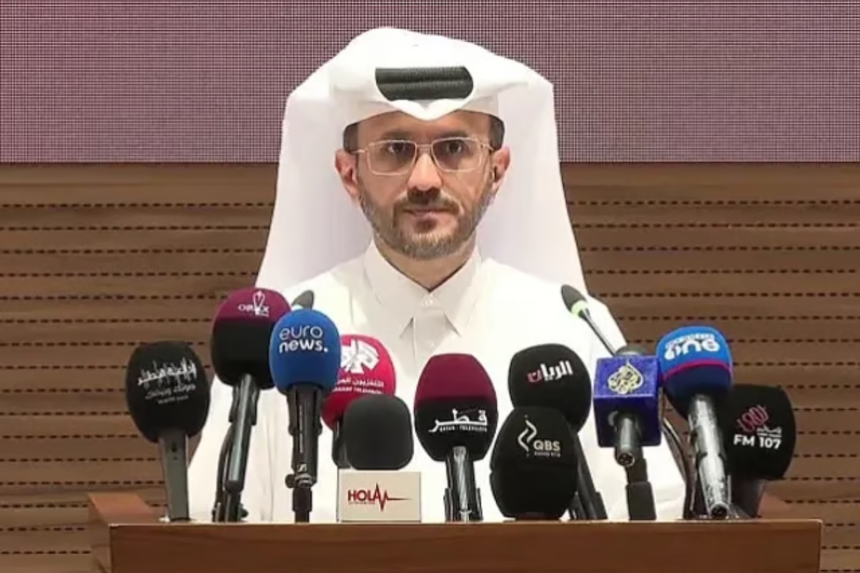
Dr Majed bin Mohammed Al Ansari, Adviser to the Prime Minister and Official Spokesperson for Qatar’s Ministry of Foreign Affairs, said Doha was relying on its formal UN submissions to document the attacks.
According to Al Ansari, two identical Qatari letters dated March 1, 2026, under reference S/2026/110, recorded Iranian missile launches towards civilian, commercial, and residential areas that caused damage and injured 16 people.
He added that a separate Qatari letter dated July 20 documented further attacks that injured three people, including a child.
The figures bring the number of injuries cited by Qatar in its official records to 19.
Qatar Says UN Records Tell a Different Story
Al Ansari said Iran should refer to Qatar’s formal UN documentation rather than selectively citing a security risk assessment prepared for a different purpose.
The document referenced by Iran was prepared for the International Telecommunication Union’s Plenipotentiary Conference, he said, and was intended as a safety and security assessment rather than a comprehensive account of the attacks or a legal determination of responsibility.
According to Qatar, the same assessment acknowledged direct attacks inside the country, including the March 18 strike on the Ras Laffan gas facilities, as well as the temporary closure of Qatari airspace and disruption to civilian life.
Al Ansari argued that taking an isolated sentence from the assessment while ignoring the wider context could create a misleading impression of what occurred.
Qatar Rejects Claim That Interceptions Ended the Threat
Qatar’s foreign ministry spokesperson also rejected any suggestion that the successful interception of Iranian missiles and drones diminished the seriousness of the attacks.
He said Qatar’s ability to intercept incoming weapons did not remove the responsibility of those who launched them.
Al Ansari also objected to descriptions of the strike on Ras Laffan as an “alleged” incident, saying the attack had been formally documented in Qatar’s UN letter S/2026/207.
Ras Laffan is a major Qatari energy hub and an important part of the global liquefied natural gas supply chain. Qatar has argued that attacks on such infrastructure go beyond a confrontation involving US military interests.
Qatar Says It Was Not a Party to the Conflict
Doha has repeatedly maintained that it was not a party to the conflict.
Al Ansari said attacks on Qatari territory and civilian infrastructure could not be justified and rejected attempts to frame destabilising actions affecting the Strait of Hormuz as legitimate responses.
He also said selective quotations from official documents could not change the nature of the incidents recorded in Qatar’s diplomatic submissions.
Qatar has continued to call for de-escalation and said dialogue and peaceful means remain the preferred route for resolving disputes.
Qatar PM Previously Rejected Iran’s Explanation
The latest statement follows an earlier telephone conversation between Qatari Prime Minister Sheikh Mohammed bin Abdulrahman bin Jassim Al Thani and Iranian Foreign Minister Abbas Araghchi.
During that conversation, Araghchi said Iranian missile attacks had been directed at American interests and were not intended to target Qatar.
Sheikh Mohammed rejected that explanation, saying the attacks had struck civilian and residential areas, including locations near Hamad International Airport, as well as critical infrastructure and industrial areas containing liquefied natural gas facilities.
He also said drones and aircraft had entered Qatari airspace and called for attacks on countries seeking to remain outside the conflict to stop immediately.
Ras Laffan Attack Adds to Tensions
The dispute over the targets of the Iranian strikes is particularly significant because of the reported attack on Ras Laffan.
Qatar regards the energy complex as a national asset belonging to the Qatari people as well as an important component of global energy security.
Any attack affecting the facility therefore carries implications beyond Qatar’s domestic security. Ras Laffan is central to Qatar’s LNG industry, making the protection of its infrastructure an issue with potential consequences for international energy markets.
Doha has previously rejected repeated Iranian claims that its attacks were limited to American bases or interests in the country.
Qatar Maintains Diplomatic Approach
Despite the increasingly direct criticism of Iran’s account, Qatar has continued to emphasize diplomacy.
Al Ansari said Doha would maintain its efforts to reduce escalation and pursue peaceful solutions to the wider conflict.
Qatar’s position is that the official record of the attacks should be judged through its formal diplomatic documentation, including the casualty figures and descriptions of damage submitted to the United Nations.
The dispute therefore goes beyond competing political narratives. Qatar is challenging Iran’s description of where and why the attacks took place, citing official records that say they document damage to civilian, residential, and commercial areas and injuries to 19 people, including a child.
For Doha, successful missile interceptions do not change that record, nor do they remove what it says is Iran’s responsibility for attacks carried out on Qatari territory.
Source: Gulf News
Al Ansari said Qatar’s two identical letters dated March 1, 2026, under reference S/2026/110, documented the launch of Iranian missiles towards civilian, commercial and residential areas.
Supplied