



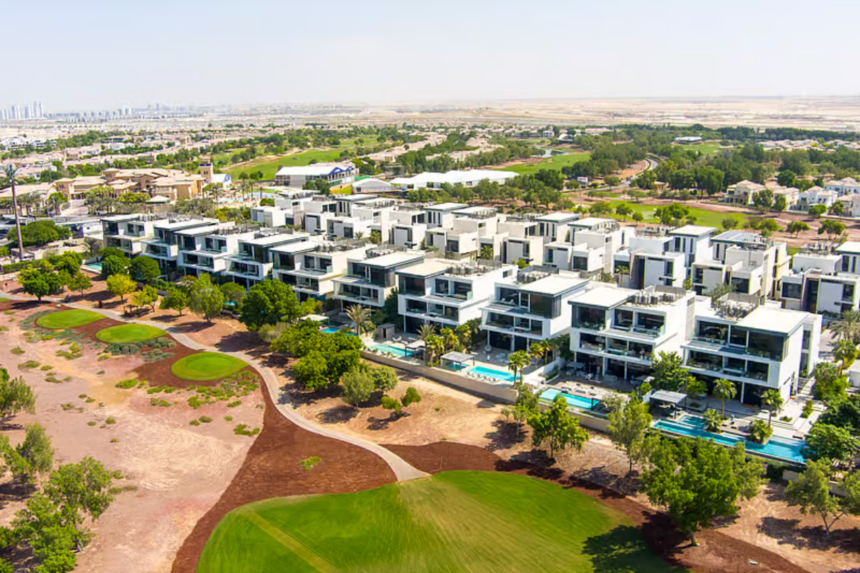
Dubai’s Flexi Rent scheme allows tenants to pay rent monthly, quarterly or annually, easing the upfront cash burden of larger homes.
Dubai: Dubai’s new Flexi Rent scheme could encourage some residents to move into larger apartments and townhouses by reducing the upfront cash required for annual rental contracts.
Launched by the Dubai Land Department (DLD) in June, the initiative allows eligible tenants working with participating real estate companies to choose monthly, quarterly or annual rental payments.
The change does not reduce the total annual rent. Instead, it spreads the financial commitment over the year, potentially making larger homes easier for some households to manage.
Why Tenants Could Upgrade Their Homes
Real estate executives say the biggest impact could come from tenants who can afford a higher annual rent but struggle with a large upfront payment.
Farooq Syed, CEO of Springfield Properties, said residents who previously rented one-bedroom apartments could potentially consider two- or three-bedroom homes or townhouses under the more flexible payment structure.
However, he noted that the scheme does not fundamentally change affordability because the total annual rental commitment remains the same.
The difference is cash flow.
A tenant may be able to manage a larger monthly payment but struggle to produce tens of thousands of dirhams at once under a traditional annual contract.
Studios Could Become One-Bedrooms, Apartments Could Become Townhouses
Rohit Bachani, co-founder of Merlin Real Estate, expects the scheme to encourage movement across several segments of Dubai’s rental market.
That could mean:
- Studios moving to one-bedroom apartments
- One-bedroom tenants upgrading to two-bedroom homes
- Apartment tenants considering townhouses
- Families moving into larger properties as their needs change
Communities such as Town Square, The Valley, Damac Hills 2 and Dubai South could benefit from increased demand for larger homes.
Bachani said the main constraint for many tenants has not necessarily been their ability to meet the annual rent, but the size of the upfront payment required.
Dubai’s Rental Market Is Already Changing
The potential impact of Flexi Rent comes as Dubai’s rental market shows signs of moderation.
According to Morgan’s International Realty, Dubai recorded 115,992 rental transactions worth Dh10.18 billion in Q2 2026. Transaction volume fell 19% quarter-on-quarter, while total rental value declined 18%.
New rental contracts fell 15% to 42,100, while renewals dropped 20% to 73,892.
Median rental prices also declined 7% to Dh93 per square foot.
Renewals still accounted for around 64% of rental activity, suggesting that a large share of tenants continue to remain in their existing homes.
Larger Homes Could Benefit Most
Flexi Rent could therefore have a more noticeable effect on the upper end of the rental market than on overall affordability.
Larger properties often require substantially higher upfront payments, making them harder for families to access under traditional payment structures.
Spreading those payments throughout the year could remove that immediate barrier and encourage some households to trade up.
For landlords, particularly those with larger properties that have experienced slower leasing activity, that could create a new pool of potential tenants.
Flexibility Does Not Mean Cheaper Rent
There is an important distinction between payment flexibility and affordability.
Flexi Rent does not automatically make a Dh100,000 annual property cheaper. It simply changes how the tenant pays that Dh100,000.
Tenants will still need to meet affordability and eligibility requirements, and actual rental prices will remain the biggest factor determining demand.
The likely impact of Dubai Flexi Rent is therefore not a sudden surge in housing affordability, but a gradual shift in how residents allocate their existing budgets.
For some tenants, that difference could be enough to turn a two-bedroom home from financially difficult into practically manageable.
Source: Khaleej Times
Read more news and follow us on Instagarm.
Real estate industry executives say that the biggest constraint on tenants trading up in Dubai has been the individual cheque required upfront. Photo: Blackbrick