



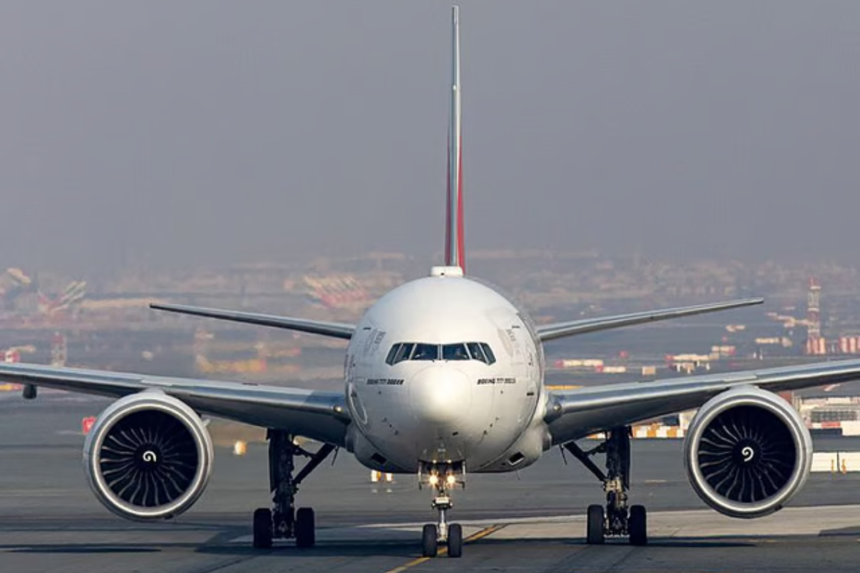
Higher fuel costs, longer flight routes, and reduced airline capacity could keep pressure on ticket prices even after regional tensions ease.
Dubai: UAE airfares could remain elevated through much of 2026, even if regional tensions ease, as higher fuel costs, longer flight routes and reduced airline capacity continue to affect the aviation industry.
A new report by Tourise and Oxford Economics estimates that, under a relatively positive resolution to the current crisis, global airfares could still be 5% to 10% above pre-war expectations in 2026. A prolonged disruption could push fares considerably higher.
The impact is particularly significant for the UAE because Dubai and Abu Dhabi sit at the centre of a major global aviation corridor.
Why UAE airfares could stay high
The report identifies three major factors keeping pressure on ticket prices:
- Higher fuel costs as disruption to energy flows affects oil and jet fuel markets.
- Longer flight routes as airlines avoid restricted airspace, increasing fuel consumption and operating costs.
- Lower capacity as airlines reduce or suspend services on affected routes.
Even if airspace restrictions begin to ease, fares may not fall immediately. Airlines often hedge fuel purchases, while passengers book flights months ahead, meaning changes in operating costs can take time to reach ticket prices.
Gulf aviation faces a major disruption.
The UAE is particularly exposed because Gulf airports handle around 14% of global transit traffic, while roughly 20% of Europe-Asia travel typically connects through the region, according to the report.
When airlines are forced to reroute around affected airspace, flights can become longer and more expensive to operate. For UAE-based carriers, this can result in higher costs, schedule changes and fewer seats on some routes.
The report cites IATA data showing that international capacity to and from Middle Eastern countries was nearly 40% lower in April 2026 than a year earlier, while passenger demand fell by almost 50%.
What happens if the crisis continues?
Tourise and Oxford Economics modelled three possible scenarios.
Under a sustained ceasefire, global travel could grow by around 6% in 2026. If hostilities resume, growth could fall to around 1%. Under prolonged disruption, global travel could decline by about 3%, with weakness extending into 2027.
However, even a ceasefire would not automatically restore airline capacity. Carriers may need time to rebuild schedules, restore routes and reposition aircraft.
Could Gulf airlines permanently change their routes?
One of the longer-term concerns is that airlines could redesign their networks if alternative routes remain necessary for an extended period.
Once new flight paths become established, some carriers could continue using them even after restrictions are lifted. That could alter the competitive position of Gulf hubs and potentially reduce reliance on connections through the region.
For Dubai, the issue therefore goes beyond the immediate disruption. The bigger question is whether temporary changes become permanent features of global airline networks.
UAE travellers may change their plans
Higher fares and uncertain schedules could also influence how UAE residents travel.
Travellers may become more price-conscious, book closer to departure, favour flexible tickets and choose regional destinations over longer international trips. Domestic and short-haul tourism could also benefit if international travel becomes more expensive or unpredictable.
The report’s analysis of 85 major crises over two decades suggests destinations that prepare before disruption recover significantly faster than those that react only after a crisis begins.
Airfares may take time to normalise
The immediate security situation is only one part of the equation. Fuel prices, airline capacity, flight routes and forward bookings can continue affecting ticket prices long after restrictions begin to ease.
For UAE travellers, that means cheaper flights may not return as soon as the geopolitical situation improves. UAE airfares could remain under pressure through 2026 as airlines absorb higher costs and gradually rebuild their networks.
Dubai International Airport is among the Gulf hubs at the centre of global air travel, with the Middle East crisis continuing to affect airline routes, capacity and fares.
Bloomberg