


The volcanic fallout has forced mass evacuations across the Philippines, damaging agricultural land and threatening local livelihoods.
Mass Displacement Across the Bicol Region
The Mayon Volcano ashfall 2026 event has displaced more than 102,000 people across the Bicol region, following a powerful eruption that released ash, rocks, and volcanic debris over a wide area.
According to the Philippine Office of Civil Defense, a total of 30,522 families across 87 villages have been affected, with over 1,400 families currently housed in evacuation centers while others continue to receive assistance outside formal shelters.
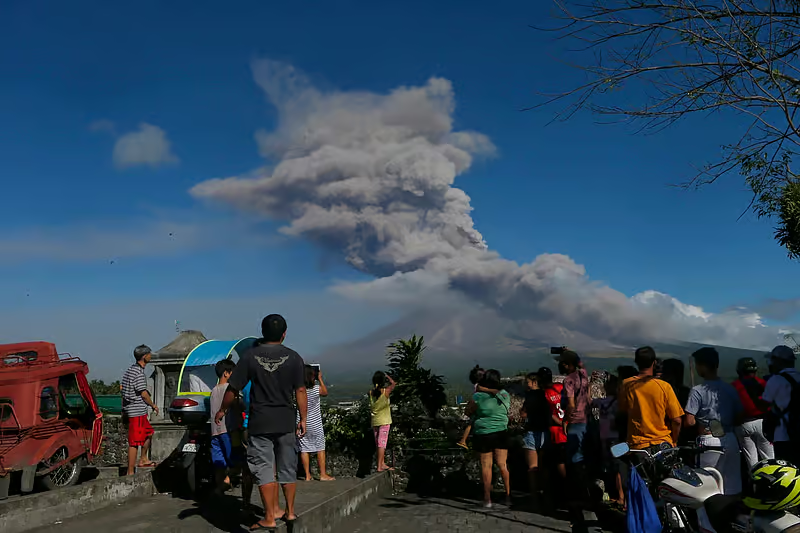
The eruption, which lasted approximately one hour on May 2, sent ash and fragmental materials up to one kilometer into the atmosphere and down the volcano’s slopes, marking one of the most significant volcanic events in recent months.
Widespread Ashfall and Infrastructure Impact
The Mayon Volcano ashfall 2026 has covered homes, roads, and vehicles with up to three inches of ash, disrupting daily life and requiring extensive cleanup efforts by residents and local authorities.
While traffic conditions have gradually improved, authorities have maintained strict restrictions, prohibiting residents from returning to areas within a six-kilometer radius of the volcano, which remains under Alert Level 3 due to continued risk.
The scale of ash deposition reflects both the intensity of the eruption and the vulnerability of surrounding communities to volcanic fallout.
Severe Agricultural Losses
Beyond displacement, the Mayon Volcano ashfall of 2026 has inflicted significant damage on agriculture, which remains a primary source of livelihood in the affected areas.
Farmers have reported extensive losses of rice, corn, vegetables, and other high-value crops, with hundreds of hectares of ready-to-harvest rice destroyed during a critical harvesting period between April and May.
Livestock losses have also been reported, with animals left behind during evacuations unable to survive the ashfall and hazardous conditions.
These losses are expected to have lasting economic consequences, with recovery projected to take several months as soil conditions, crop cycles, and farm operations gradually stabilize.
A Volcano of Beauty and Risk
Mayon Volcano remains one of the most iconic natural landmarks in the Philippines, known for its near-perfect conical shape and its role as a central feature of tourism in the Bicol region.
Standing at 2,462 meters, the volcano is both a symbol of natural beauty and a source of recurring risk, with frequent eruptions that simultaneously enrich surrounding farmland with minerals while posing periodic threats to nearby communities.
Its historical record includes one of the country’s deadliest eruptions in 1815, which claimed around 2,200 lives and reshaped the region’s landscape.
Long-Term Impact on Communities
The Mayon Volcano ashfall 2026 underscores the fragile balance between natural systems and human settlement in volcanic regions, where economic activity, agriculture, and habitation remain closely tied to an active geological environment.
While evacuation measures have limited immediate casualties, the broader impact is unfolding across livelihoods, food supply, and local economies, with recovery dependent on both natural conditions and sustained institutional support.
The current phase remains one of containment and stabilization, as authorities monitor volcanic activity and affected communities begin the process of rebuilding.
Residents watch as Mayon Volcano spews ash
Read more news and follow us on Instagram
Source: KT