


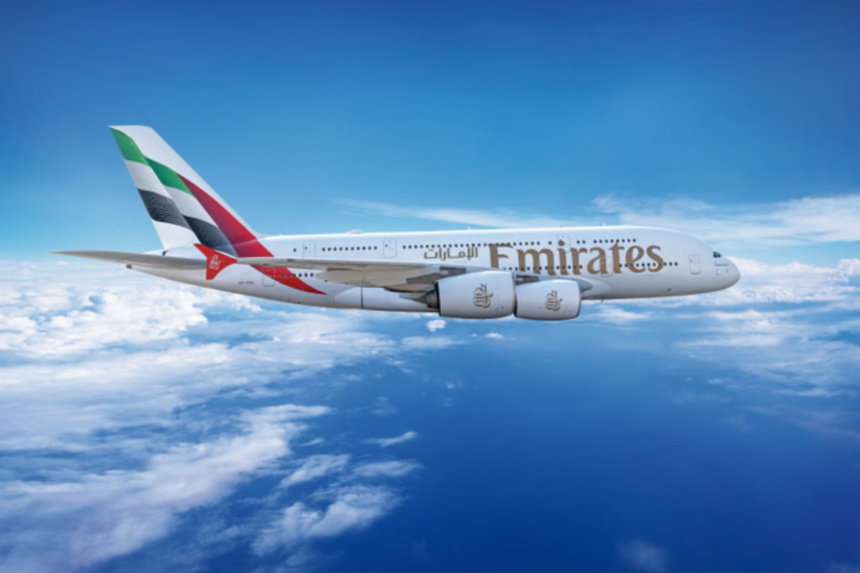
With services restored to 137 destinations worldwide, the airline signals a strong return to pre-disruption scale.
Network Recovery Nears Full Scale
Dubai-based Emirates has restored 96 percent of its global network, marking a near-complete recovery and reinforcing the scale of Emirates global network restoration across major international routes.
The airline now operates to 137 destinations across 72 countries, supported by more than 1,300 weekly flights, representing around 75 percent of pre-disruption capacity as services continue to expand steadily across key regions, including Europe, the Americas, Asia, and the Middle East.
This phase of Emirates’ global network restoration reflects a measured return, where capacity is being aligned with operational readiness and evolving travel demand rather than being deployed aggressively.
Passenger Movement During Disruption
During the disruption period between March 1 and April 30, Emirates carried approximately 4.7 million passengers despite operating under reduced capacity, demonstrating the airline’s ability to sustain movement across its network even under constrained conditions.
This level of continuity highlights the structural strength behind Emirates’ global network restoration, where maintaining essential connectivity remained a priority while rebuilding operations.
Flexible Travel Measures Support Demand
As part of its recovery approach, Emirates introduced flexible travel policies that allow customers to change travel dates once without additional cost for bookings made from April 2, alongside a 24-hour fare hold option.
The airline continues to offer its Dubai Connect program for long transit passengers, providing hotel stays, transfers, meals, and visa support, which strengthens the passenger experience while supporting Emirates’ global network restoration through improved transit efficiency
Dubai Airport Reflects Regional Impact
Passenger traffic at Dubai International Airport illustrates the broader effects of disruption, with 18.6 million passengers recorded in the first quarter of 2026, marking a 20.6 percent decline year on year.
March traffic dropped sharply to 2.5 million passengers, reflecting peak disruption, although core travel corridors remained active, with India, Saudi Arabia, the United Kingdom, and Pakistan leading as top markets, and cities such as London, Mumbai, and Jeddah continuing to anchor traffic flows.
Cargo and Operations Maintain Continuity
Cargo volumes reached 399,600 tonnes in the first quarter, while aircraft movements totaled 88,000, both reflecting declines linked to regional constraints, yet operations remained functional throughout the period.
Dubai’s aviation system continued to support over 6 million passengers, more than 32,000 flights, and over 213,000 tonnes of cargo during the disruption window, reinforcing the operational backbone supporting Emirates’ global network restoration.
A Structured Return to Scale
The current phase of Emirates global network restoration signals a controlled return to global aviation scale, where capacity, frequency, and service levels are being rebuilt with long-term stability in mind.
As operations continue to normalize, Emirates’ recovery reinforces Dubai’s role as a global transit hub, where connectivity, resilience, and infrastructure remain central to international travel flows.
The airline carried 4.7 million passengers during the disruption (March 1 to April 30)
Supplied/ Source: Gulf News