


Israeli forces expand airstrikes into Lebanon and Iran, and Iran responds with attacks across Israel and the Gulf. Here’s the latest.
The regional conflict widened sharply on Tuesday as Iran said it has not yet deployed its most advanced weapons, even as Israeli and US airstrikes intensified across Iran and Lebanon and Iranian attacks expanded across Israel and Gulf states.
In a fresh development, two drones struck the US Embassy in Riyadh early Tuesday, causing minor damage and a fire. The embassy temporarily suspended operations. Washington also closed its mission in Kuwait and began evacuating non-essential personnel from several countries in the region.
Tehran Signals Escalation but Holds Back Key Capabilities
Iranian officials warned that Tehran remains prepared for a prolonged confrontation and retains sophisticated military systems it has not yet used. The statement came as explosions echoed across Tehran overnight following sustained US and Israeli airstrikes that began after the reported killing of Iran’s Supreme Leader, Ali Khamenei, on Saturday.
Iran and allied groups responded with missile and drone attacks targeting Israel, Gulf states, and critical energy infrastructure.
According to the Iranian Red Crescent Society, at least 787 people have died in Iran since the conflict began. The figure could not be independently verified.
Israeli and US Operations Intensify
Israeli Prime Minister Benjamin Netanyahu said Israel continues to strike Iran “with force,” confirming operations over Tehran and Lebanon. He warned Hezbollah against further escalation and vowed stronger retaliation.
Israeli forces reported launching a ninth wave of large-scale strikes on what they described as regime infrastructure in Tehran. Iranian media said Bushehr airport sustained damage, including to aircraft and terminal facilities. Strikes also reportedly targeted Tehran’s Mehrabad Airport and the Assembly of Experts building.
Israel’s military stated it hit missile production facilities and targeted a senior Iranian commander in Tehran.
Meanwhile, an airstrike struck the Jurf al-Nasr base in Iraq, home to the Iran-backed Kataeb Hezbollah militia.
Iran Expands Regional Response
Iran launched fresh missile and drone attacks across Israel and the Gulf states. Explosions and air raid sirens were reported in Doha and Manama. Blasts were also heard in Jerusalem as Israeli defenses intercepted incoming projectiles.
An IRGC general warned that Iran could target “all economic centers” in the Middle East if attacks continue. Another adviser declared the Strait of Hormuz effectively closed, threatening global shipping routes.
Iran also announced a ban on exports of all food and agricultural products, prioritizing domestic supply amid wartime pressure.
Diplomatic Tensions Escalate
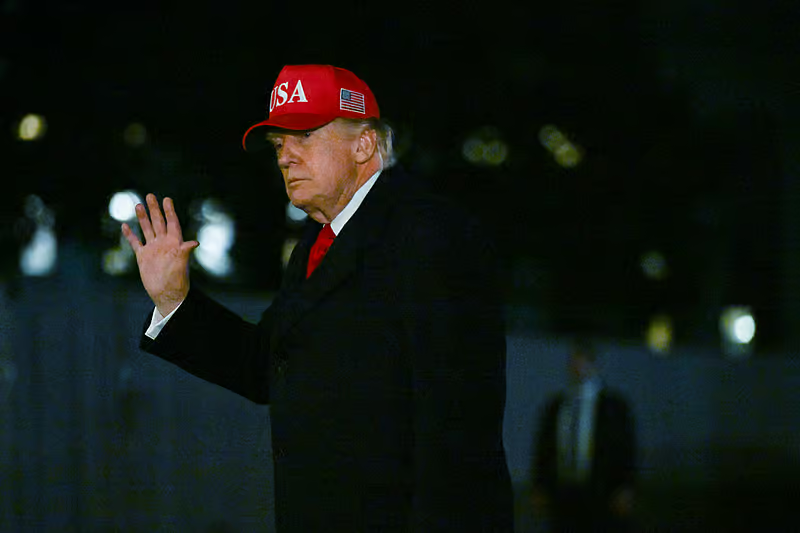
US President Donald Trump said it was “too late” for talks with Tehran, despite signals that Iran sought negotiations. He claimed most potential successors to Iran’s leadership had been eliminated in successive strikes.
Iran appealed to the UN Security Council, urging intervention. Russia’s Foreign Minister Sergei Lavrov called for de-escalation in discussions with Tehran’s top diplomat. The European Union and Gulf foreign ministers scheduled emergency talks by videolink.
Britain announced it would dispatch a warship and anti-drone helicopters to Cyprus after a UK base was struck.
China called for immediate de-escalation and warned against disruptions to shipping through the Strait of Hormuz.
Energy Markets and Displacement
Brent crude surged above $85 per barrel at one point amid fears of disruptions to Gulf oil and gas supplies. European gas prices also jumped sharply.
Iranian strikes reportedly hit energy facilities in Qatar and Saudi Arabia, and vessels near the Strait of Hormuz came under attack. Global markets reacted with heightened volatility.
The United Nations refugee agency said escalating hostilities displaced at least 30,000 people in Lebanon. Casualties mounted across the region, with reported deaths in Israel, Lebanon, the Gulf states, and among US personnel in Kuwait.
Conflict Enters Fourth Day
As Israeli forces advanced into parts of southern Lebanon in what they described as a forward defense move, Hezbollah launched additional rockets and drones at Israel. Airstrikes continued in Beirut and southern Lebanon.
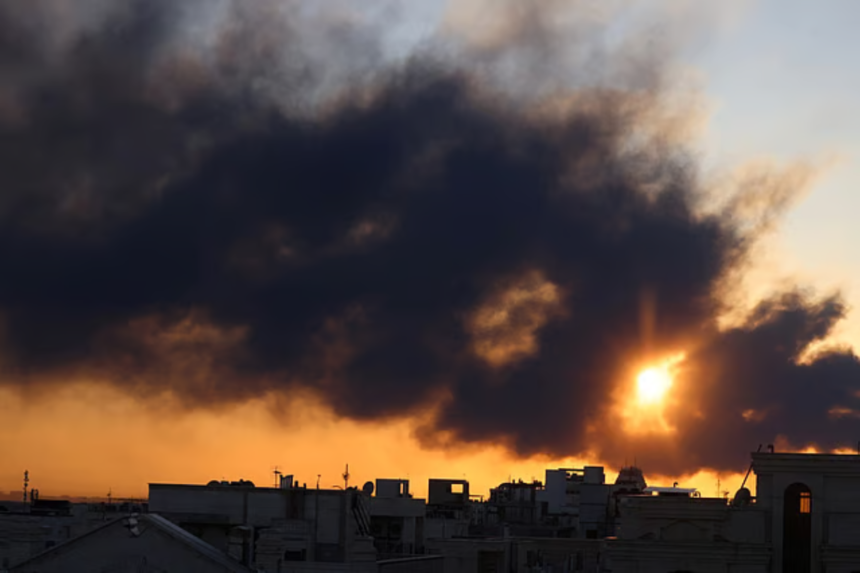
Explosions rocked northern Tehran overnight, while Iranian leaders reiterated that their most advanced weapons remain unused.
The conflict shows no immediate sign of de-escalation, and regional powers are bracing for further escalation as diplomatic efforts struggle to gain traction.
A plume of black smoke following a strike on the Iranian capital Tehran, on March 3, 2026.
AFP, Source: Gulf News