


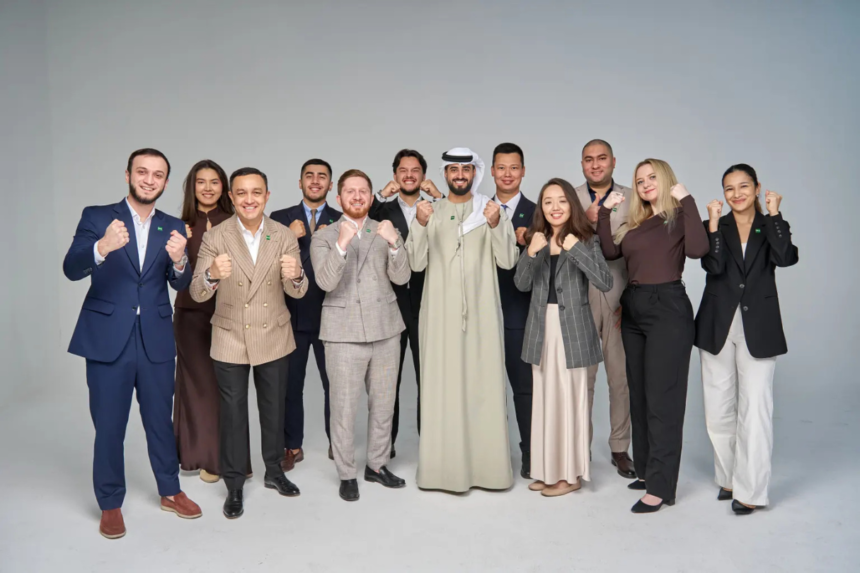
Faruh Kurbanov, Co-Founder of DIA Holding, on Dubai’s long-term growth strategy
In one of the world’s most competitive property markets, Faruh Kurbanov approaches development with a focus on time rather than speed.
As founder of DIA Developments, Kurbanov argues that long-term value in Dubai does not come from chasing momentum. It comes from managing capital, risk, and durability.
“In real estate, long-term strategy matters more than short-term market momentum,” he says. With more than two decades in construction, he evaluates each project as a capital decision that must remain relevant five, ten, or twenty years ahead.
From Projects to Platform Thinking
Kurbanov created DIA Developments as a structured platform for disciplined decision-making. Instead of reacting to cycles, the company focuses on location logic, end-user demand, operational efficiency, and adaptability.
“Projects end, but reputation does not,” he says.
He believes market influence comes from consistency rather than volume. A brand establishes accountability and continuity across developments, shaping standards beyond a single project.
In a city like Dubai, where ambition and scale define the skyline, he views trust as one of the most undervalued assets in the sector.
Starting With the End User
Kurbanov observes that many developers prioritize speed of sales and visual impact. He considers that model short-sighted.
DIA Developments begins with a different question. Who will live here? How will they live? Why will they stay?
This philosophy reflects his guiding principle, “Live and benefit others.” He describes it as a filter for decision-making, particularly when commercial pressure conflicts with long-term sustainability.
He maintains that sacrificing short-term profit can preserve trust and credibility over time.
Ecosystems, Not Standalone Buildings
DIA Developments speaks of creating ecosystems rather than isolated towers. Kurbanov defines livability as reducing daily compromise through functional layouts, efficient logistics, and alignment between infrastructure and lifestyle.
An ecosystem works when every element reinforces the other. Many projects fail, he argues, not because of vision, but because of execution.
This framework is most visible in LuzOra, the company’s flagship project on the Dubai Islands.
LuzOra and Flexible Living
Before design or branding began, LuzOra started with a single premise. Modern buyers expect both lifestyle and investment performance.
One of the project’s defining features is a flexible two-bedroom layout that can be divided into two independent units. The design responds to changing living patterns and rental strategies.
Owners can adapt the space across life stages or income models, including short-term leasing. Kurbanov emphasizes adaptability over fixed formats.
“Future living is adaptability,” he says, referring to energy efficiency, flexible space planning, and systems that remain relevant as technology evolves.
Technology With Discipline
DIA Developments integrates smart systems and AI-driven planning into its workflow. Kurbanov remains pragmatic about technology’s role.
He believes technology must solve concrete problems such as timeline control, quality assurance, and risk forecasting. Tools that do not improve execution remain cosmetic.
This discipline enables growth without diluting standards. Scaling, he argues, should reinforce a company’s DNA rather than weaken it.
A Measured Ambition
Looking ahead ten to twenty years, Kurbanov’s ambition centers on responsibility rather than scale.
He wants DIA Developments to be remembered as a company that built thoughtfully and with respect for people. He measures success not only by completed projects, but by how residents live within them.
Faruh Kurbanov of DIA Developments outlines a long-term strategy for Dubai real estate, focused on durability, trust, and ecosystem-driven design. For him, building cities means shaping environments where people want to live, work, and grow over time.
Read more news, follow us on Instagram
Credit: entrepreneur.com