


A Nation Under Pressure, Systems Under Control
As the conflict entered its 19th day on March 18, 2026, the UAE Ministry of Foreign Affairs presented a structured account of the country’s response to sustained missile and drone attacks. Rather than reacting with urgency, authorities emphasised control, continuity, and systemic preparedness across defence, diplomacy, and the economy.
Meanwhile, more than 2,001 missiles and drones were launched toward the UAE, with the vast majority intercepted. This not only highlights advanced technology but also reflects consistent operational performance over a prolonged period of conflict.
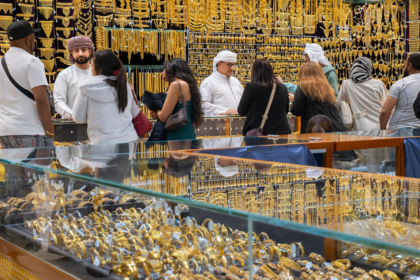
At the same time, daily life continues without visible disruption. Businesses remain open, airports operate, and tourism activity continues. As a result, the focus extends beyond defence to preserving normalcy and stability under pressure.
Defense Is Not Reaction, It Is Architecture
The UAE’s defensive posture reflects a long-term systems approach rather than a reactive military response, with integrated air defense capabilities designed to operate across multiple threat layers simultaneously while maintaining endurance over prolonged engagements.
Key elements of this architecture include:
- A multi-layered air defense system combining long-range, medium-range, and short-range interception capabilities to ensure full-spectrum coverage of national airspace.
- A strategic stockpile of munitions built to sustain interception operations over extended periods without compromising readiness.
- Continuous monitoring and response mechanisms designed to neutralize diverse aerial threats, including ballistic missiles, drones, and cruise systems.
This structure indicates that defense is being executed as a sustained capability rather than a temporary response, where endurance becomes as critical as immediate interception success.
Interception at Scale Reshapes the Conflict Dynamic
The ability to intercept thousands of incoming threats shifts the strategic equation by reducing both physical damage and psychological disruption, allowing civilian life and economic systems to continue operating despite ongoing hostilities.
This scale of interception produces two parallel outcomes:
- Protection of critical infrastructure and urban environments from sustained damage.
- Preservation of public confidence by minimizing visible disruption to daily life and economic activity.
The result is a controlled environment where conflict exists but does not translate into systemic instability.
Diplomacy Running Parallel to Defense
While defense operations continue, the UAE has simultaneously expanded its diplomatic engagement to contain escalation and build international alignment against the attacks.
This effort is reflected through:
- Over 100 calls were conducted by President Sheikh Mohamed bin Zayed Al Nahyan with global leaders to coordinate responses and reinforce diplomatic channels.
- Extensive engagement by Sheikh Abdullah bin Zayed, including meetings and discussions with international counterparts to sustain pressure for de-escalation.
- Adoption of UN Security Council Resolution 2817, co-sponsored by 136 countries, condemning the attacks and calling for an immediate halt to hostilities.
This dual-track approach positions diplomacy not as a secondary tool but as a parallel system designed to reduce long-term escalation risks.
Economic Stability as Strategic Signaling
The UAE has reinforced its response by releasing detailed economic indicators that signal structural resilience, aiming to maintain confidence among global investors, businesses, and residents during a period of geopolitical uncertainty.
Key economic markers include:
- Non-oil sectors contribute 75 percent of GDP, reflecting diversification and reduced dependency on energy markets.
- Sovereign wealth assets are estimated at $2.49 trillion, placing the UAE among the largest sovereign investors globally.
- Capital Adequacy Ratio at 17 percent and Liquidity Coverage Ratio around 146.6 percent, indicating strong banking sector stability.
- Total banking sector assets exceed Dh5.42 trillion, reinforcing financial system depth.
- Continued AA/A-1+ credit rating with stable outlook from S&P Global.
These indicators function as strategic communication, signaling that economic systems remain intact and capable of absorbing external shocks without altering long-term policy direction.
No Strategic Retrenchment
Despite ongoing conflict conditions, the UAE has maintained its long-term investment strategies and global economic positioning, avoiding reactive policy shifts that could signal instability.
This approach is reflected in:
- Continued execution of long-term development plans without delays or restructuring.
- Ongoing expansion of international partnerships and investment relationships.
- Preservation of the country’s positioning as a global business and capital hub.
Markets tend to respond more to behavior under stress than to formal statements, and continuity of strategy serves as a stronger signal than temporary assurances.
Tourism and Mobility as Real-Time Confidence Indicators
The tourism and aviation sectors continue to operate as visible indicators of stability, demonstrating that infrastructure and service systems remain functional despite regional tensions.
Operational highlights include:
- More than 1,260 hotels remain fully operational, with resorts, retail centers, and attractions operating under safety protocols.
- Over 1.4 million passengers are traveling through UAE airports between March 1 and 12, indicating sustained mobility and connectivity.
- State-supported measures to assist stranded travelers, such as covering accommodation and catering costs, reinforce a commitment to safety and service continuity.
These factors collectively reinforce confidence among residents, visitors, and global partners.
The Underlying Strategy
The UAE response operates across three interconnected layers that function simultaneously rather than sequentially:
- Military resilience is built on sustained interception capability and layered defense systems.
- Diplomatic engagement, aimed at reducing escalation and building global consensus.
- Economic continuity, ensuring stability in markets, institutions, and public life.
This integrated approach reflects a system-level strategy where stability is maintained not through a single lever but through coordinated execution across multiple domains.
The Real Signal
The conflict continues, and threats persist, but the broader system remains stable, indicating that resilience is not situational but designed, tested, and sustained over time under real conditions.
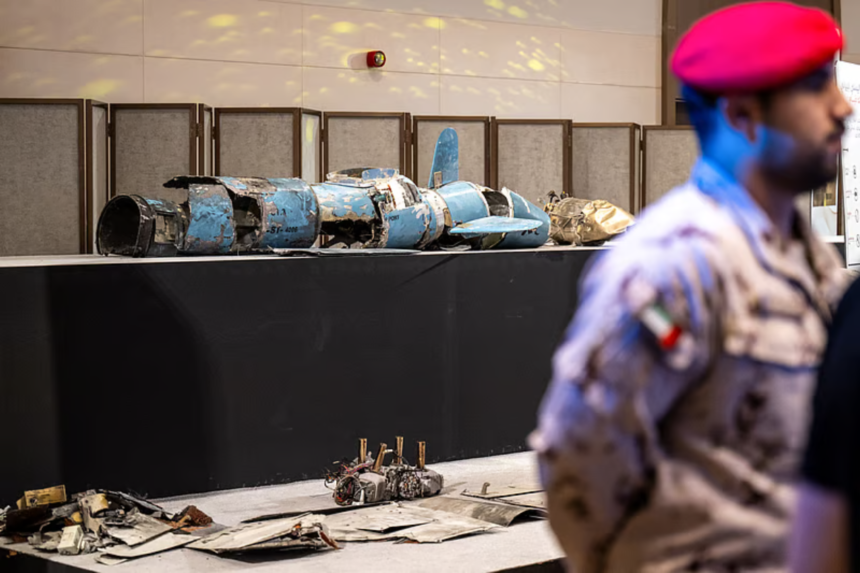
Pieces of missiles and drones recovered after Iran’s strikes are displayed during a press briefing by the UAE government held in Abu Dhabi on March 3, 2026. Iran stepped up its attacks on economic targets and US missions across the Middle East on March 3. Photo: AFP
Source: Khaleej Times