



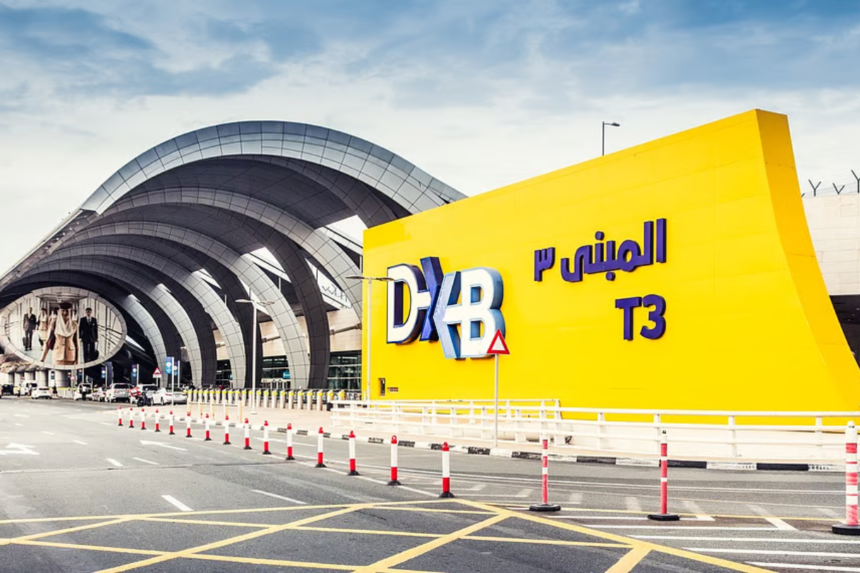
Dubai International Airport has once again confirmed its position as the world’s busiest international hub, extending its lead over every major global rival in 2025.
The airport handled 62.4 million international passengers, according to rankings released by OAG. Dubai has now held the top spot continuously since 2019, and the gap with competing hubs continues to widen.
Dubai widens the gap
Dubai increased international capacity by 16 percent compared with 2019 and recorded four percent growth year on year in 2025.
By contrast, London Heathrow Airport ranked second with 49 million international passengers. The difference, 13.5 million travellers, underscores Dubai’s growing dominance. Industry observers point to scale, geography, and airline coordination as key advantages that competitors struggle to match.
How Dubai compares globally
While Hartsfield–Jackson Atlanta International Airport remains the world’s busiest airport overall, its 63.1 million passengers include domestic traffic. Dubai’s figures reflect international travel alone.
The gap between the two stands at less than one million passengers, and during several months in 2025, Dubai processed more travellers than Atlanta.
Dubai Airports chief executive Paul Griffiths expects total traffic at DXB to reach 95.3 million passengers by year-end, keeping the airport within reach of the overall global lead.
Where other hubs stand
Asian and Middle Eastern airports continue to dominate the rankings.
Incheon International Airport placed third with 43 million passengers, followed by Singapore Changi Airport at 42.6 million.
Istanbul Airport posted the strongest growth, reaching 41.2 million passengers, up 27 percent from 2019. Meanwhile, Hong Kong International Airport rebounded sharply but still trails pre-pandemic levels.
In the Middle East, Hamad International Airport rounded out the top ten with 32.7 million passengers.
Why Dubai keeps winning
Dubai’s lead rests on a clear strategy. At the core, Emirates operates one of the world’s largest long-haul fleets from DXB. At the same time, the airport continues to invest in infrastructure built for scale, speed, and international connections.
Unlike many hubs, Dubai designed its model around global transit traffic from the outset. As a result, that focus has delivered consistency and growth, even as other regions face capacity constraints and tighter regulatory limits.
A shift in global aviation gravity
Dubai International Airport no longer competes on the margins. Instead, it sets the pace.
In context, the 62.4 million passengers who moved through DXB in 2025 represent more than recovery or growth. They also show how global air travel continues to re-centre around hubs built for connectivity, efficiency, and long-haul reach.
As a result, the question facing the industry has shifted.
It is no longer about whether Dubai can hold its position as the busiest international hub.
Rather, it is about whether any airport can realistically close the distance.
Follow us on Instagram and stay updated with our current news