


A US peace plan via Pakistan raises hopes but leaves key issues unresolved.
Confusion Around “Ongoing Talks”
Donald Trump’s recent claim that negotiations with Iran are making progress has added more uncertainty to an already complex conflict.
The central question remains unresolved. What talks are actually taking place?
While Washington signals movement toward a diplomatic off-ramp, Tehran has publicly denied that any formal negotiations are underway, maintaining its position to continue fighting until what it calls “complete victory.”
A 15-Point Plan, But No Clarity
At the center of the current developments is a reported 15-point peace proposal from the United States, delivered to Iran through intermediaries in Pakistan.
The plan is said to outline a potential pathway to de-escalation, though its full details remain undisclosed. Mediators, including Pakistan, Egypt, and Gulf states, are working behind the scenes to facilitate dialogue.
Despite this, Iran has not formally acknowledged receiving or engaging with the proposal, reinforcing the gap between diplomatic signaling and on-ground reality.
War Goals Remain Unsettled
One of the biggest uncertainties lies in the objectives of the conflict itself.
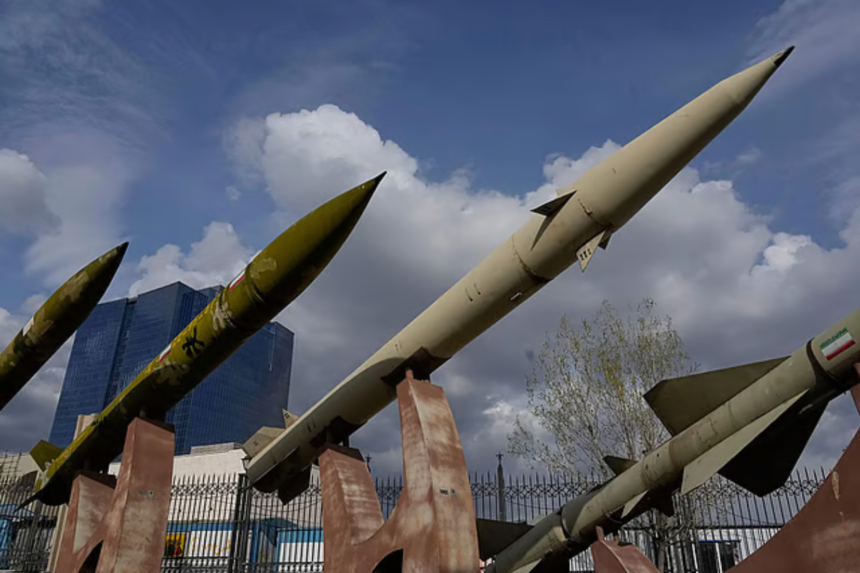
Trump has outlined shifting goals, including weakening Iran’s missile capabilities and preventing it from developing nuclear weapons. At the same time, reopening the Strait of Hormuz has become a critical economic priority.
Meanwhile, Benjamin Netanyahu has taken a more aggressive stance, suggesting that the war could contribute to regime change in Iran, a position not fully aligned with Washington’s messaging.
Who Speaks for Iran
Even if talks begin, a fundamental issue persists.
Who represents Iran?
Following the reported killing of senior leadership figures, including the previous supreme leader, the current power structure remains opaque. The new leader, Mojtaba Khamenei, has not made direct public appearances, and authority appears distributed across political, military, and paramilitary institutions.
This fragmentation raises doubts about whether any negotiator could commit the system to a binding agreement.
Escalation Continues Despite Diplomacy
While diplomatic efforts are being discussed, military escalation has not slowed.
Missile and drone attacks continue across the region, and the United States is deploying additional forces, including Marines and airborne troops, to the Middle East.
This dual-track approach, negotiations alongside military buildup, suggests that diplomacy may be as much about strategic positioning as conflict resolution.
Tactical Pause or Strategic Shift
Trump’s decision to delay potential strikes and extend negotiation timelines has been interpreted in two ways.
One view is that it reflects an attempt to find an exit and limit economic fallout, particularly given rising oil prices and global market sensitivity.
Another interpretation is more tactical. The delay may provide time for additional military assets to arrive, increasing leverage in any future confrontation.
Core Issues Still Unresolved
Even if talks formally begin, major obstacles remain.
The United States has indicated that any agreement would require Iran to give up enriched uranium, a demand Tehran has historically rejected.
Iran, in turn, has emphasized that it does not support partial solutions such as temporary ceasefires, instead calling for a broader end to conflict across multiple fronts.
Israel’s Parallel Strategy
Notably, Israel is not directly involved in the current diplomatic push.
While aligned with U.S. strategy in some areas, Israel continues its own military operations and has signaled that it will pursue its objectives independently if necessary.
This creates an additional layer of complexity, where even a U.S.-Iran understanding may not fully halt regional hostilities.
A War Without Clear Boundaries
The current situation reflects a conflict that lacks defined endpoints.
Diplomatic signals suggest movement toward negotiation, yet military actions indicate continued escalation. Leadership structures remain unclear, objectives are evolving, and key demands remain unresolved.
For now, the possibility of talks exists more as a framework than a confirmed process.
Until clarity emerges on who is negotiating, what is being negotiated, and whether all parties are aligned, uncertainty will continue to define the trajectory of the war.
Source: Gulf News
Read more news and follow us on Instagram
AP