


Global government bond markets are heading toward their steepest monthly losses in over a year as investors reassess the economic impact of a prolonged Middle East conflict.
Rising oil prices, persistent inflation risks, and slowing growth expectations have combined to weaken demand for sovereign debt, pushing yields higher across major economies.
Shift from Inflation to Stagflation
Initially, markets responded to the conflict through the lens of inflation, as oil prices surged sharply. However, that narrative is now shifting.
Investors are no longer focusing only on rising prices. Instead, they are increasingly pricing in slower economic growth alongside persistent inflation, bringing stagflation to the forefront. As a result, short-term bond yields have started to ease slightly, even after climbing sharply earlier in the month.
In other words, the main concern is no longer higher prices alone. Markets now fear a combination of elevated costs and weakening growth.
Short-Term Bonds Show Relative Resilience
Even so, short-dated government bonds have remained more resilient than longer-term debt. This reflects expectations that central banks will keep interest rates elevated in the near term.
During the month, the two-year yield on US10Y rose by roughly 50 basis points, marking its largest increase since October 2024, although it has edged lower in recent sessions. Meanwhile, Australia and Japan have followed a similar pattern, with short-term yields in both countries also posting significant monthly gains.
Taken together, these moves suggest that markets are recalibrating expectations around future policy rates rather than preparing for immediate rate cuts.
Higher-for-Longer Rate View
Oil prices remaining above $100 per barrel have reinforced expectations that global interest rates will stay elevated for longer.
Investors now widely expect the Federal Reserve to hold rates steady through the year, while central banks such as the European Central Bank and the Bank of England may continue tightening.
This environment reduces the traditional appeal of government bonds as safe-haven assets, as higher yields reflect both inflation risk and tighter financial conditions.
Long-Term Yields Climb Sharply
Longer-duration bonds have borne the brunt of the sell-off.
The U.S. 10-year Treasury yield is on track for a rise of over 40 basis points for the month, while five-year yields have posted even larger increases. Similar upward pressure has been seen in Australia and Japan, where long-term yields are recording their steepest gains in over a year.
Weak demand at recent bond auctions further highlights investor caution, with many choosing to stay on the sidelines amid ongoing uncertainty.
China Diverges from Global Trend
China’s bond market has remained relatively stable compared to its global peers.
Investors view the country as better insulated from the energy shock due to its substantial crude reserves, strong position in renewable energy, and relatively subdued inflation environment. As a result, Chinese government bond yields have risen only modestly.
What to Expect Next
The global bond market is being reshaped by a combination of geopolitical risk, energy-driven inflation, and slowing growth expectations.
As the conflict shows little sign of resolution, markets are adjusting to a prolonged period of uncertainty where stagflation risks dominate, and central banks face limited flexibility.
Source: KT
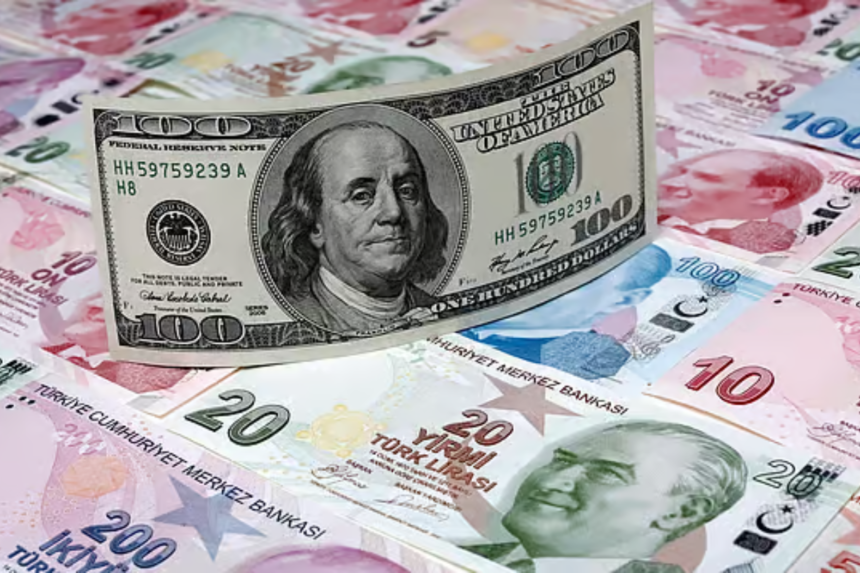
The five-year U.S. Treasury yield was set for a monthly gain of roughly 51 bps, its largest since October 2024. Photo: File photo