


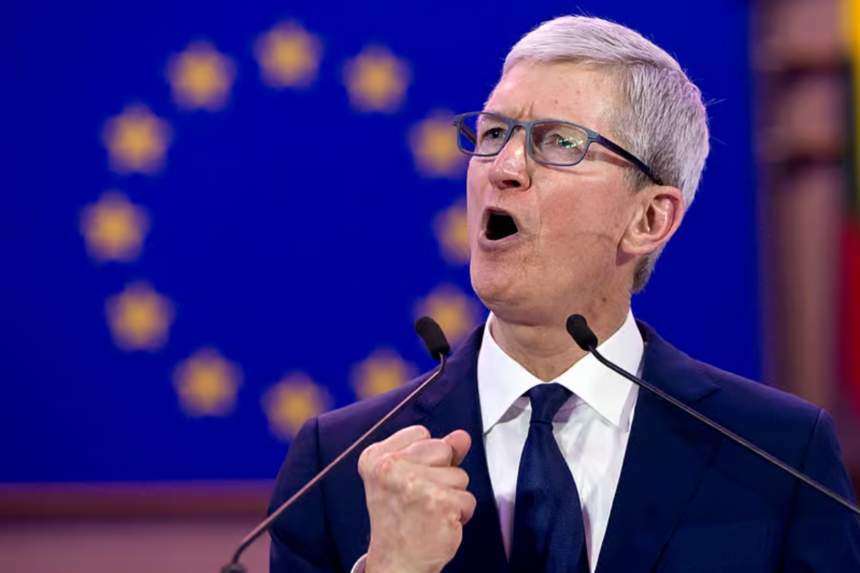
Apple is set for a major leadership change as Tim Cook steps down as CEO and John Ternus prepares to take over the top job.
Apple is entering a major leadership transition as Tim Cook completes his 15-year tenure as chief executive on August 31, 2026, with longtime hardware executive John Ternus set to become the company’s next CEO on September 1.
Apple announced the succession plan in April after its board unanimously approved the transition as part of a long-term succession planning process. Cook will become executive chairman of Apple’s board, while Ternus will join the board and take over the company’s day-to-day leadership.
The change marks the end of one of the longest leadership eras in Apple’s modern history. Cook became CEO in 2011 after succeeding co-founder Steve Jobs and has overseen Apple’s expansion into new product categories, services and technologies during his time at the top.
Tim Cook’s 15 years at Apple
Cook joined Apple in 1998 and initially served as executive vice president for worldwide operations before becoming chief operating officer. He succeeded Jobs as CEO in August 2011.
During his tenure, Apple expanded its product portfolio beyond the iPhone and Mac, launching products including the Apple Watch, AirPods and Vision Pro. The company also built its services business around offerings such as Apple Music, Apple TV+, Apple Pay, iCloud and other subscription and digital services.
Apple’s silicon strategy also became a major part of the Cook era. The company transitioned its Mac lineup from Intel processors to Apple-designed silicon, strengthening its control over hardware and software integration.
Under Cook, Apple also expanded its global manufacturing and supply-chain footprint while navigating growing regulatory scrutiny, geopolitical tensions and changes in consumer technology.
John Ternus becomes Apple’s new CEO
John Ternus will take over as CEO on September 1.
Ternus has spent 25 years at Apple after joining the company in 2001. He currently serves as senior vice president of Hardware Engineering, where he oversees teams responsible for products including the iPhone, iPad, Mac and AirPods.
He has been closely involved in Apple’s hardware development for years and has overseen engineering work across multiple generations of major Apple products. His experience also includes the company’s transition of the Mac to Apple silicon.
Before joining Apple, Ternus worked as a mechanical engineer at Virtual Research Systems. He holds a bachelor’s degree in mechanical engineering from the University of Pennsylvania.
Apple’s board described Ternus as a leader with deep technical knowledge and a strong focus on product development, making him the company’s first CEO succession from within its senior hardware leadership ranks in the Cook era.
Cook will remain involved with Apple.
Although Cook is leaving the CEO position, he will not be leaving Apple.
As executive chairman, he will continue supporting selected areas of the business, including Apple’s engagement with policymakers around the world. Arthur Levinson, who has served as Apple’s non-executive chairman for the past 15 years, will become lead independent director.
The arrangement allows Apple to retain Cook’s experience and relationships while giving Ternus responsibility for running the company.
Cook said when Apple announced the transition that serving as CEO had been the greatest privilege of his life and expressed confidence in Ternus as his successor.
What changes under John Ternus?
The leadership transition comes at an important moment for Apple.
Ternus inherits a company that remains financially powerful but faces several major strategic challenges, including the rapid development of artificial intelligence, competition in smartphones and computing, regulatory pressure in major markets, and the need to identify Apple’s next significant product category.
His background is particularly relevant to Apple’s hardware ambitions. Unlike Cook, whose career at Apple was heavily associated with operations and supply-chain management, Ternus has spent much of his career focused on product engineering and hardware development.
That does not necessarily mean Apple will radically change direction. The succession has been presented by the company as a planned transition rather than a sudden change in strategy. Ternus has worked closely with Apple’s existing leadership team for years and is familiar with the company’s product development culture.
A new chapter for Apple
August 31, therefore, represents more than the end of Tim Cook’s tenure as CEO. It marks the beginning of a new leadership chapter for one of the world’s most valuable technology companies.
Cook leaves the CEO role after 15 years, having guided Apple through the expansion of the iPhone ecosystem, the growth of services, the introduction of new hardware categories, and the transition toward increasingly customized technology.
From September 1, Ternus will take responsibility for determining where Apple goes next.
His first major challenge will be maintaining the scale and discipline built during the Cook era and, at the same time, convincing consumers and investors that Apple can continue creating meaningful new products and technologies.
For Apple, the transition is carefully planned. For Ternus, however, the real test begins tomorrow.
Tim Cook
Source: KT