


Abu Dhabi has launched Phase Two of its Solar Self-Supply Policy, extending it to the residential sector for the first time.
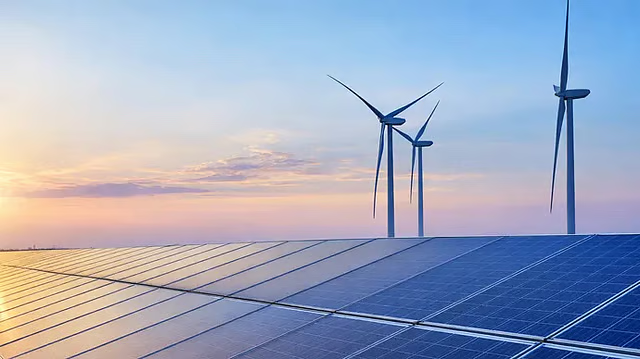
Villa owners and eligible residential occupants can now generate electricity through rooftop solar systems, store excess energy in batteries, and remain fully connected to the grid.
The move shifts solar from a niche adoption model into a structured, scalable system for households.
From Pilot to Scale
The first phase, introduced earlier in 2026, focused on farms, estates, and retreats. It proved the model.
Phase Two expands that framework into everyday residential use, where energy demand is highest and more consistent.
The transition reflects a clear direction. Move from limited experimentation to broader integration across sectors.
Simplified Adoption Framework
The policy introduces a streamlined regulatory structure designed to remove friction.
Installation procedures, grid connection requirements, and technical standards have been simplified and standardized.
The objective is direct. Reduce barriers. Increase adoption speed. Maintain safety and efficiency without complexity.
Battery Storage Changes the Equation
A key addition is integrated battery storage.
Homes can now store surplus solar energy generated during the day and use it later, reducing dependence on the grid during peak hours.
This changes the role of residential users. From passive consumers to active participants in energy management.
Reducing Pressure on the Grid
The policy is not only about individual savings. It addresses system-level efficiency.
Distributed solar generation reduces peak load pressure, improves grid stability, and optimizes energy distribution across the emirate.
Load balancing shifts from centralized supply to shared responsibility.
Supporting Long-Term Energy Strategy
The expansion aligns with Abu Dhabi’s Energy and Water Efficiency Strategy 2030.
The approach combines policy, technology, and behavioral change to reshape how energy is produced and consumed.
Guidelines released alongside the policy cover high-efficiency systems such as cooling, lighting, water heating, and electrical appliances, reinforcing a full-spectrum efficiency model.
A Structural Shift in Energy Use
The residential rollout signals a deeper transition.
Energy is no longer delivered in one direction. It is generated, stored, and managed at the user level while remaining integrated within a larger system.
The model is decentralized but coordinated.
Current Direction
Abu Dhabi is building an energy system that distributes responsibility without losing control.
Solar adoption at the household level, combined with storage and grid integration, moves the system toward resilience, efficiency, and long-term sustainability.