


Tehran’s signals over subsea data routes raise fears of disruption across Europe, Asia, and the Gulf.
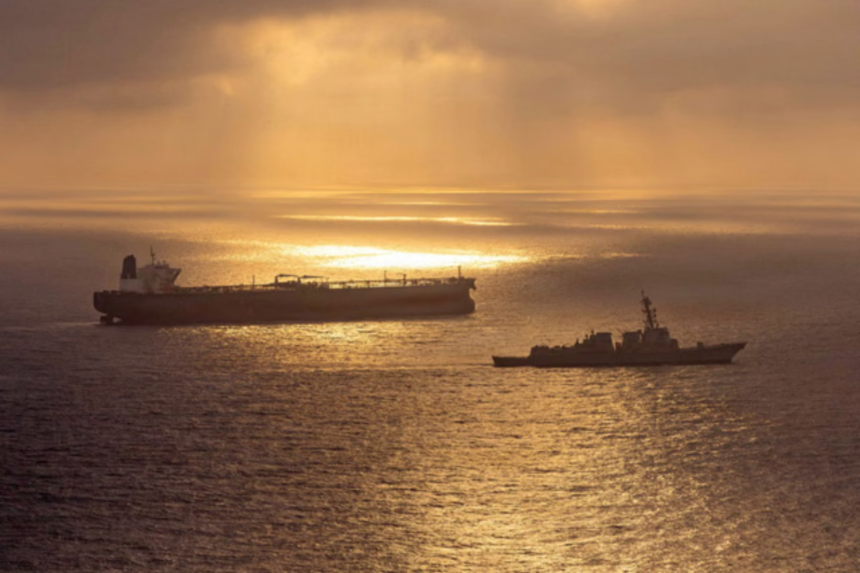
Concerns are rising that the Strait of Hormuz could become not only an energy choke point, but also a pressure point for global internet infrastructure.
After years of using the Strait of Hormuz as leverage in geopolitical and energy disputes, Iran is now signaling a possible escalation into an entirely different domain: the underwater internet cables carrying much of the world’s digital traffic.
According to reports and statements cited by international media outlets, Iranian officials and state-linked platforms have floated the possibility of imposing fees, restrictions, or regulatory controls on submarine internet cables operating through the strategically critical waterway.
The proposal has triggered concern among analysts and cybersecurity experts because the cables running beneath the Gulf are not simply telecommunications infrastructure. They form part of the global digital backbone supporting financial systems, cloud computing, international banking, AI networks, remote work infrastructure, energy operations, and military communications across multiple continents.
The warnings suggest that the Strait of Hormuz may increasingly be viewed by Tehran not only as an oil transit route but also as a strategic digital corridor capable of exerting pressure far beyond the Middle East.
Why Subsea Internet Cables Matter So Much
Most people never see the infrastructure that powers the global internet because it sits thousands of meters beneath the ocean floor.
Subsea fiber-optic cables carry the overwhelming majority of international data traffic worldwide, handling everything from financial transactions and cloud storage to video calls, streaming services, and global business operations.
These cables connect Asia, Europe, the Gulf, and Africa through carefully mapped seabed routes. Because satellites cannot efficiently process the same scale and speed of global data exchange, modern economies rely heavily on these underwater systems.
The Strait of Hormuz occupies a particularly sensitive position within that network because it links major Asian digital hubs with Europe and the Middle East.
Any disruption to critical cable routes inside or around Hormuz could therefore extend far beyond slower internet speeds.
Analysts warn that the consequences could include interruptions to banking systems, stock exchanges, energy infrastructure, cloud services, logistics networks, and cross-border financial activity.
Iran’s Growing Use of Strategic Pressure Points
Iran’s recent messaging appears consistent with a broader strategy of expanding leverage across every layer of the Strait of Hormuz.
Historically, the waterway has primarily been associated with oil exports and maritime security because roughly one-fifth of global oil supplies move through the narrow corridor. But recent tensions have demonstrated how modern geopolitical conflicts increasingly involve digital infrastructure alongside physical trade routes.
Iranian state-linked commentary reportedly suggested that international technology companies and cable operators could eventually face licensing fees, regulatory requirements, or operational restrictions linked to subsea infrastructure crossing the region.
Some reports also referenced demands that repair and maintenance rights be handled exclusively by Iranian firms.
Although legal experts question whether such measures could realistically be enforced under existing international maritime law, analysts argue that the larger issue is the signal itself.
The concern is that Tehran may increasingly view digital infrastructure as a legitimate instrument of strategic pressure during periods of confrontation with Western powers.
The Risks of a Digital Choke Point
Security analysts have long warned that undersea infrastructure remains one of the world’s most vulnerable strategic assets.
Unlike visible pipelines, ports, or military bases, subsea cables are difficult to monitor continuously across enormous distances. Repairs also require specialized ships, equipment, and international coordination, meaning disruptions can take significant time to resolve.
Several major intercontinental cable systems already pass through or near the Strait of Hormuz, connecting Gulf economies with global digital networks.
Because of longstanding geopolitical tensions, many international operators have attempted to position newer cables closer to Oman’s territorial waters rather than Iranian routes. Still, some critical systems continue passing through areas vulnerable to regional instability.
Analysts say Iran’s military capabilities, including underwater drones, combat divers, and naval units associated with the Islamic Revolutionary Guard Corps, have intensified concerns around the protection of maritime infrastructure.
The fears are not entirely theoretical.
In 2024, multiple subsea cables in the Red Sea were severed after a damaged vessel dragged its anchor across the seabed during a regional conflict involving Iran-aligned groups. The incident disrupted a substantial share of internet traffic across affected regions and exposed how fragile global digital infrastructure can become during geopolitical crises.
Global Markets Are Watching Closely
The implications of any serious disruption would likely be immediate.
Banking systems, international payment networks, energy trading platforms, cloud service providers, logistics operations, and AI infrastructure all depend heavily on uninterrupted high-speed data flows.
Countries across the Gulf could face communications disruptions, while economies heavily dependent on outsourcing, technology services, and financial connectivity could experience operational instability.
The threat also arrives at a moment of heightened geopolitical sensitivity following renewed speculation surrounding US-Iran tensions and the possibility of broader military escalation in the region.
As global economies become increasingly dependent on real-time digital systems, subsea cables are evolving from invisible infrastructure into strategic geopolitical assets.
For decades, the Strait of Hormuz symbolized the vulnerability of global energy markets.
Now, it may also symbolize the vulnerability of the global internet itself.
Tehran’s threats themselves highlight Iran’s growing willingness to weaponise every layer of the Strait of Hormuz, not just oil shipping routes but also the hidden digital infrastructure beneath them.
AFP file