


Thousands deploy as Washington balances military action and diplomacy.
The United States has deployed thousands of Marines and additional naval assets to the Middle East, even as President Donald Trump signals a potential wind-down of military operations.
The latest deployment includes amphibious assault ships and about 2,500 Marines, bringing the total to more than 50,000 US troops already stationed in the region. The move reflects a dual-track strategy, reinforcing military presence while keeping diplomatic options open.
Iran Expands Threats Beyond the Region
Iran has warned that its response may extend beyond traditional military targets. Officials indicated that recreational and tourist locations worldwide could become potential targets for its adversaries.
The warning followed continued missile launches toward Israel and drone activity near Gulf energy infrastructure. The escalation signals a widening scope of risk, moving beyond state and military assets into civilian-linked environments.
Conflicting Signals From Washington
Despite the troop surge, Trump stated that the US is considering reducing military operations.
At the same time, the administration has expanded its objectives in the conflict, adding the protection of Gulf allies to existing goals that include limiting Iran’s nuclear capabilities, countering proxy groups, and weakening its missile infrastructure.
This reflects a strategic contradiction. Military escalation is being paired with political messaging around de-escalation.
Regional and Allied Involvement Deepens
The conflict has drawn in multiple regional and international actors.
The United Kingdom has authorized the use of its bases for US operations linked to protecting shipping routes in the Strait of Hormuz. Gulf countries, including Saudi Arabia, Kuwait, Bahrain, Qatar, and the UAE, have intercepted missile and drone threats targeting energy infrastructure.
Israel has continued airstrikes on Iranian-linked positions in Beirut, while tensions with Hezbollah have intensified.
Oil Markets and Economic Pressure
Energy markets are reacting sharply to the conflict.
Brent crude prices have surged above $110 per barrel, reflecting fears of prolonged disruption to supply routes. The Strait of Hormuz, a critical global energy corridor, remains under threat, amplifying volatility across markets.
The US has temporarily eased sanctions on certain Iranian oil shipments in an attempt to stabilize supply, though analysts expect a limited immediate impact.
Rising Human and Humanitarian Costs
The conflict is producing a growing humanitarian crisis.
Casualties have risen across multiple countries, with thousands killed and millions displaced in Iran and Lebanon alone. Civilian life has been severely disrupted, with major cultural events and daily activities halted in affected areas.
International organizations have warned of compounding risks, including displacement, food insecurity, and economic instability.
Strategic Shifts in Defense Posture
The US has redirected key defense resources, including Patriot missile systems, from Europe to the Middle East.
While officials maintain that NATO defenses remain sufficient, the move highlights the shifting focus of military priorities toward the current conflict zone.
A Conflict Without Clear Direction
Despite signals of a possible drawdown, there is no clear indication that the conflict is nearing resolution.
Military actions continue across multiple fronts, while diplomatic messaging remains inconsistent. The combination of escalation, economic impact, and humanitarian strain suggests a prolonged period of instability.
With inputs from AP
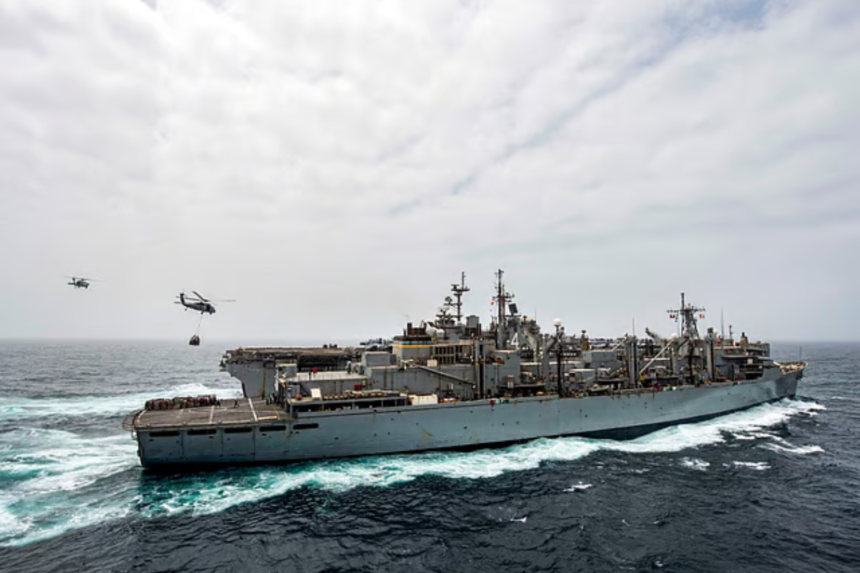
This handout picture released by the US Navy on July 14, 2019, shows the amphibious assault ship USS Boxer (LHD 4) receiving a vertical replenishment-at-sea from the fast combat support ship USNS Arctic (T-AOE 8) in the Arabian Sea.
Source: Gulf News