



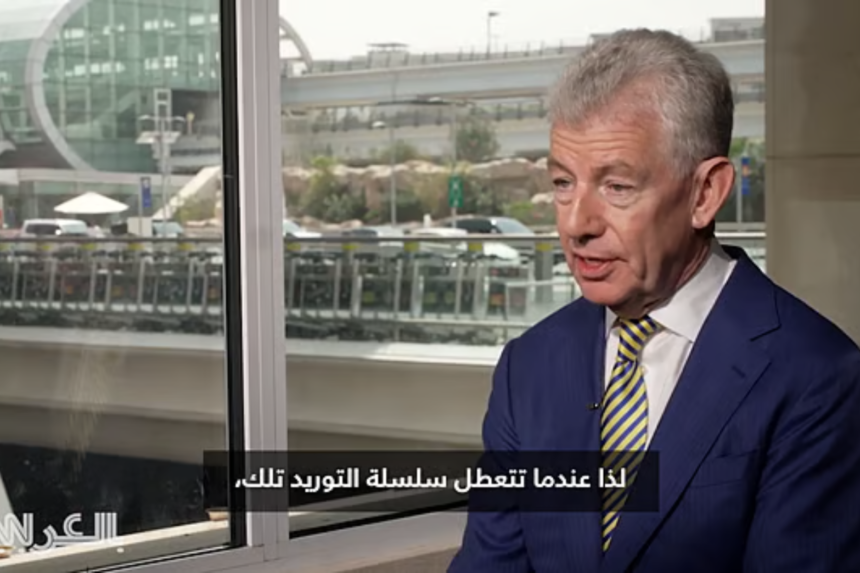
Currently, Dubai International Airport is operating at 40–45% of normal levels, according to CEO Paul Griffiths.
Despite this, the airport continues to function as regional tensions and airspace restrictions affect flight movements.
At the same time, Griffiths said the airport has handled over one million passengers in the past 17 days, highlighting a steady recovery despite operational challenges.
Overall, the figures reflect the resilience of one of the world’s busiest aviation hubs during a period of disruption.
Airspace Strategy Keeps Flights Moving
The UAE has managed its airspace dynamically, opening and closing it based on real-time threat assessments.
Authorities introduced designated flight corridors approved by the General Civil Aviation Authority to ensure safe and continuous operations.
Airlines, including Emirates, Etihad Airways, and Air Arabia, adjusted schedules, suspended selected routes, and gradually resumed services as conditions stabilized.
Some international carriers paused operations, largely due to insurance-related constraints rather than operational limitations within the UAE.
Managing Passenger Flow and Communication
DXB typically handles around 320,000 passengers daily, making communication critical during disruptions.
Authorities focused on:
- Advising passengers to travel to the airport only when necessary
- Maintaining clear and consistent updates
- Managing passenger flow to avoid congestion
Griffiths said these measures helped keep the airport environment stable, with operations described as calm and controlled during peak disruption periods.
Regional Coordination Supports Recovery
Dubai Airports coordinated closely with other regional hubs to manage limited airspace capacity.
Flight schedules were carefully planned to reduce congestion and ensure smoother operations across the network.
The recovery process depends on coordination between:
- Airlines
- Air traffic control
- Government authorities
This system-wide alignment has played a key role in maintaining operational continuity.
Operational Challenges Remain
Despite progress, challenges persist.
The aviation system relies on a complex global supply chain involving multiple stakeholders, from departure points to arrival hubs.
Insurance constraints remain a major factor affecting international carriers, with some airlines requiring government support to continue operations.
Griffiths said Dubai Airports is not restricting airlines but must manage limited airspace capacity carefully to minimize delays.
Safety and Rapid Response
Safety remains the top priority.
Griffiths noted that emergency response systems have functioned effectively, with civil defense teams responding within minutes to incidents near airport infrastructure.
Clear communication protocols ensured passengers and staff could move to safety quickly, allowing operations to resume without prolonged disruption.
Outlook for Full Recovery
Griffiths expressed confidence in a rapid return to full capacity, emphasizing the global importance of Dubai as an aviation hub.
With a large portion of the world’s population within short flying distance, demand is expected to rebound quickly once conditions stabilize.
The airport’s focus remains on restoring operations to 100% capacity while maintaining safety, efficiency, and passenger confidence.
CNN