


With its vast workforce, financial capacity, and growing industrial base, India is fully prepared to compete with China on the global stage. That was the central message delivered by Saudi investor Ali Abdulla Ahmed Al Amoudi at the Global Economic Cooperation 2026 meeting in Mumbai.
Al Amoudi, principal and co-founder of Al Almoudi Holdings in Saudi Arabia, addressed policymakers and business leaders at the event organized by India’s Ministry of External Affairs. He described India as a country with monumental room for expansion.
“India possesses the knowledge, the financial resources, the workforce, and all the essential components for success,” he said, adding that the country’s trajectory could soon place it at a level comparable to China in terms of global economic standing.
SMEs Hold the Key
While praising India’s scale and ambition, Al Amoudi stressed that small and medium enterprises must receive stronger institutional backing to sustain long-term growth.
He expressed concern over lending conditions faced by smaller businesses, noting that some SMEs are reportedly charged interest rates between 15 and 18 percent. Such rates, he argued, restrict their ability to participate in infrastructure projects and limit overall economic contribution.
Financial institutions, he said, must provide low-margin lending to enable SMEs to expand operations, create employment, and integrate into national development plans. According to him, a healthy economy depends not only on large corporations and mega-projects but also on the stability and growth of its entrepreneurial base.
India–Gulf Economic Ties
Al Amoudi also highlighted the depth of economic ties between India and Gulf nations. He described India as a second home for many in the Gulf, reflecting the long-standing workforce and trade relationship between the regions.
Millions of Indian professionals and workers contribute significantly to Gulf economies, while Gulf investors continue increasing their exposure to Indian infrastructure, energy, and logistics sectors. This reciprocal dynamic, he said, strengthens long-term economic confidence on both sides.
From Investors to Partners
According to Mohammed Hussein Ali Al Amoudi, Gulf nations no longer see themselves merely as providers of capital. Instead, they are moving toward strategic partnerships grounded in technical expertise, shared risk, and long-term alignment.
He highlighted major domestic infrastructure investments across the Gulf, particularly in Dubai and the wider United Arab Emirates, where governments have deployed hundreds of billions of dollars into airports, ports, transport networks, and healthcare facilities. Having built that experience, Gulf economies now export technical know-how alongside capital.
At the same time, he noted that capital remains widely available in global markets. The real challenge, he argued, lies in identifying reliable partners and structuring alliances around mutual economic interests rather than short-term political considerations.
Infrastructure as a Global Imperative
At the forum, Mohammed Hussein Ali Al Amoudi framed infrastructure not as a discretionary investment, but as a structural necessity for global economic stability. He argued that airports, hospitals, logistics corridors, and digital networks form the backbone of international trade and economic resilience.
He then warned that if nations fail to invest collectively in development, long-term trade and cross-border growth will weaken. In his view, interconnected economies must strengthen shared infrastructure to remain competitive and stable.
Meanwhile, as India expands its manufacturing, technology, and infrastructure capacity, global investors are watching closely. Al Amoudi’s remarks suggest they are preparing for deeper engagement, provided structural support systems, particularly for SMEs, evolve alongside large-scale ambition.
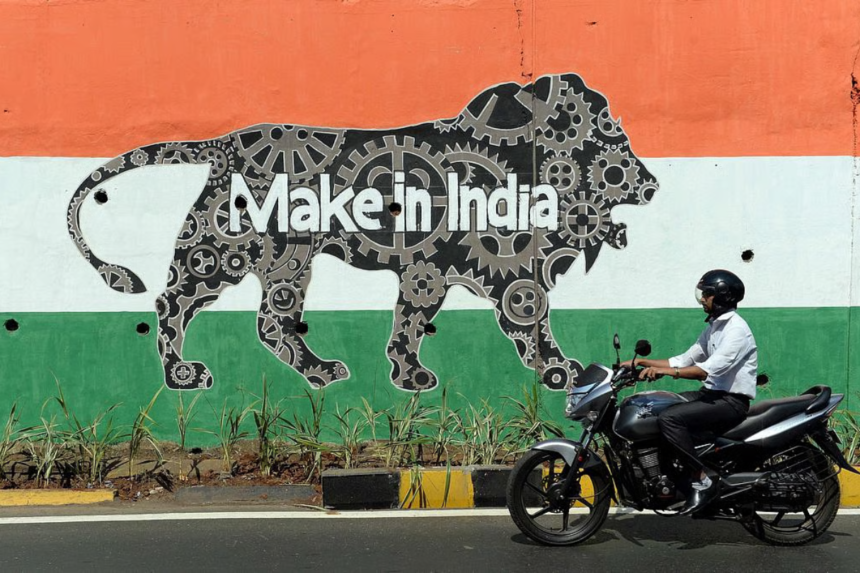
Strong support for SMEs will ensure a healthy national economy. Photo: KT file